
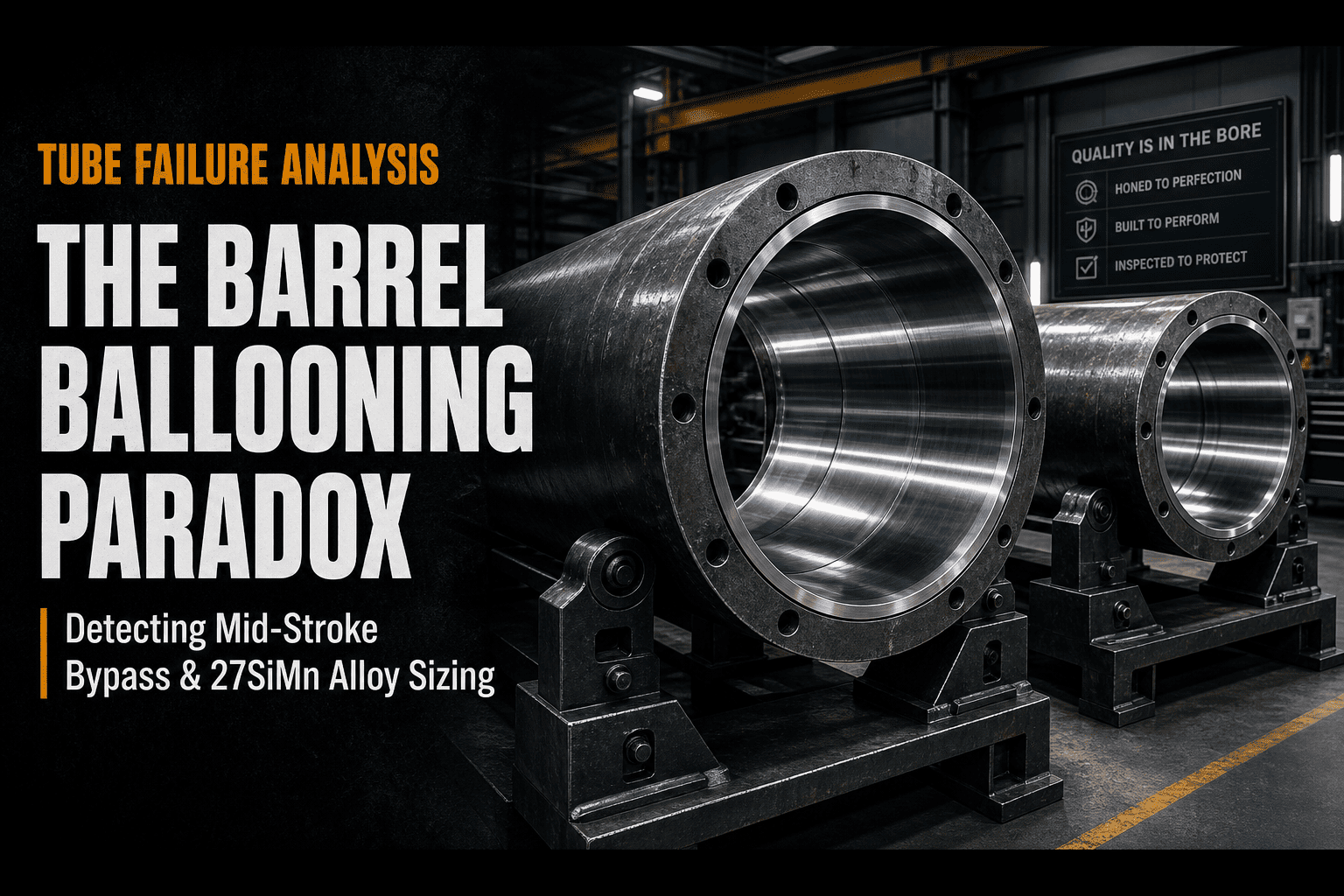
One of the most elusive failure modes in severe-duty hydraulic machinery is cylinder barrel ballooning—a permanent or elastic outward swelling of the seamless cylinder tube under extreme internal pressure spikes. In mining excavators, heavy demolition shears, high-tonnage forge presses, and rock quarry tippers, impact shocks frequently generate localized pressure pulses exceeding 6,000 to 10,000 psi. Barrel ballooning creates a baffling diagnostic symptom: the hydraulic cylinder passes dead-end pressure holding tests at full extension and full retraction, yet experiences complete loss of breakout force and severe internal oil bypass whenever the piston operates through the middle 30% to 70% of its stroke. This forensic guide details the mechanics of hoop stress yielding, field metrology procedures for mapping bore expansion, and metallurgical criteria for eliminating ballooning failures.
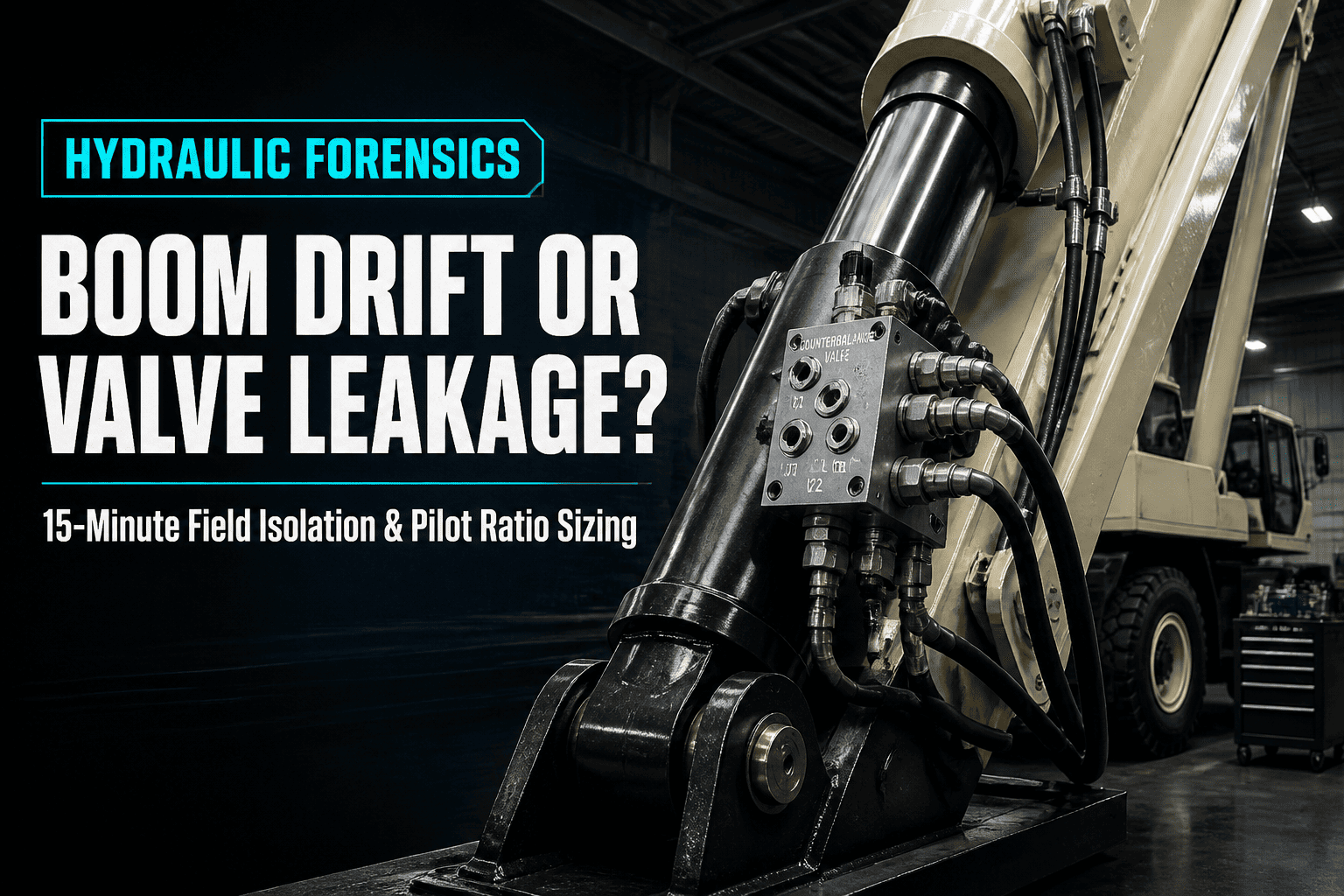
Uncommanded hydraulic cylinder movement—commonly diagnosed as cylinder drift—is one of the most frustrating and hazardous malfunctions in mobile cranes, excavators, telehandlers, and aerial work platforms. When an elevated boom slowly sinks overnight or creeps downward under rated load, field mechanics frequently pull and repack the hydraulic cylinder, only to find the drift persists because the root cause was a weeping counterbalance valve seat or thermal oil contraction. Equally destructive is counterbalance valve hunting: a violent, shuddering stick-slip vibration that shakes boom structures during lowering cycles under overrunning loads. This guide provides field-proven diagnostic procedures to isolate cylinder seal bypass from load-holding valve leakage in under fifteen minutes without guessing, alongside engineering rules for matching counterbalance pilot ratios to eliminate hydraulic oscillation.
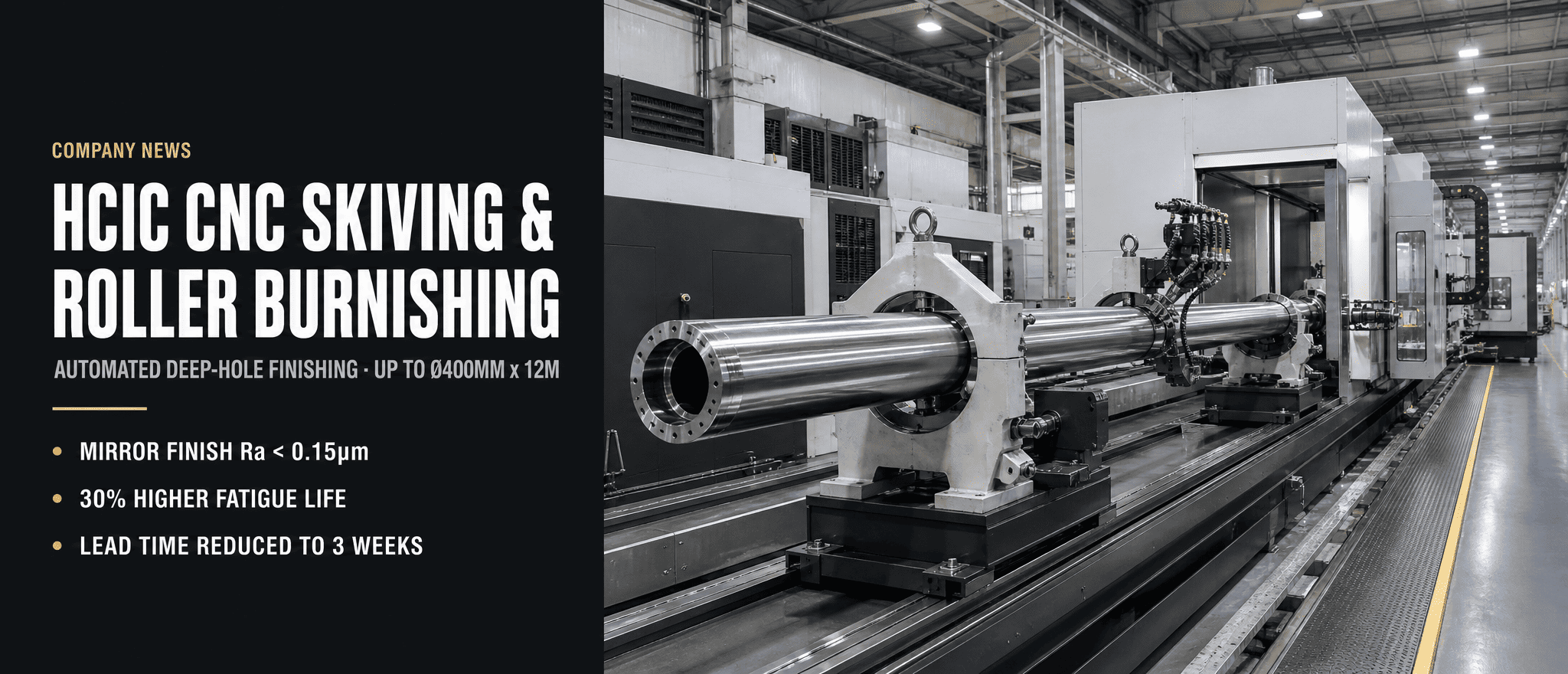
HCIC expands heavy cylinder manufacturing with an automated CNC skiving and roller burnishing line, processing tube bores up to Ø400mm and lengths up to 12 meters.
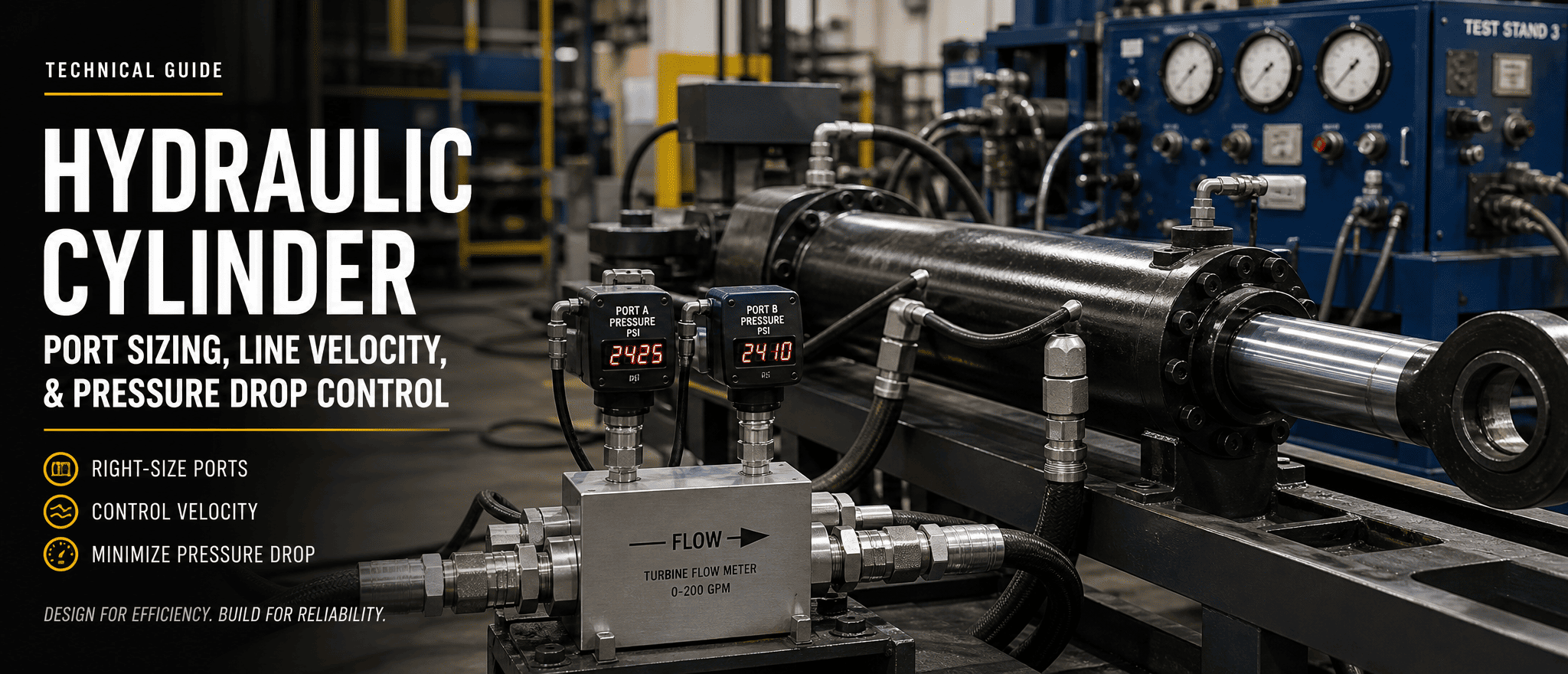
Learn how to calculate hydraulic cylinder port sizes, manage fluid velocity limits across pressure and return lines, and prevent turbulent heat generation and flow choking.
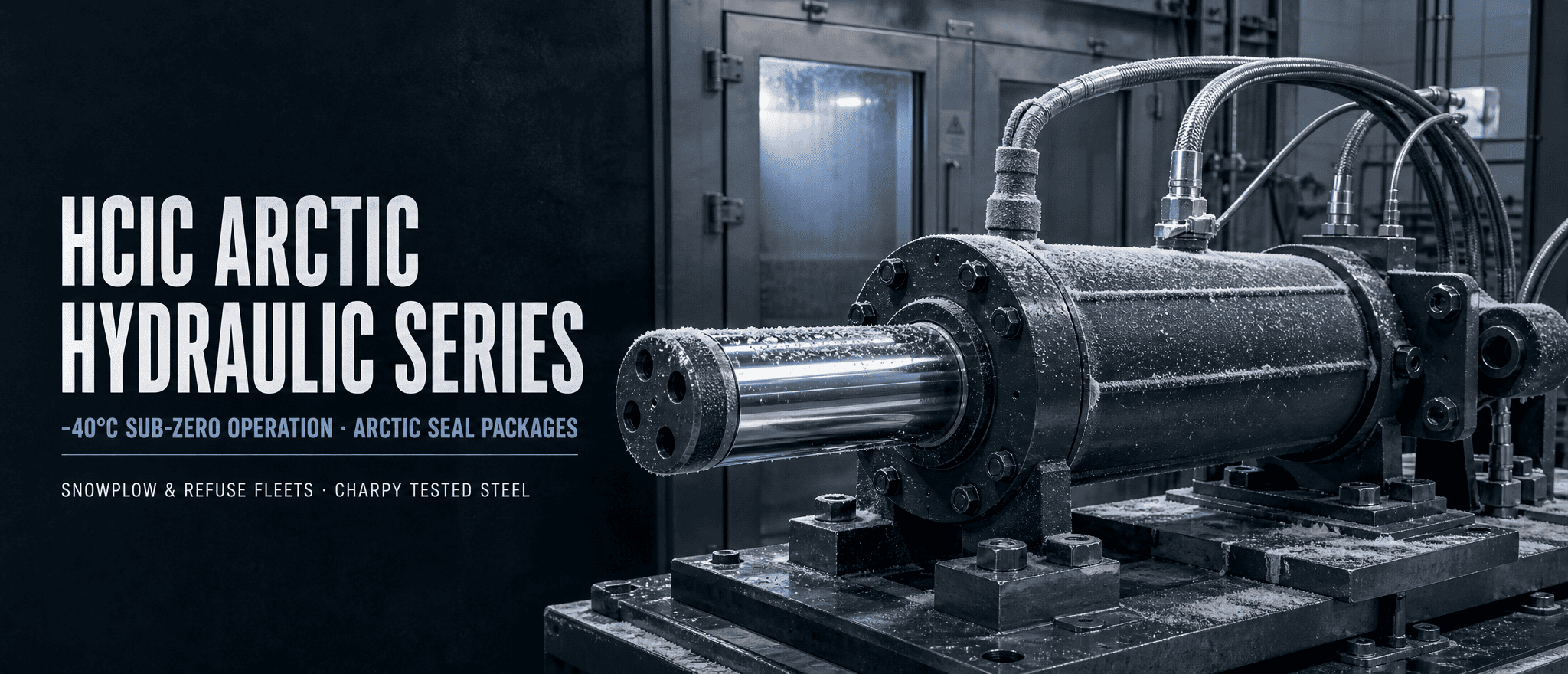
HCIC introduces heavy-duty -40°C (-40°F) extreme cold weather hydraulic cylinders engineered with Arctic HNBR/PTFE seal packages and impact-tested alloy steel.
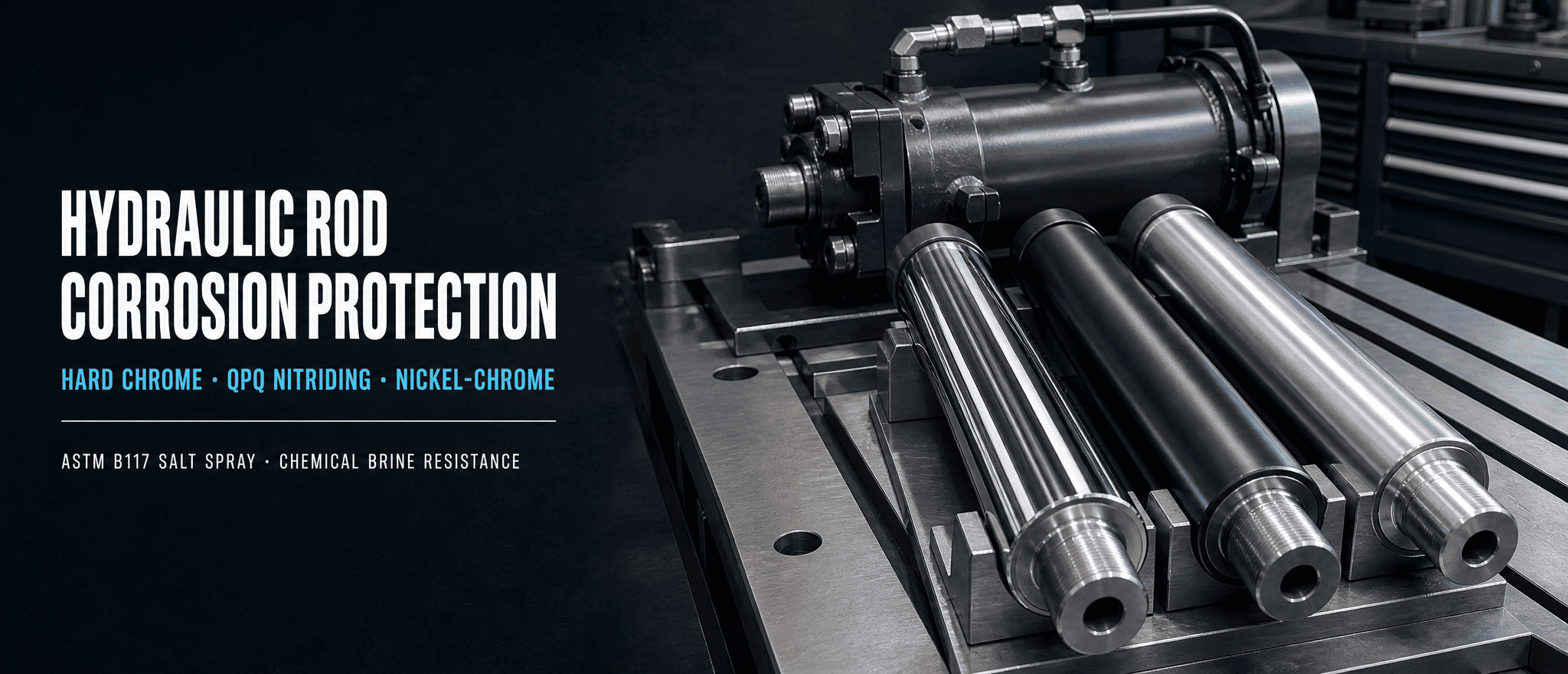
Compare hard chrome plating, QPQ liquid nitriding, and nickel-chrome coatings. Learn how salt spray, road de-icing chemicals, and fertilizer cause rod pitting and seal failure.