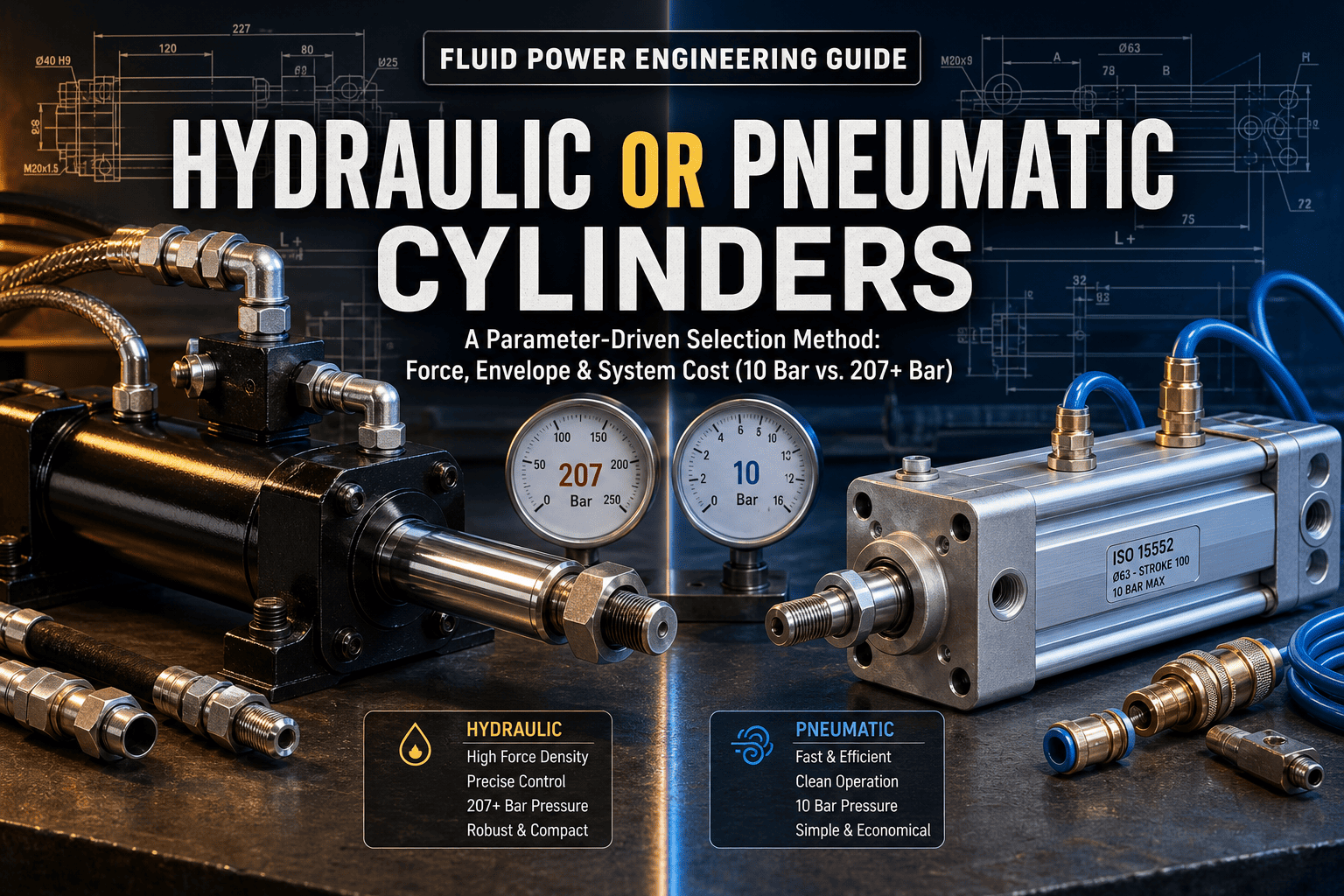
Pneumatic cylinders typically operate below 100 psi (10 bar), while hydraulic cylinders routinely run at 207 bar and above. The selection question is therefore not “which is stronger,” but whether the required force at the available pressure and bore size can be produced without oversizing the actuator, the air supply, or the maintenance routine. This article sets out a parameter-first method, using published pressure ranges and HCIC’s own manufacturing context as reference points.
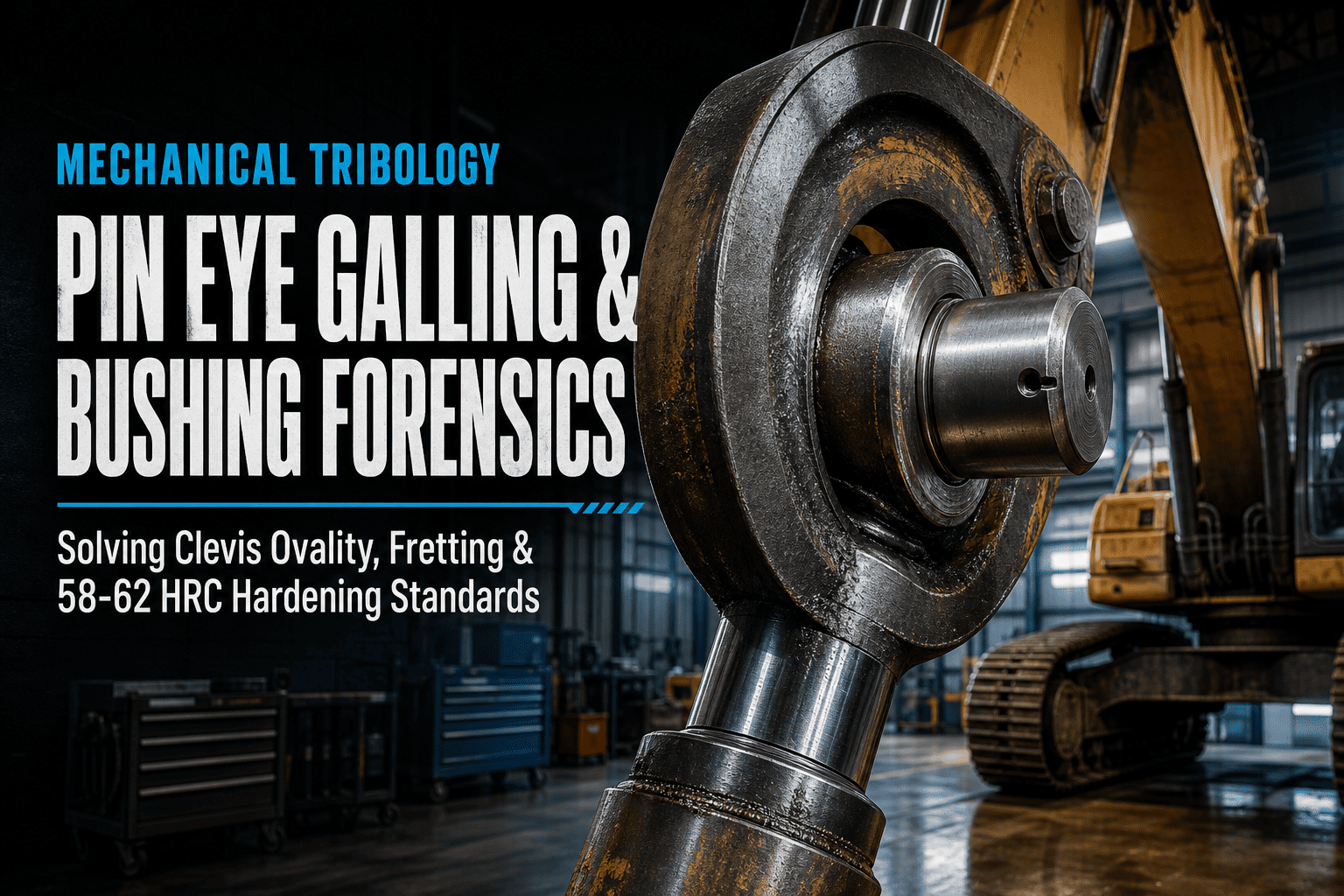
Solve cylinder clevis pin galling, bore ovalization, and fretting corrosion. Compare bronze vs. composite bushings, grease groove patterns, and 58–62 HRC pin specs.
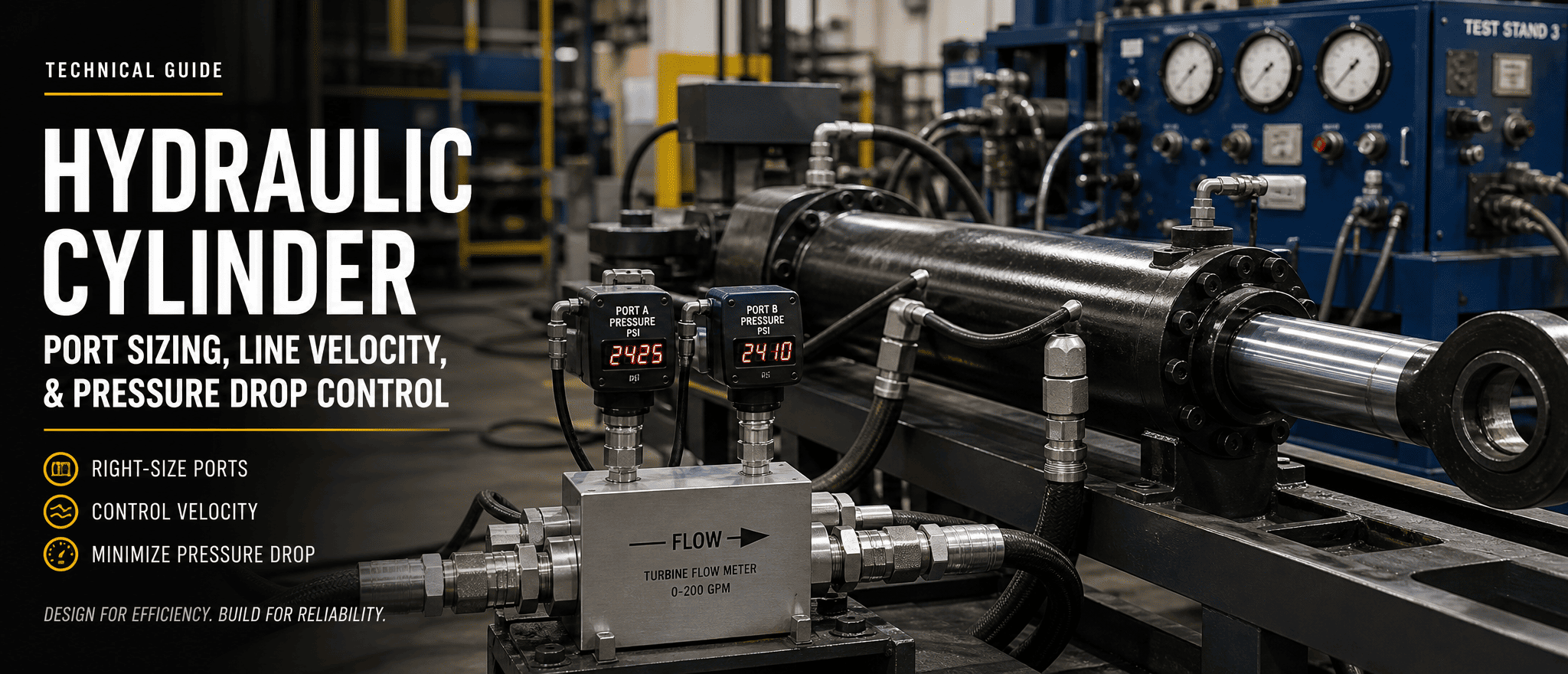
Learn how to calculate hydraulic cylinder port sizes, manage fluid velocity limits across pressure and return lines, and prevent turbulent heat generation and flow choking.

Discover why side loads destroy rod seals at full stroke and how OEM designers calculate stop tube length, increase bearing span, and prevent gland galling.
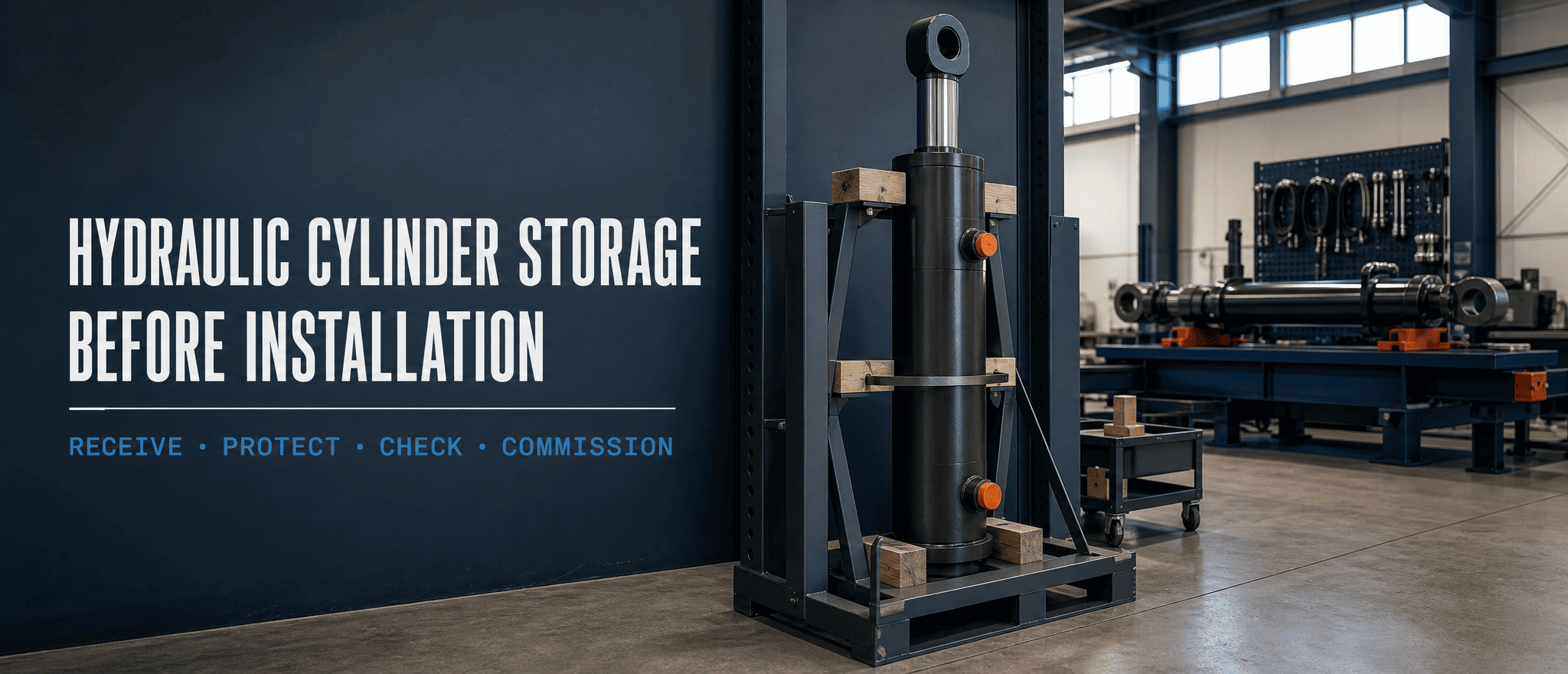
Learn how to receive, store and prepare a hydraulic cylinder before installation, with practical checks for ports, piston rods, alignment, mounting stress and commissioning.

Learn how to inspect hydraulic cylinder mounting pins, bushings and clevis holes, identify alignment problems, and prepare the right replacement-cylinder data.