A hydraulic cylinder can arrive in good condition and still be damaged before it reaches the machine. Unprotected ports collect contamination. An exposed piston rod can corrode. A cylinder stored in the wrong position may develop avoidable seal or internal-corrosion problems.
That is why receiving and storage should be treated as part of the installation process, not as warehouse housekeeping. The goal is simple: keep the cylinder clean, protected and traceable until a trained technician is ready to connect it.
This guide is for OEM buyers, maintenance teams and distributors handling hydraulic cylinders before installation. It focuses on practical storage and pre-commissioning checks. It does not replace the cylinder manufacturer's product manual or the safety procedure for the machine.
Start the inspection while the packaging and transport protection are still in place. Record the model, quantity, visible damage and any missing accessory. Take photographs before removing protective materials if the crate, pallet or cylinder shows impact marks.
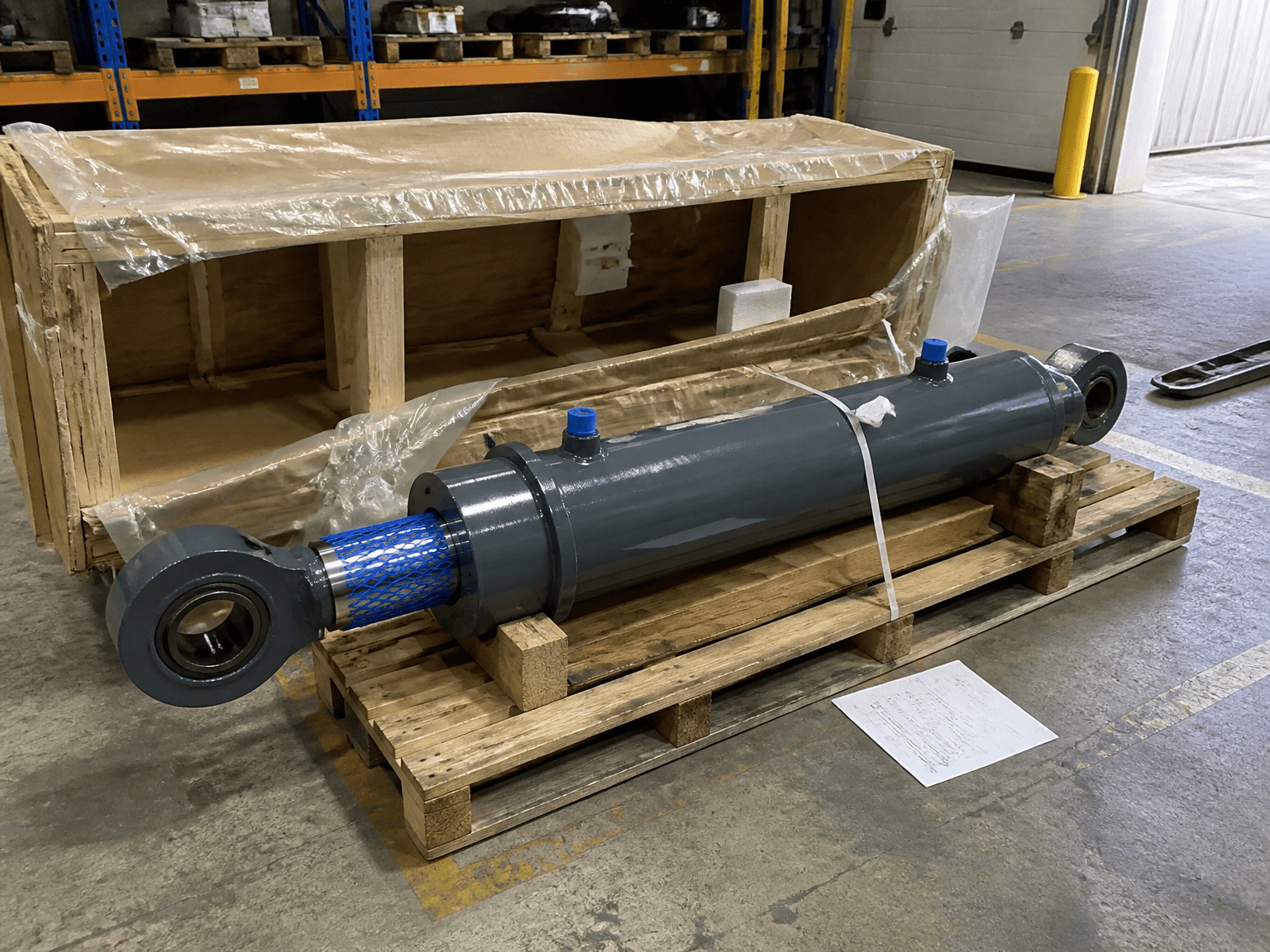
Check the following points:
Hänchen's installation instructions begin with checking the delivery for completeness and damage. That is a useful discipline for any replacement or OEM project: do not discover a missing mounting part after the cylinder has already been moved into storage.
If damage is visible, isolate the item and document it before cleaning, painting or attempting to move the piston rod.
Parker's cylinder guidance says port protector plugs should remain in place until installation. The reason is practical. Open hydraulic ports provide a direct path for dust, metal chips, moisture and other contamination into the cylinder.
Do not remove the plugs simply to check the thread. Confirm the port type from the drawing or product documentation. When piping is ready to be installed, clean the lines and fittings before making the connection. Parker also warns that piping should be thoroughly cleaned to remove chips and burrs from threading or flaring work.
A clean connection is not only a commissioning preference. Contamination can damage seals, valves and finished cylinder surfaces after the machine starts cycling.
Parker recommends an indoor storage area with a dry, clean and noncorrosive atmosphere. The cylinder should be protected from internal corrosion as well as external impact.
The storage area should also limit:
Do not use the cylinder as a support for other materials. Keep identification and product documents with the item or in a traceable warehouse record. A cylinder that loses its model or order information becomes harder to verify when the machine is finally ready.
For conventional industrial cylinders, Parker recommends vertical storage with the piston rod up whenever possible. This position can reduce corrosion risk from condensation inside the cylinder and help minimize seal damage.
The correct position can depend on the cylinder design, stroke, weight, installed accessories and the manufacturer's instructions. Telescopic cylinders, single-acting cylinders and cylinders with special storage requirements should not be placed according to a generic warehouse rule.
If a cylinder must be stored horizontally, support it across suitable points so that the tube, rod and mounting accessories are not bent or damaged. Prevent rolling and protect the piston rod from contact with the rack or floor.
If the cylinder is stored full of hydraulic fluid, Parker notes that fluid expansion caused by temperature changes must be considered. This is a point for the manufacturer or hydraulic engineer to confirm before long-term storage.
The piston rod is one of the most important surfaces to protect during storage. Rust, dents and scratches can damage the rod seal and guide when the cylinder starts moving.
Parker recommends coating exposed unpainted surfaces, such as the piston rod, with a rust-inhibiting compound when equipment is stored outside for extended periods. The correct protection product and removal method should be confirmed for the rod finish, seal material and storage duration.
Before installation, inspect the rod under good light. Look for:
Do not polish, sand or repaint a damaged rod as a quick fix. Record the condition and ask the cylinder supplier or qualified repair team whether the part can be accepted.
Before assembly, compare the cylinder with the approved drawing and order details. Confirm the overall length, stroke, mounting style, port orientation, rod-end connection and included accessories.
Hänchen instructs installers to remove sealing plugs or cover plates used to protect the product during transport before assembly. Remove these protections at the correct stage: keep the hydraulic ports closed until the piping and fittings are ready, then clean the connection area before opening the circuit.
The installation team should also confirm that:
Parker and Hänchen both emphasize that cylinder installation is a specialist task. Follow the machine builder's lockout, lifting and pressure-release procedures.
A hydraulic cylinder should not be used to pull a machine structure into position. After storage, the installation team should confirm that the support points, mounting faces and connected machine members meet without forcing the cylinder into place. Hänchen advises stress-free installation and warns against exceeding permissible side loads on the piston rod.
Before commissioning, check the installation from the cylinder outward:
- Mounting faces are clean and fully seated
- The cylinder is supported without twisting the tube
- The rod-end connection does not force the rod sideways
- The rod can reach both ends of the intended stroke without contact
- Hoses have enough movement allowance and do not rub on the frame
- Guards and nearby parts leave the required clearance
Parker's safety guidance also treats alignment as an installation responsibility. Make this check before pressure is applied, while any interference can still be corrected without loading the cylinder or the machine structure.
Air trapped in a hydraulic cylinder can affect operation and component behavior. Hänchen's installation guidance recommends positioning venting ports at the top where applicable and venting the cylinder before start-up.
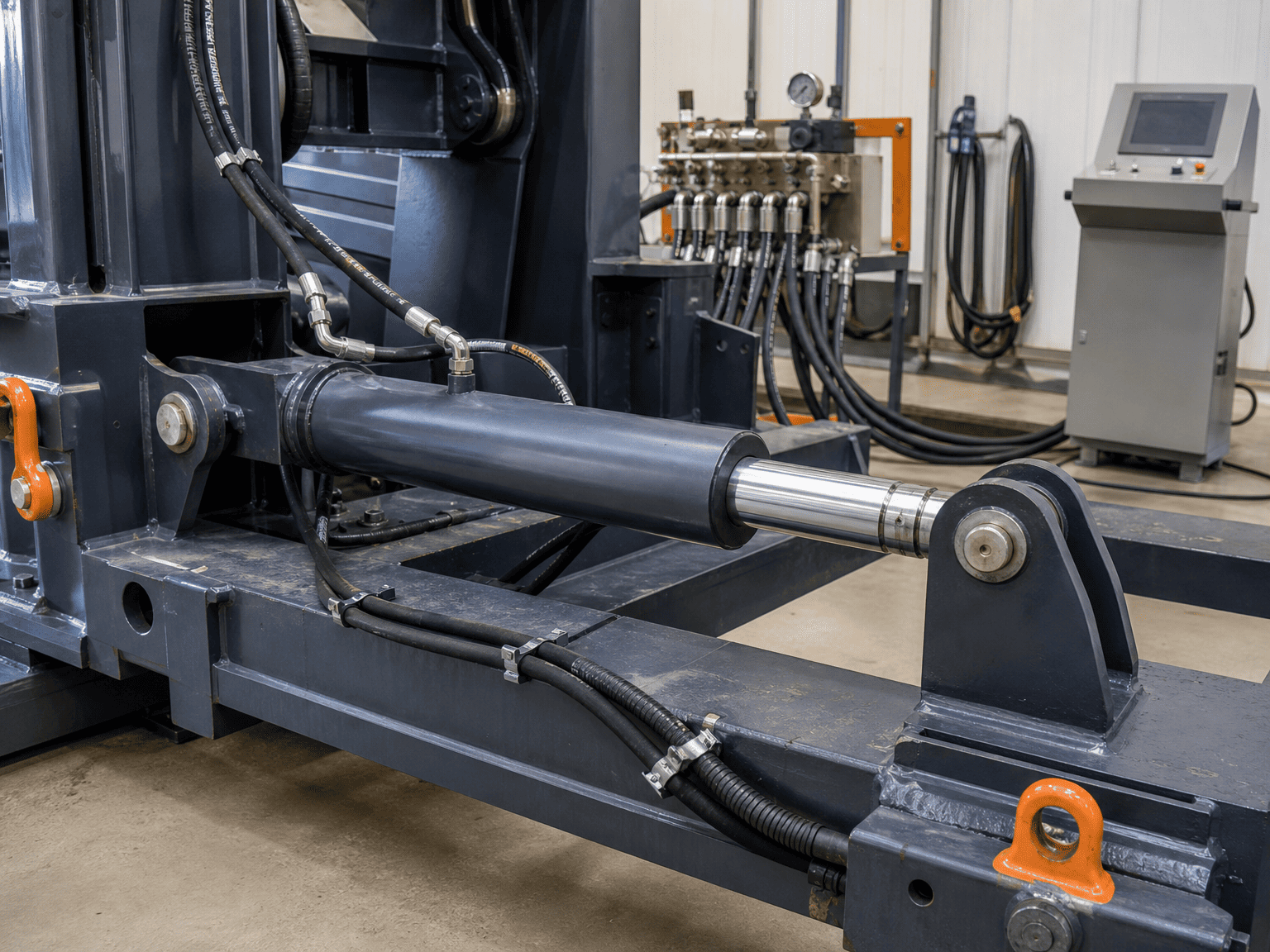
The exact venting procedure depends on the cylinder design and machine circuit. Use the manufacturer's instructions, keep pressure controlled and make sure discharged fluid and air cannot create a hazard.
After venting, Hänchen recommends slow, no-load, low-pressure movement before normal operation. The commissioning team should observe:
- Smooth extension and retraction
- Leaks at ports, seals and fittings
- Rod movement and alignment
- Unexpected noise, chatter or impact
- Hose movement and contact with the frame
- End-of-stroke behavior and cushioning, if fitted
Do not move directly from warehouse storage to a full-load test without this controlled inspection stage.
For each cylinder, keep a short record containing:
- Model and serial or order reference
- Date received and storage location
- Packaging or transport damage
- Port-plug and rod-protection condition
- Storage position and inspection dates
- Visible corrosion or surface damage
- Approved drawing and installation manual
- Name of the person who released it for installation
This record helps an OEM separate transport damage, storage damage and operating damage when a problem appears later. It also gives the installation team a clear starting point instead of relying on memory.
If a cylinder has been stored for an extended period, exposed to weather or received with transport damage, send the model information, photographs, storage history and installation drawing before connecting it to the machine. A supplier can then help distinguish a normal pre-installation check from a condition that requires repair or replacement.
The best commissioning result starts before the first pressure test: protect the cylinder, keep the ports clean, verify the installation and record what you found