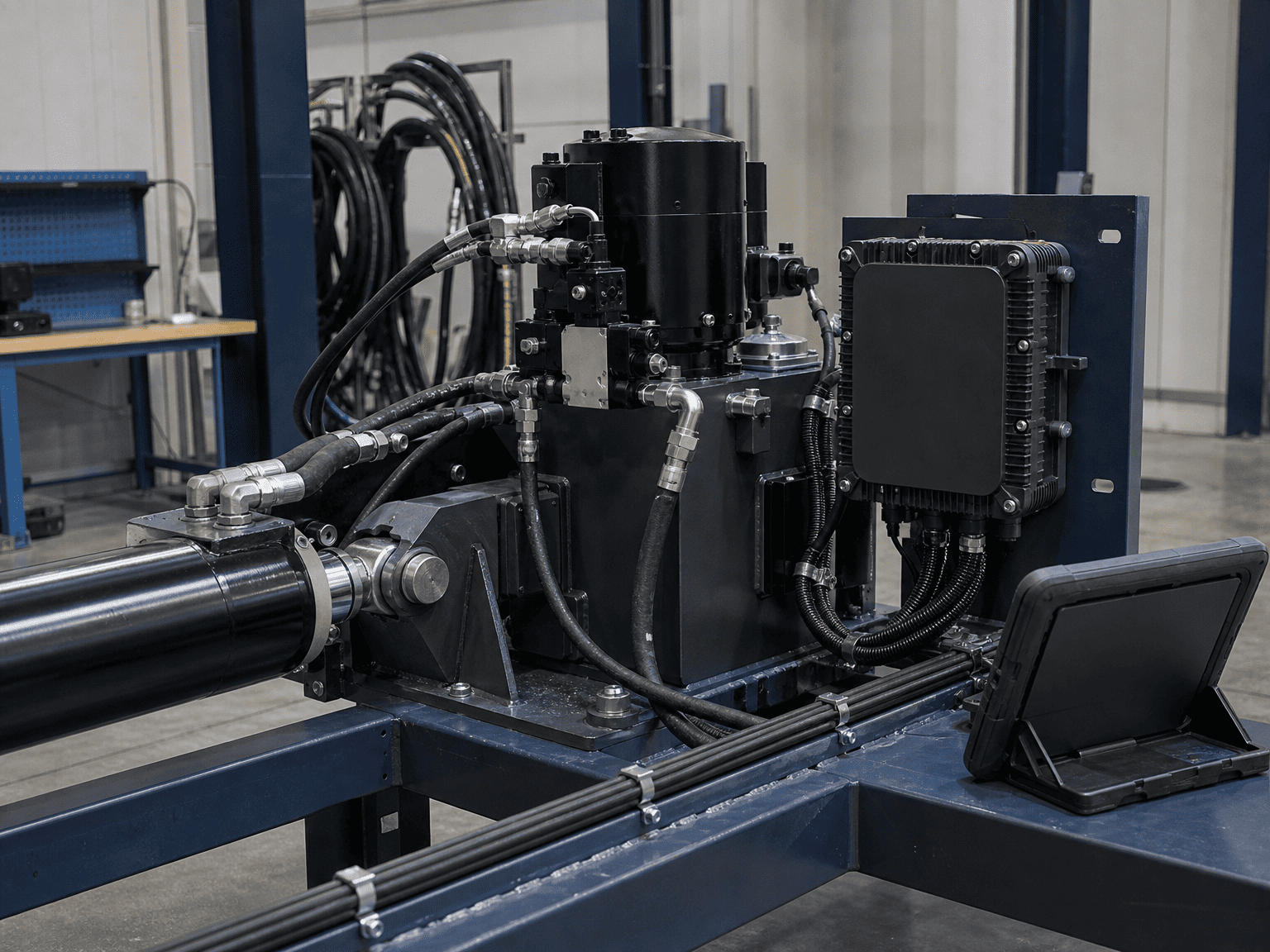
Hydraulic power is not new. What is changing is how much of the system can now be seen and understood while the machine is working.
A recent CONEXPO-CON/AGG technology article published on August 10, 2026 describes the digitalization of hydraulic components in off-highway equipment. The article points to a practical stack built from sensors, embedded controllers, edge gateways, machine networks and cloud analytics. A separate Fluid Power World report published on September 10, 2026 also highlighted connectivity as a current direction for hydraulic and pneumatic manufacturers.
This is more than a software story. For an OEM, it changes the questions asked during component selection.
A connected hydraulic system does not mean that every cylinder suddenly needs a cloud connection. It means that selected operating information can be captured, processed and used by the machine control or service team.
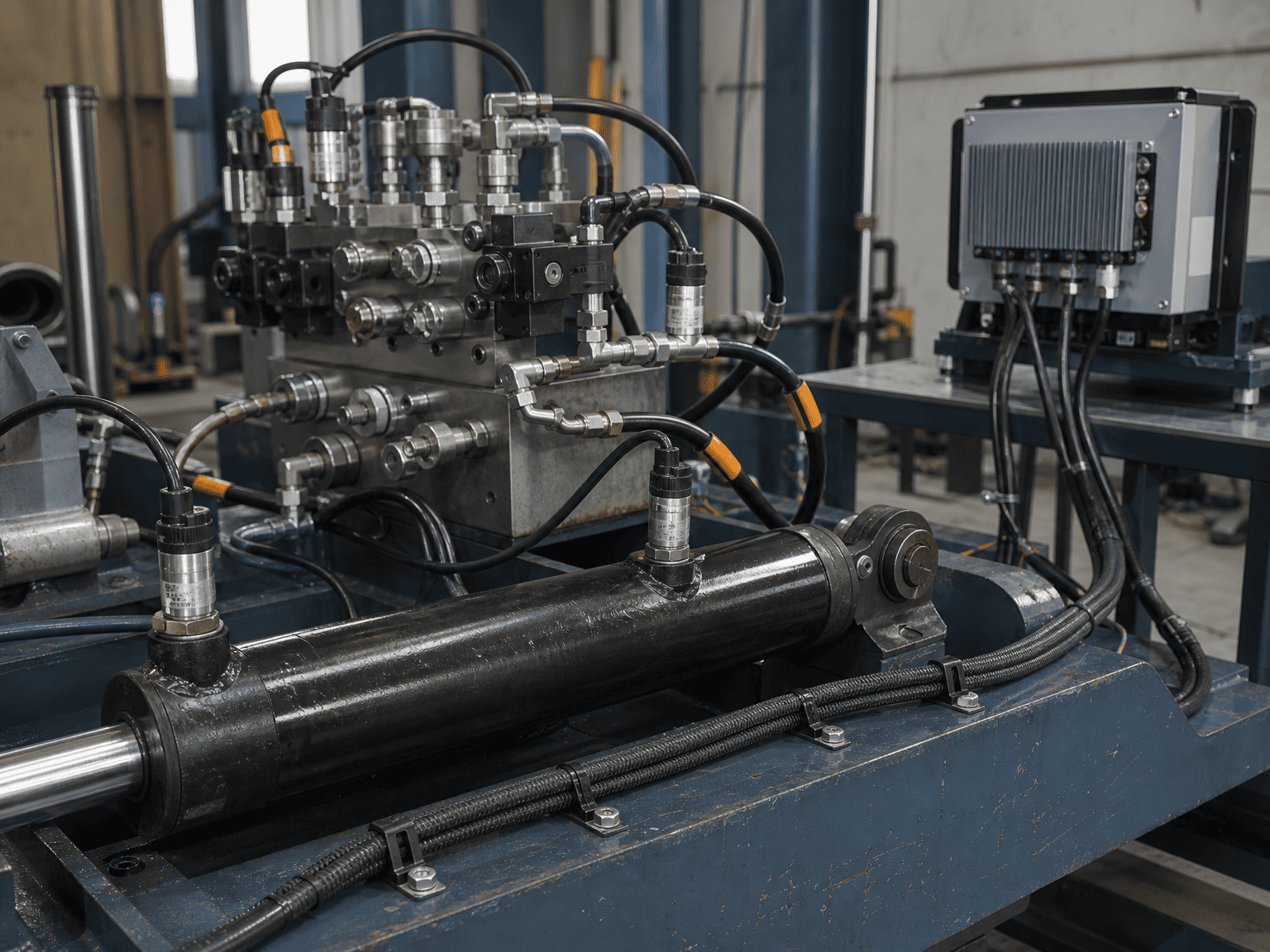
Depending on the machine, the information may include pressure, temperature, flow, position, vibration or contamination-related signals. A local controller can use this information for control and diagnostics. An edge gateway can collect data for a telematics platform or service tool.
This separation is useful for OEMs that want better service information without making the machine dependent on an unreliable connection.
For buyers, the value is not the word “smart” on a brochure. The value is better information at the right time.
A connected machine may help a fleet identify abnormal pressure behavior before a full failure, compare duty cycles between units, or plan a service visit around actual operating evidence. It may also help an OEM understand how a hydraulic component behaves in the field instead of relying only on laboratory assumptions.
That does not make predictive maintenance automatic. A sensor can report a condition; engineers still need to define what the signal means, what action is appropriate and how a technician should confirm the finding.
Traditional hydraulic sourcing often starts with bore, rod, stroke, mounting style and pressure. Those details remain essential. Connected-machine projects add another layer of questions:
Is a position sensor required, or is end-of-stroke confirmation enough?
The answers depend on the equipment architecture. A standard replacement cylinder should not be turned into a connected component without a defined electrical, mechanical and service requirement.
The CONEXPO-CON/AGG article also places cybersecurity inside the digitalization conversation. Once hydraulic functions are connected to controllers, gateways or cloud systems, the machine has more digital interfaces to protect.
For OEMs selling into regulated markets, security questions may affect the whole supply chain. Buyers may need information about device identity, update control, vulnerability handling, data access and system recovery. These requirements are not solved by adding a sensor at the end of a project.
The practical lesson is simple: if a hydraulic component will be part of a connected machine, its electrical and data requirements should be discussed during the design stage, not after production drawings are finished.
Not every machine needs a complete digital transformation. A phased approach is often easier to manage.
Start with one service problem that matters. For example, the team may want better visibility into a recurring actuator fault or a difficult-to-diagnose duty cycle. Define what information is needed, where it will be measured and who will act on the result.
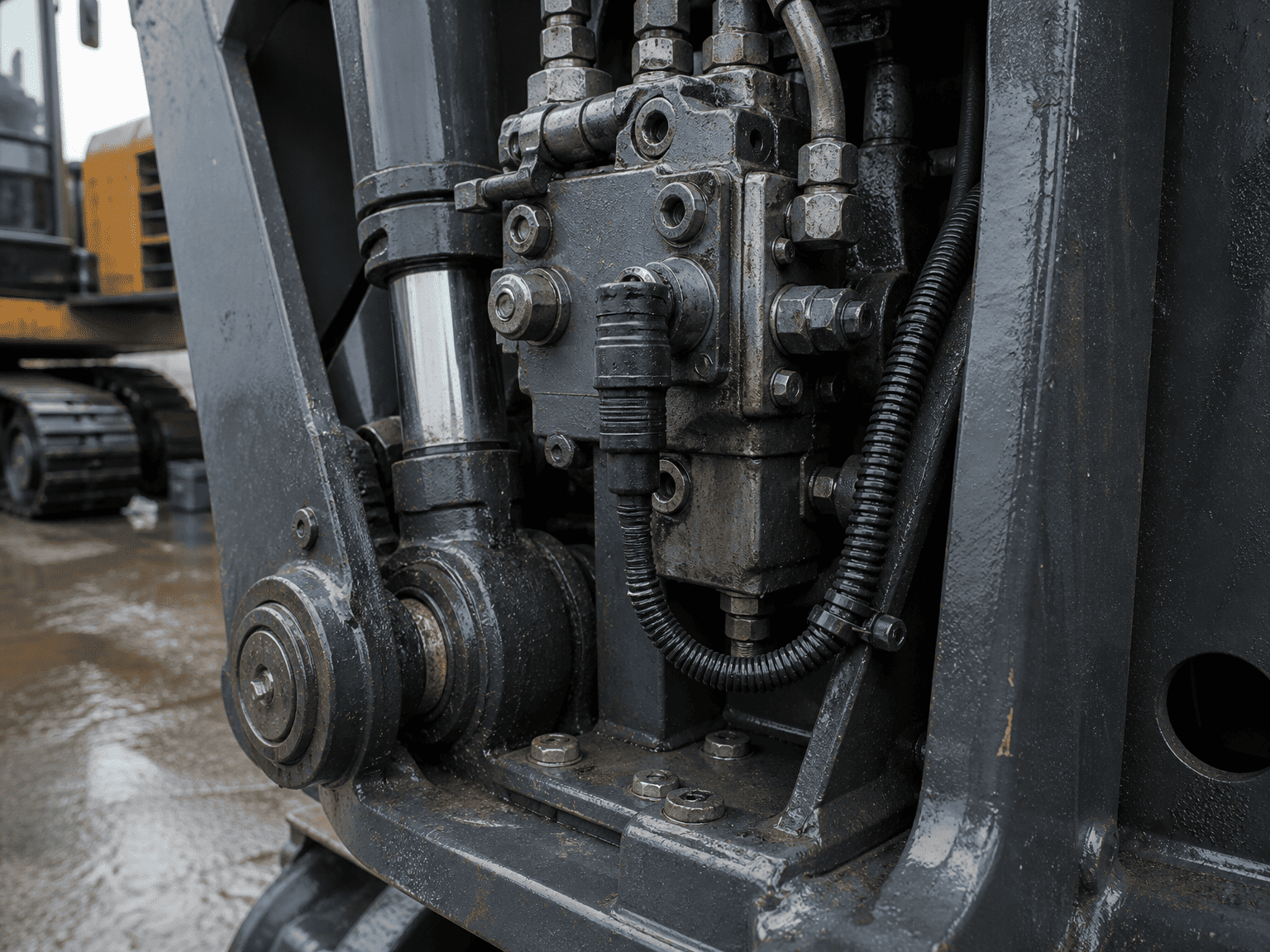
Then check the physical installation. Hydraulic components on off-highway equipment face vibration, water, dust, temperature changes and impact. A sensor or connector that works in a cabinet may not be suitable beside a moving cylinder or exposed valve block.
Finally, write the fallback behavior. The machine must remain safe if a sensor gives an invalid signal, a network is interrupted or a remote service platform is unavailable.
The new demand is not that every supplier must sell a cloud platform. It is that suppliers need to understand the machine around the cylinder or power unit.
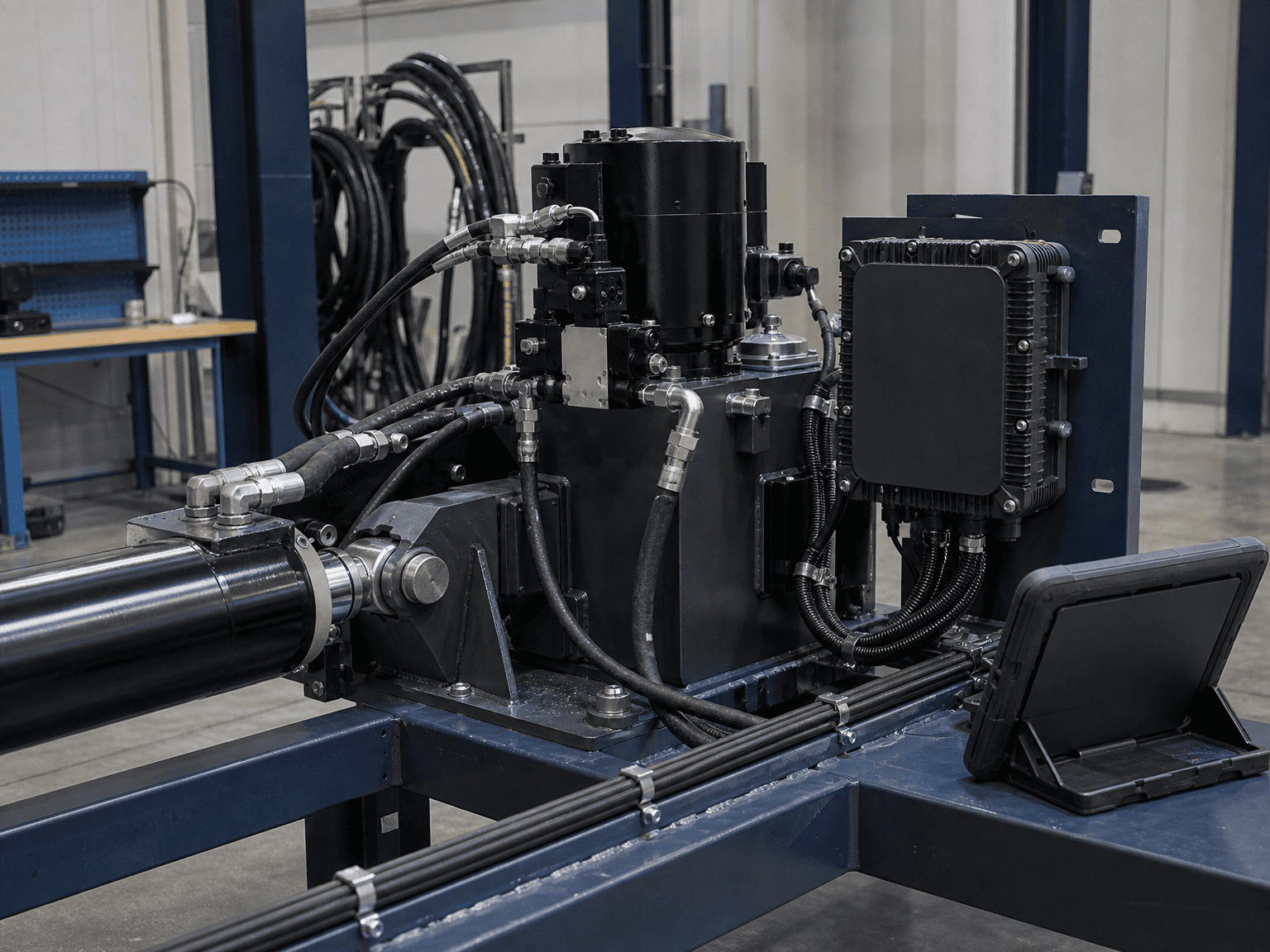
A useful technical conversation may include the cylinder's mounting environment, sensor space, cable routing, port orientation, operating temperature, duty cycle and inspection method. For a power unit, the discussion may also include control interfaces, electrical supply, diagnostics and the customer's service workflow.
Suppliers that can provide clear drawings, realistic application limits and practical integration information will be easier for OEMs to evaluate than suppliers that only provide a generic product label.
1. What machine problem is the connected data meant to solve?
2. Which measurement is actually needed at the component?
3. Is the function safety-critical or mainly for service visibility?
4. Where will the component operate, and what environmental exposure is expected?
5. What is the local fallback if the signal is missing or unreliable?
6. Who will install, calibrate, update and maintain the connected device?
7. Can the supplier provide the drawings and interface information required by the machine team?
These questions keep the project focused on an operating result rather than a technology label.
X. A Practical Next Step for OEM Buyers
If you are planning a connected hydraulic function, send the machine layout, actuator or power-unit requirements, environmental conditions, control architecture and the service problem you want to solve. That gives a hydraulic supplier enough context to discuss a realistic component and integration path.
Connected hydraulics is moving into procurement, but the best projects still begin with a clear machine problem and a clearly defined technical requirement.