In severe operating environments, piston rod corrosion is rarely just a cosmetic blemish. A single microscopic pinprick of rust on an exposed cylinder rod acts like a serrated razor blade.
Every time the hydraulic cylinder retracts, that rough iron-oxide crater slices directly across the polyurethane rod wiper and primary U-cup pressure seal. Within dozens of cycles:
For machines exposed to coastal marine air, highway de-icing brines (calcium and magnesium chloride), or acidic agricultural chemicals, standard catalog hard chrome rods often blister and pit within a single season. Choosing the right surface metallurgy is the most cost-effective line of defense.
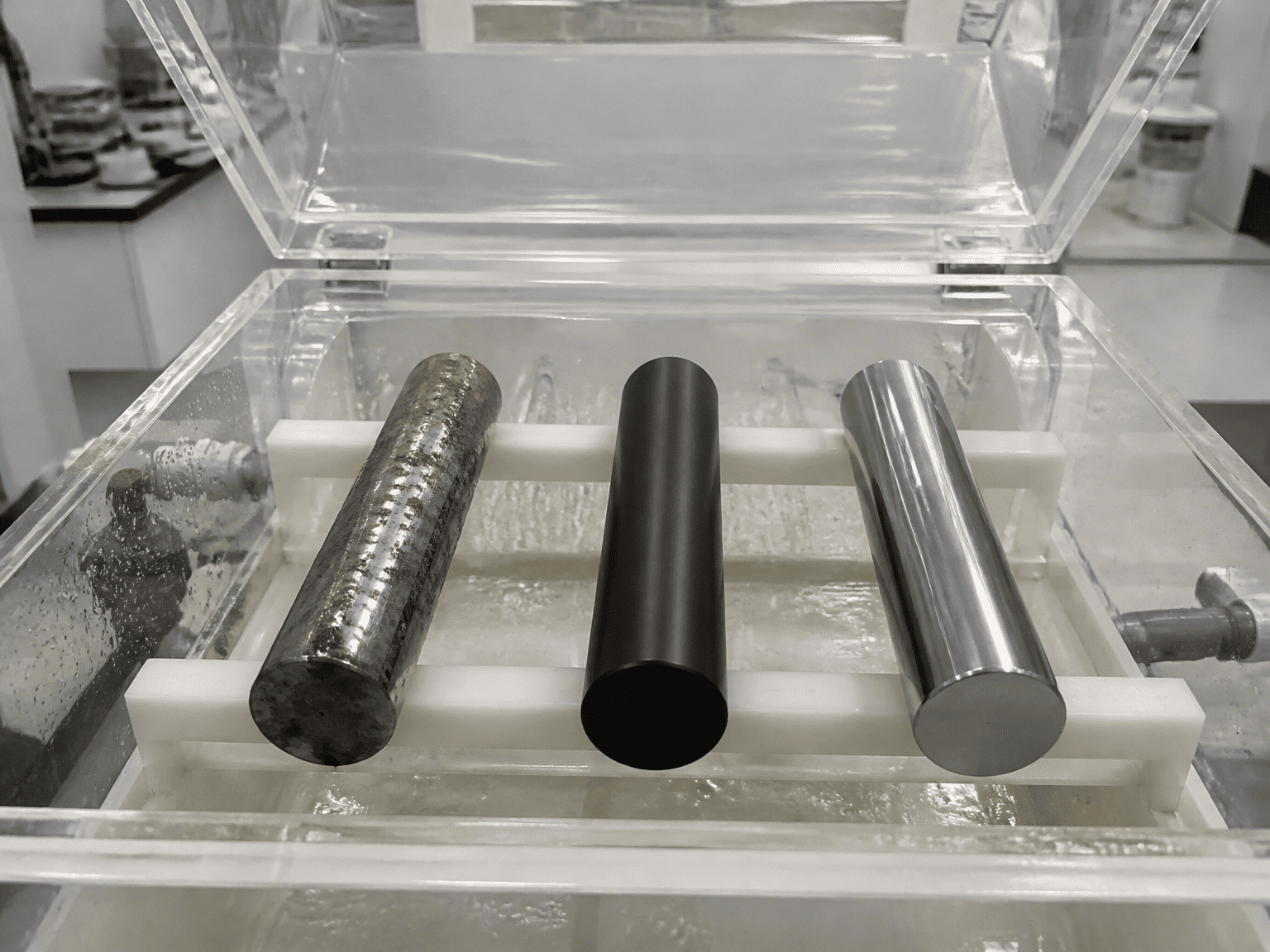
[ 1. Standard Hard Chrome ] ===> Micro-cracked electroplated shell (Relies on pure surface barrier)
[ 2. QPQ Liquid Nitriding ] ===> Thermal chemical diffusion layer into the steel (No coating to flake)
[ 3. Nickel-Chrome Dual Layer] ===> Dense non-porous nickel barrier + sacrificial hard chrome outer layer
Standard hard chrome remains the global benchmark for indoor and light-duty industrial machinery.
- The Process: A layer of metallic chromium (typically 20 to 30 microns thick) is electroplated onto induction-hardened carbon steel and polished to a mirror finish (Ra 0.1 to 0.2 microns).
- The Microscopic Reality: All electrodeposited chromium naturally contains thousands of microscopic stress fractures ("micro-cracks"). In dry or clean oil environments, these micro-cracks hold lubricating oil film beneficially. However, in aggressive chemical environments, corrosive electrolytes seep straight through the micro-cracks to the raw base steel underneath. Rust blossoms beneath the chrome, lifting the plating off in sharp flakes.
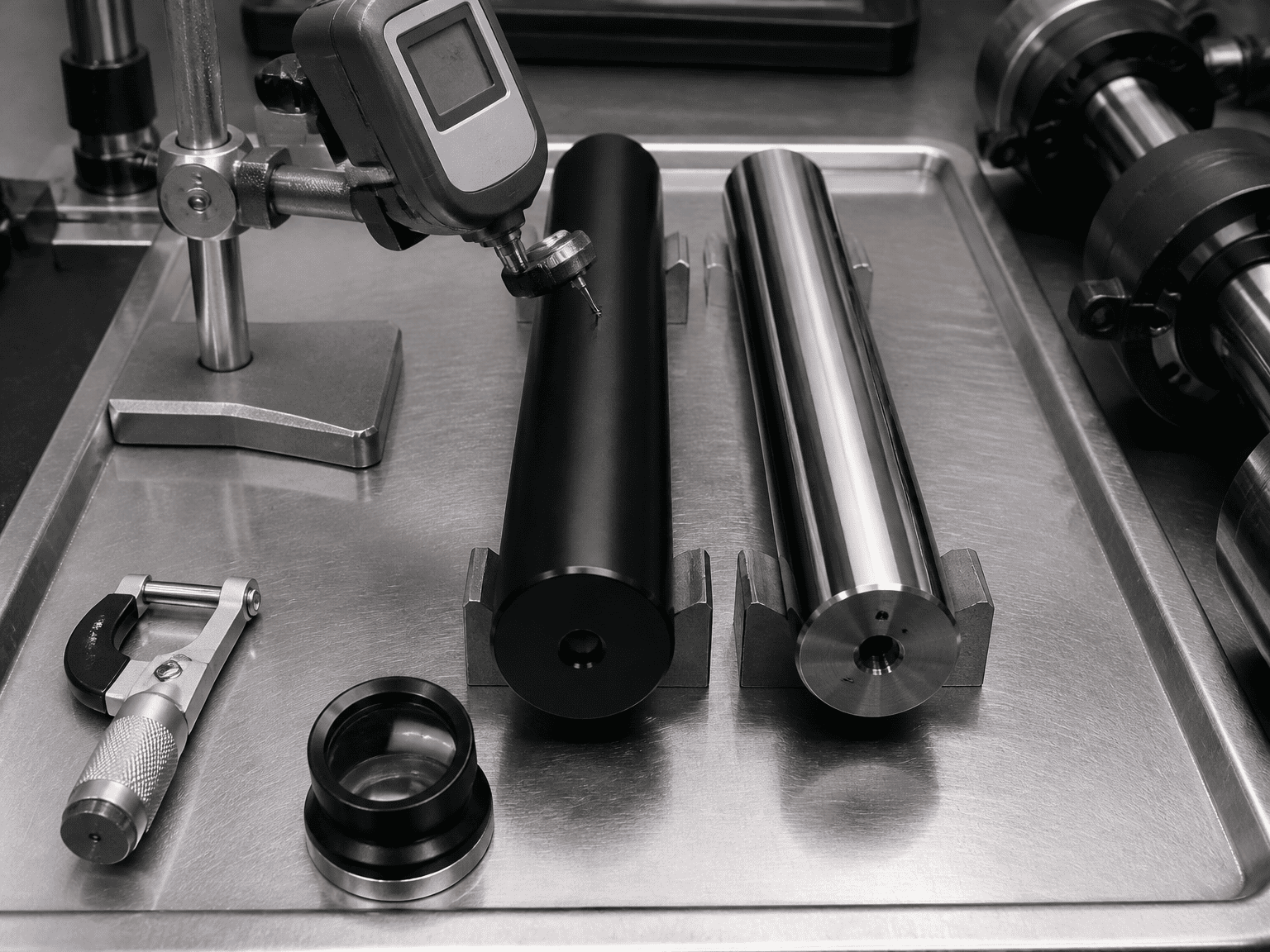
QPQ is not a surface plating that sits on top of the steel; it is a thermochemical diffusion process that fundamentally transforms the outer molecular structure of the steel itself.
- The Process: The raw steel rod undergoes liquid ferritic nitrocarburizing in a specialized molten salt bath, followed by mechanical polishing and secondary oxidation. Nitrogen and carbon atoms diffuse deep into the steel lattice, creating an extremely hard iron-nitride "compound layer" (typically 15 to 25 microns deep) backed by a deeper nitrogen diffusion zone.
- Key Advantage: Because there is no separate electroplated shell, QPQ cannot blister, chip, peel, or flake off. Furthermore, the dense black iron-oxide finish seals surface micropores, offering exceptional resistance to road salt and gravel chipping.
When equipment operates directly in saltwater splash zones or offshore drilling rigs, dual-layer nickel-chrome provides maximum galvanic protection.
- The Process: A thick, pore-free ductile nickel sub-layer (30 to 50 microns) is electroplated first onto the steel, followed by a standard hard chrome topcoat (20 to 30 microns).
- Key Advantage: The pure nickel base layer provides an impermeable, corrosion-proof chemical barrier that completely seals the steel substrate. The outer chromium topcoat provides high surface hardness and scratch resistance. Even if aggressive saltwater penetrates the chrome micro-cracks, it halts dead at the nickel barrier without contacting the base steel.
| Performance Parameter | Hard Chrome | QPQ Liquid Nitriding | Dual-Layer Nickel-Chrome |
|---|---|---|---|
| ASTM B117 Salt Spray Rating | 100 to 200 Hours | 400 to 800+ Hours | 1,000 to 1,500+ Hours |
| Surface Hardness | 850 to 1,000 HV | 900 to 1,150 HV | 850 to 1,000 HV (Chrome layer) |
| Gravel / Impact Chipping | Moderate (Prone to micro-chipping) | Excellent (No flaking or peeling) | Good (Nickel absorbs impact shock) |
| Surface Color & Aesthetics | Bright Mirror Silver | Satin Gunmetal / Matte Black | Bright Mirror Silver |
| De-Icing Chemical Resistance | Poor (Pits rapidly in MgCl₂/CaCl₂) | Outstanding (Resists chemical brine) | Outstanding (Impermeable barrier) |
| Relative Cost Factor | Baseline ($1.0×) | Moderate ($1.2 to 1.4×) | Premium ($1.8 to 2.5×) |
+-----------------------------+------------------------------------+--------------------------------+
| Standard Chrome | QPQ Liquid Nitriding | Nickel-Chrome Dual |
+-----------------------------+------------------------------------+--------------------------------+
| • Indoor factory automation | • Highway snowplows & salt spreaders| • Offshore cranes & winches |
| • Stationary shop presses | • Agriculture & fertilizer tanks | • Coastal container ship hoists|
| • Enclosed machine tools | • Refuse side & rear loaders | • Splash-zone marine docks |
| • Clean warehouse forklifts | • Forestry & aggregate haulers | • Subsea hydraulic actuators |
+-----------------------------+------------------------------------+--------------------------------+
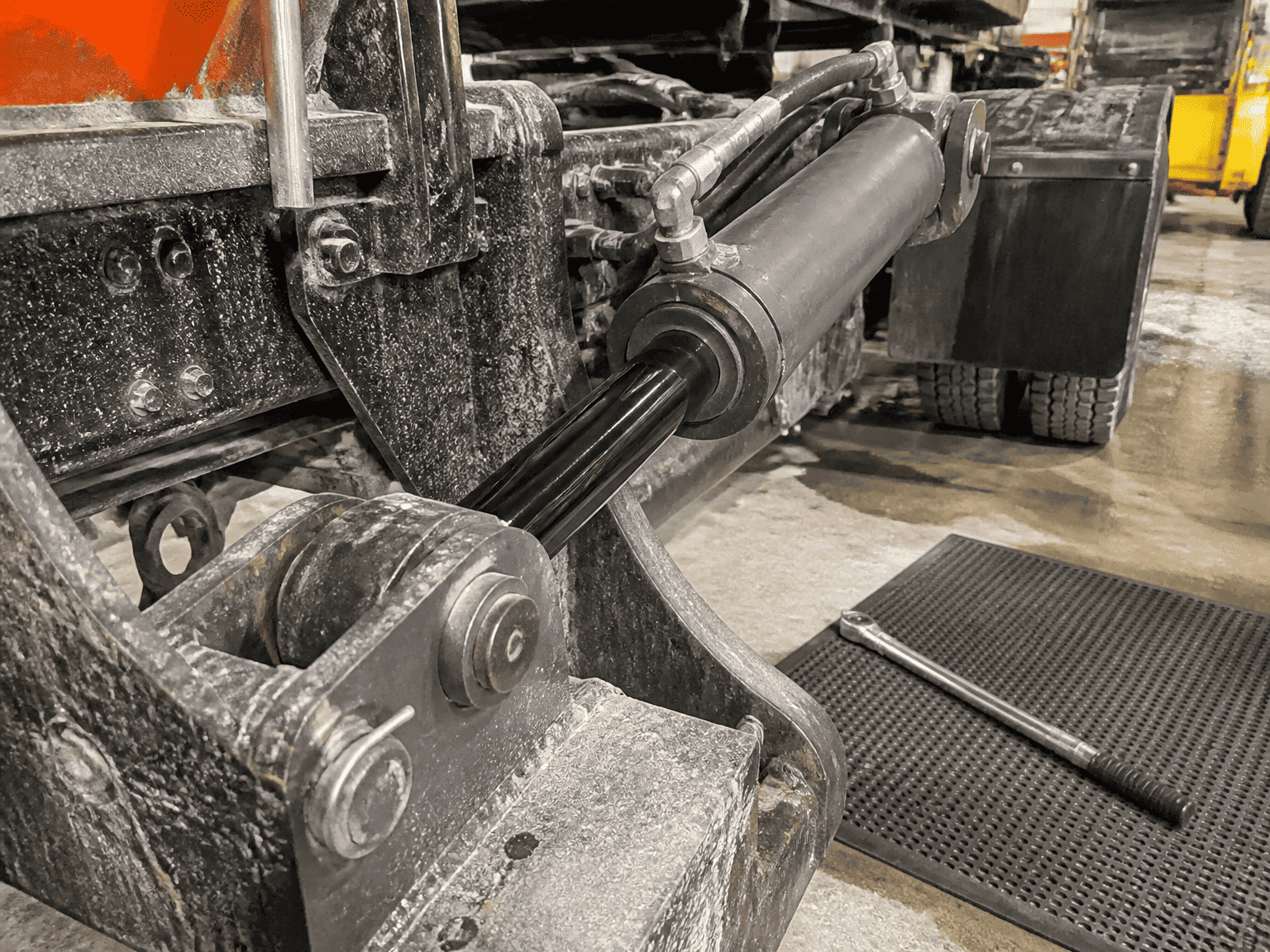
Municipal winter service vehicles drive directly through pressurized clouds of liquid calcium chloride and wet rock salt. Salt spray blasts the extended hydraulic cylinder rod along with high-velocity road gravel. QPQ's chip-resistant, unified diffusion layer prevents localized pitting, while its sleek black finish reduces solar glare for oncoming traffic.
Liquid nitrogen fertilizers and potash slurries are notoriously aggressive against standard electroplated chrome. QPQ provides the chemical passivity needed to survive seasonal chemical exposure without seizing the gland seals.
In marine splash zones where equipment is permanently exposed to ocean mist and tidal spray, dual-layer nickel-chrome is the recognized global standard. The higher initial investment is offset by preventing offshore hydraulic leaks and expensive vessel downtime.
Corrosion performance ratings referenced in this guide are based on standard ASTM B117 neutral salt spray laboratory testing. Field service life may vary depending on local chemical concentrations, mechanical abrasion cycles, ultraviolet exposure, and fleet wash-down protocols.
HCIC manufactures precision custom hydraulic cylinders engineered with induction-hardened hard chrome, QPQ liquid nitriding, and marine-grade nickel-chrome rods for equipment builders worldwide.