HCIC a leading global manufacturer of custom hydraulic cylinders and power units since 1998, today announced the formal commissioning of its new multi-million-dollar Automated CNC Skiving & Roller Burnishing (SRB) Production Line.
Installed at HCIC’s primary hydraulic manufacturing facility, this advanced heavy-duty machining installation is engineered specifically for deep-hole finishing of seamless steel cylinder barrels. The facility can process tube inner diameters from Ø50 mm up to Ø400 mm (1.97" to 15.75") and single-pass working lengths up to 12 meters (39.4 feet), significantly expanding HCIC's manufacturing bandwidth for mining, crane, marine, long-stroke telescopic, and heavy industrial cylinders.
| Machining Process | Combined Single-Pass CNC Skiving & Roller Burnish |
|---|---|
| Tube Inner Diameter (Bore) Range | Ø50 mm to Ø400 mm (1.97" to 15.75") |
| Maximum Single-Pass Stroke Length | Up to 12,000 mm (12.0 meters / 39.4 feet) |
| Achieved Surface Roughness (Ra) | Ra 0.08 to 0.20 μm (3.2 to 8.0 micro-inches) |
| Bore Tolerance Standard | ISO H8 / H9 High-Precision Bore Dimensional Class |
| Tube Material Capability | St52-3, E355, 27SiMn, 4140, Q355JR Alloy Steels |
| Quality Inspection Integration | Inline Ultrasonic Thickness & Multi-Point Air Gauge |
For decades, hydraulic cylinder manufacturing relied on multi-step rough boring followed by multi-pass abrasive stone honing. While functional, traditional honing is slow, generates high consumable waste, and can leave microscopic cross-hatch micro-grooves that accelerate elastomer seal wear.
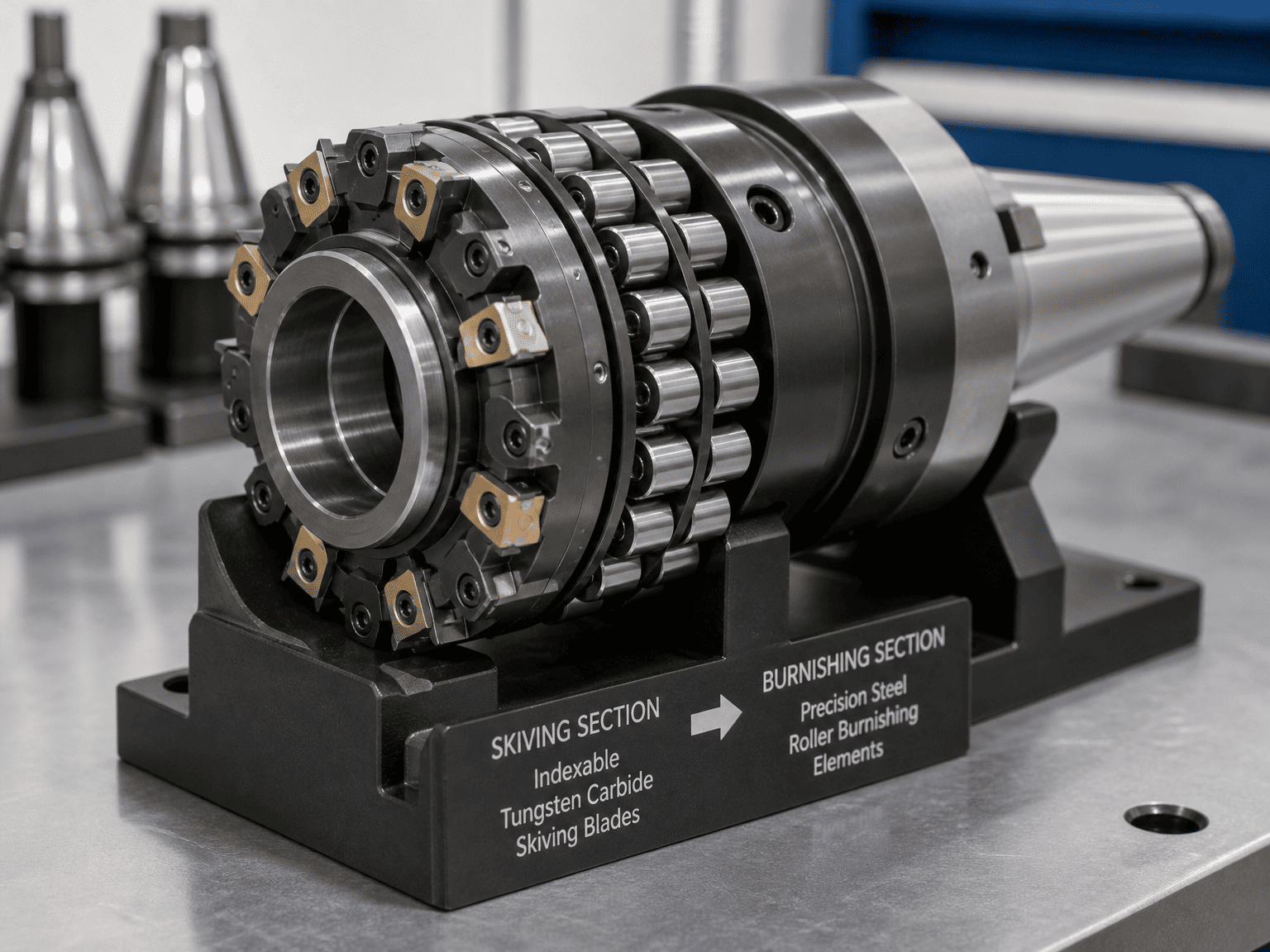
The HCIC automated CNC skiving roller burnishing cylinder line replaces these sequential operations with a single, high-efficiency continuous pass:
During the operation, high-precision carbide skiving inserts remove raw tube runout and taper. Immediately behind the cutting head, hardened steel rollers exert intense radial pressure against the bore wall. This mechanical plastic deformation flattens microscopic metal peaks into valleys, creating an ultra-smooth, mirror-like surface ($Ra \le 0.15\text{ }\mu\text{m}$) that dramatically reduces seal friction and prevents micro-abrasion.
Unlike cutting or grinding processes that introduce residual tensile surface stress, roller burnishing induces deep compressive residual stresses into the inner tube wall. This cold work hardening increases surface hardness by 15% to 30%, significantly boosting resistance to high-pressure fatigue cracking and internal barrel dilation under heavy cyclic loads.
Traditional deep-hole boring and honing of an 8-meter heavy-duty excavator or multi-stage telescopic barrel often required 4 to 6 hours of machine cycle time. The automated CNC SRB line completes the same tube in under 25 minutes, reducing overall cylinder batch manufacturing lead times from the typical 6-to-8-week industry standard down to just 3 to 4 weeks.
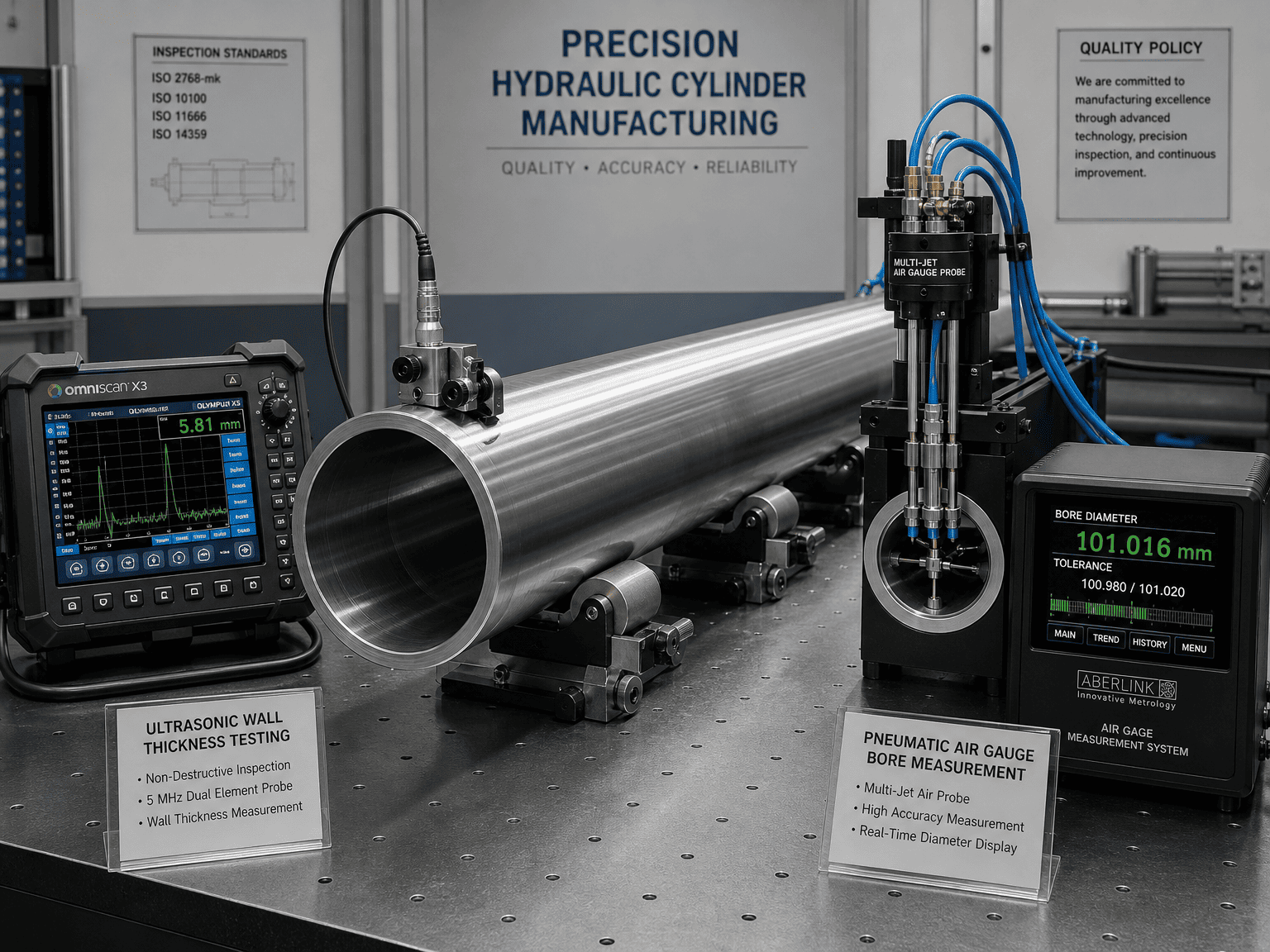
To guarantee zero-defect delivery across global export markets, the new production line is fully integrated into HCIC’s ISO 9001 quality management framework:
"Investing in world-class manufacturing infrastructure is core to HCIC's commitment to our global partners," stated David Song, Director of International Engineering at HCIC. "With the commissioning of our HCIC automated CNC skiving roller burnishing cylinder line, we provide North American and European OEM equipment builders with tier-1 precision, extended seal operating life, and industry-leading delivery speeds for large-bore and long-stroke hydraulic actuators."
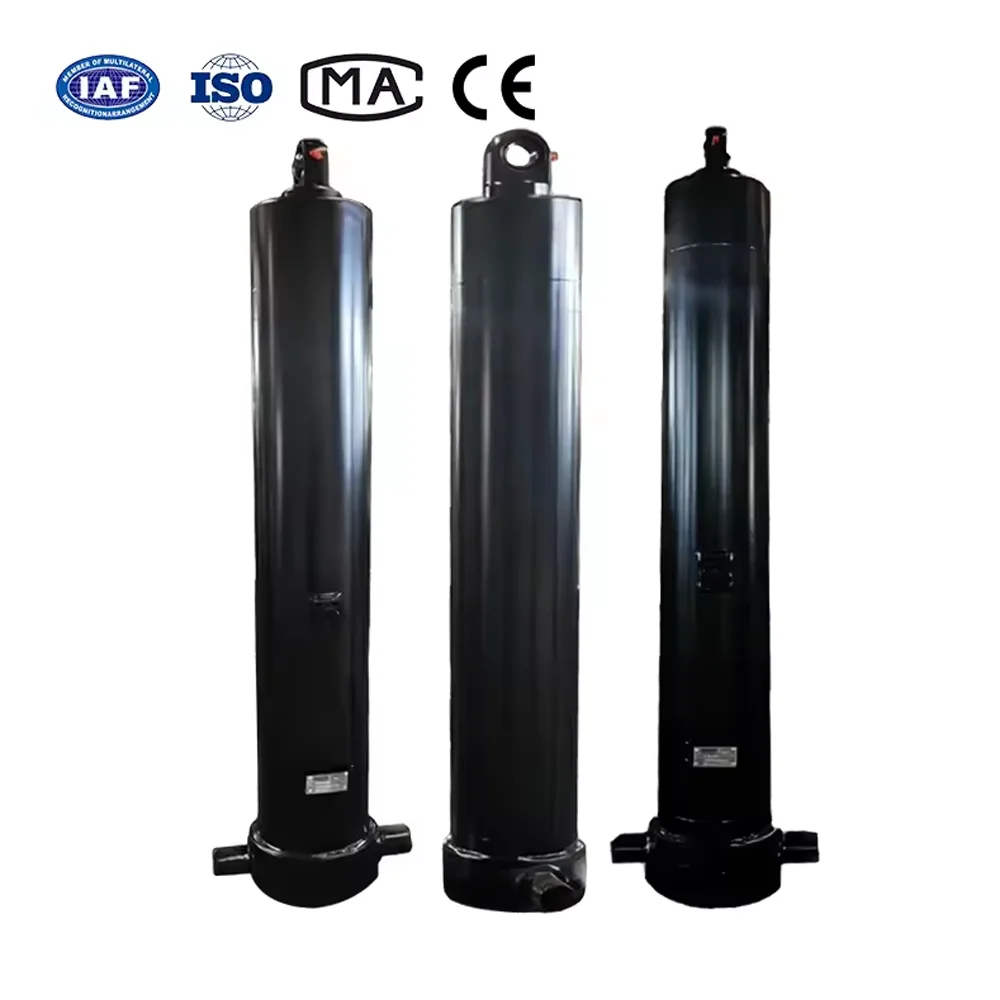
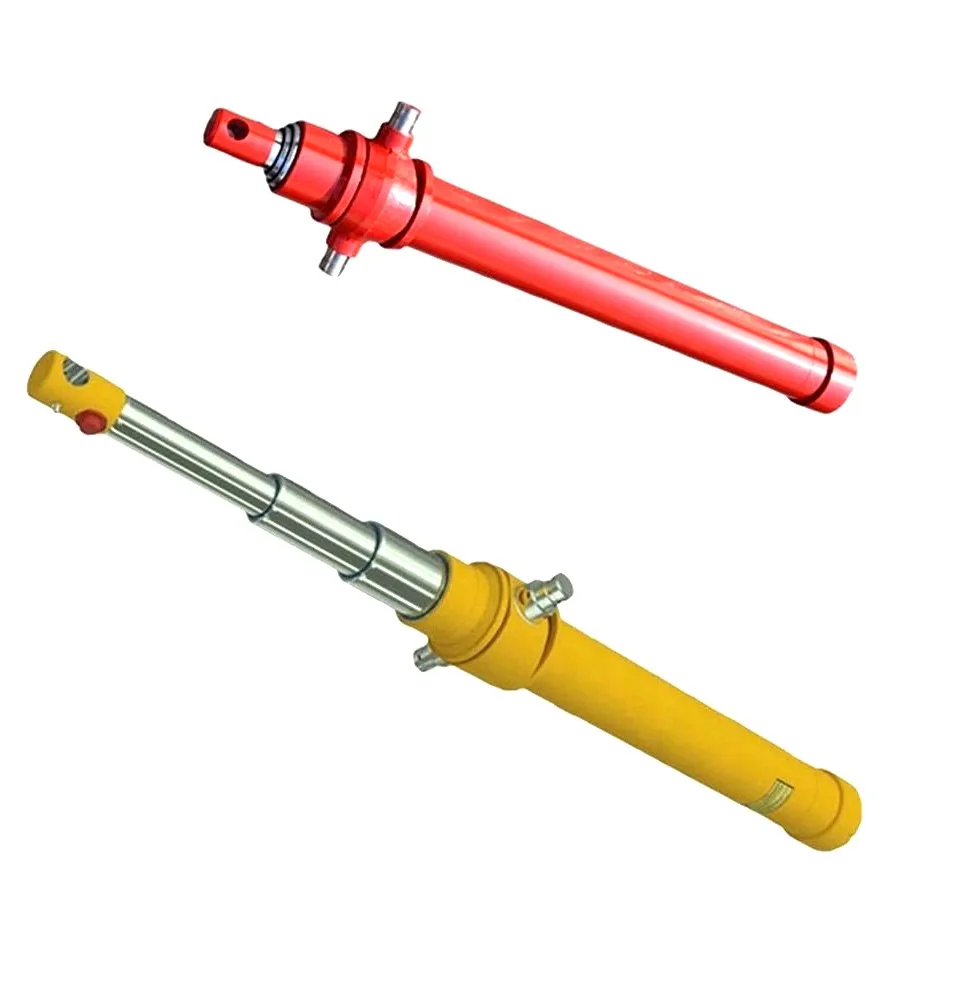
The facility is now fully operational, producing high-tonnage telescopic cylinders for dump semi-trailers, refuse packer cylinders, boom cylinders for mobile cranes, and custom tie-rod/welded cylinders for heavy industrial applications.
Specifications and tolerances referenced in this announcement reflect validated factory acceptance test parameters at HCIC's Jinan manufacturing facility. Engineering drawings, material test certificates (MTR), and ISO 9001 compliance documentation are provided with every production shipment.
To discuss large-bore cylinder manufacturing, custom OEM specifications, or request 3D STEP engineering models: