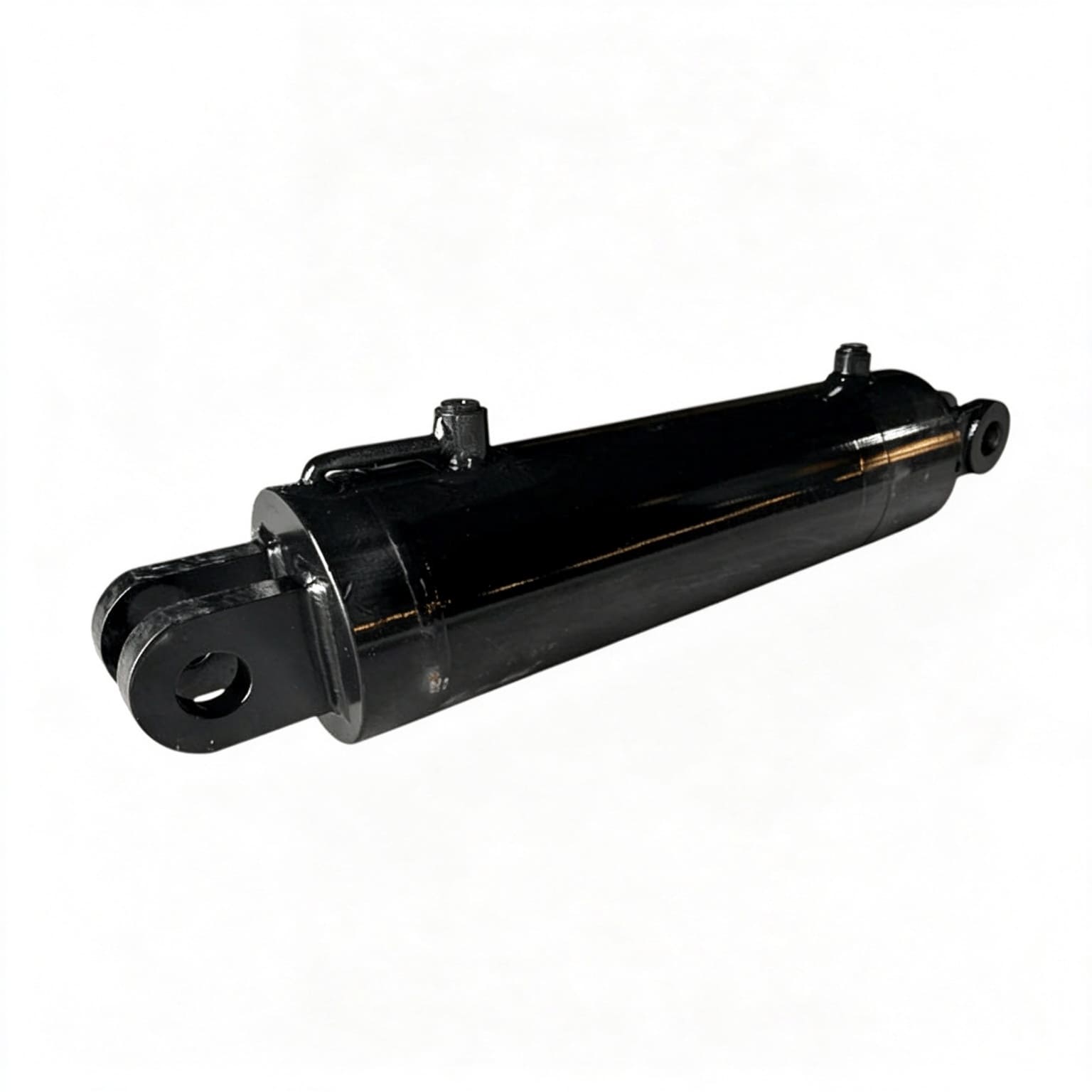
In heavy hydraulic cylinders, hard chrome electroplating provides the primary barrier against abrasive wear and environmental oxidation. Measuring layer thickness without destroying finished ground rods is a vital first-article inspection step.
| Item | Details |
|---|---|
| Quadrant Positions | Top Quadrant: 0°Right: 90°Bottom Quadrant: 180°Left: 270°(Measured on Solid Steel Rod) |
| Longitudinal Measuring Stations | 3 stations: Front (100mm), Center, Rear (100mm) |
| Radial Readings | 4 radial readings per station, total 12 Point Data Matrix |
| Target Thickness | Standard Industrial ≥ 25 μmSevere-Duty ≥ 40–50 μm |
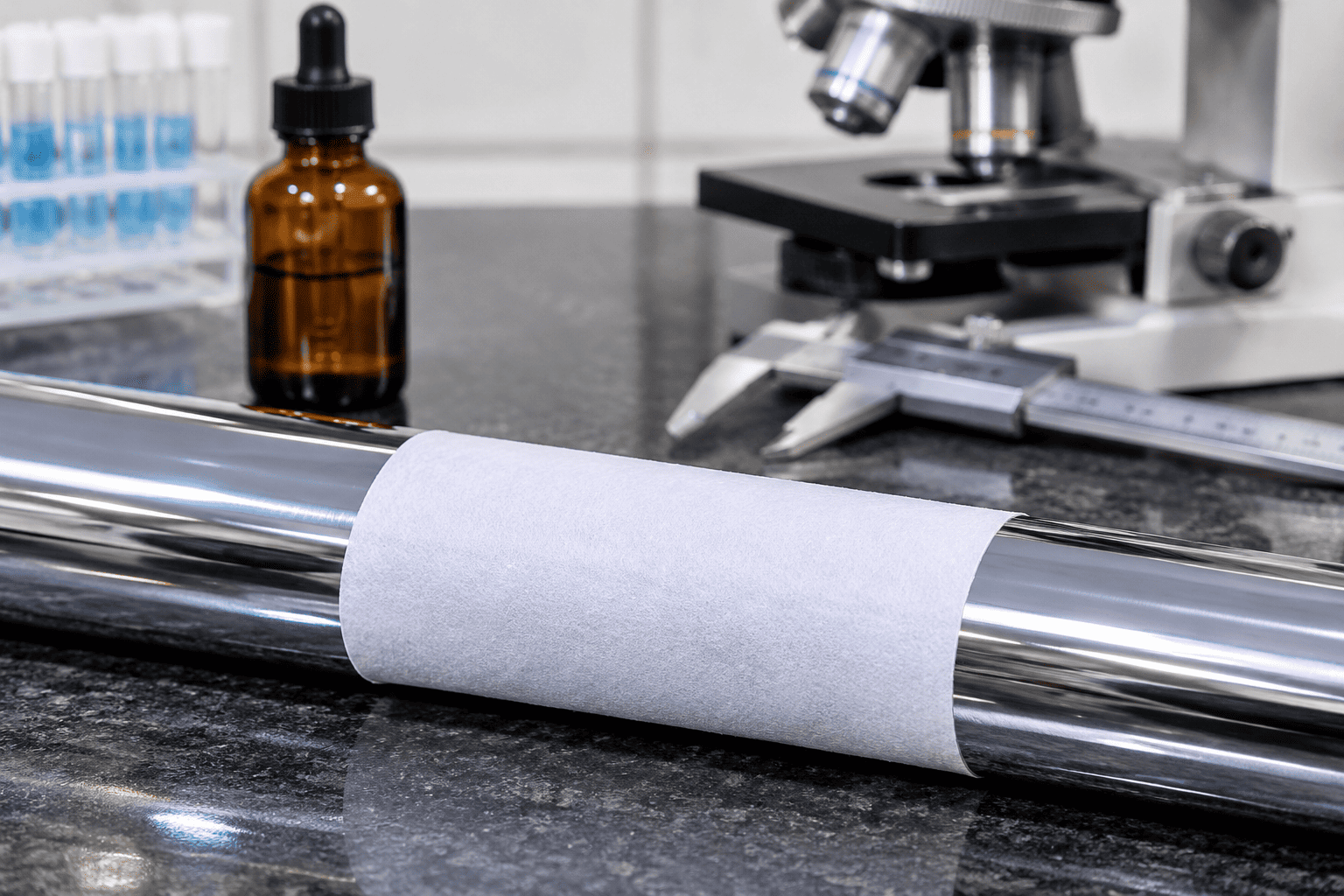
Strict enforcement of hard chrome piston rod quality standards for hydraulic cylinders during thickness verification prevents early rod pitting and oil seal extrusion under heavy multi-shift operations.
The functional scratch resistance of a hydraulic cylinder rod depends on the crystallographic hardness of the deposited chromium lattice:
Unlike decorative bright chrome, industrial hard chrome electroplating naturally develops internal stress-relief micro-cracks during electrodeposition. Controlled micro-crack networks are critical: they retain microscopic lubricating oil films that reduce seal friction without allowing corrosive moisture to reach the raw base steel.
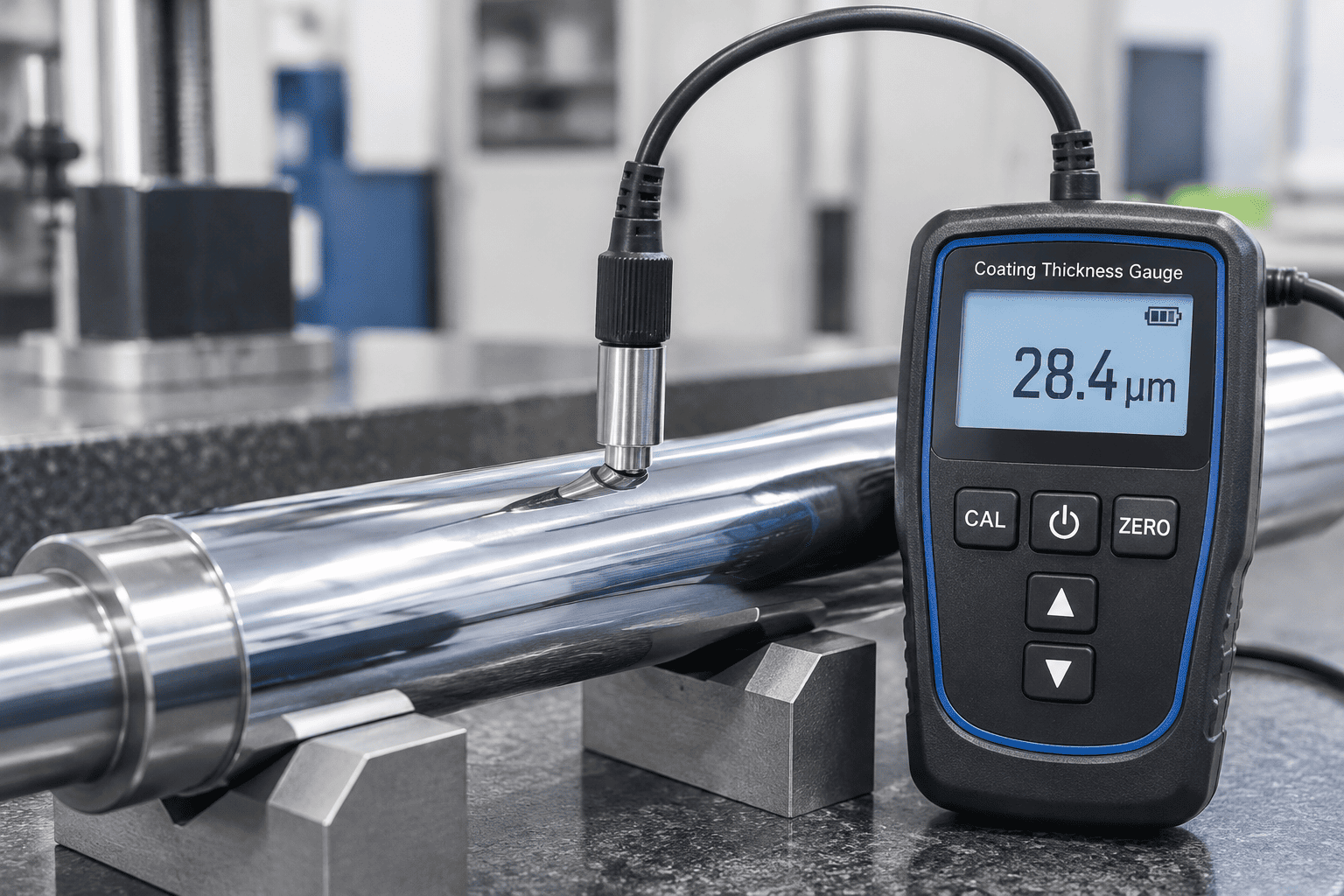
1. Reagent Formulation: Prepare a solution of 10 g/L potassium ferricyanide (K₃[Fe(CN)₆]) and 20 g/L sodium chloride (NaCl) dissolved in distilled water.
2. Application: Apply absorbent filter paper saturated with the reagent directly onto the cleaned, degreased chrome rod surface for 10minutes.
3. Reaction Chemistry: If a pore or through-crack extends completely down to the ferrous steel base, iron ions dissolve and react to form distinctive Prussian blue stains ( Fe₄[Fe(CN)₆]₃):
4. Acceptance Threshold: Under hard chrome piston rod quality standards for hydraulic cylinders, zero blue spots per 100 cm² are permitted for first-grade hydraulic cylinder rods.
Under optical metallographic inspection (200×magnification with hydrochloric acid), high-durability rods must exhibit 400 to 600 micro-cracks per linear centimeter. A closed, non-through-crack network prevents moisture migration while maintaining boundary lubrication for U-cup polyurethane seals.
Accelerated corrosion chambers simulate years of harsh coastal, de-icing chemical, and aggregate quarry exposure in a controlled laboratory environment:
Adhering to these hard chrome piston rod quality standards for hydraulic cylinders ensures that fluid power cylinders deployed in harsh road-salting, agricultural fertilizer, and coastal shipyard environments operate without seal-shredding corrosion pits.
| Metrology Dimension | Standard Quality Requirement | Verification Standard | Failure Mode Prevented |
|---|---|---|---|
| Plating Layer Thickness | ≥25μm (Standard) / ≥40–50μm (Heavy-Duty) | ISO 2178 Magnetic Induction | Premature wear-through and base steel exposure |
| Vickers Microhardness | 850 to 1,050 HV0.1 (65 to 70 HRC) | ISO 4516 / ASTM E384 | Scratching and scoring from airborne grit and sand |
| Micro-Crack Density | 400 to 600 cracks/cm (Non-through network) | Metallurgical Etch @200× | Oil film starvation or deep moisture seepage |
| Porosity Verification | Zero Blue Spots per 100 cm2 filter test | Ferroxyl Reagent (ASTM B571) | Pinhole galvanic rust and subsurface blistering |
| Neutral Salt Spray (NSS) | 500 to 1,000+ Hours (Rating 10) | ASTM B117 / ISO 9227 | Environmental rust pitting on exposed parked rods |
| Surface Finish (Ra) | Ra=0.10 to 0.20μm (Rmr>50%) | ISO 4287 Stylus Profilometer | Rod seal lip abrasion and dynamic hydraulic oil leakage |
| Diametrical Runout | ≤0.15 mm per 1,000 mm rod length | Dial Indicator on V-Blocks | Cylinder gland bushing binding and seal ovalization |
Implementing these comprehensive hard chrome piston rod quality standards for hydraulic cylinders guarantees that hydraulic equipment manufacturers deliver leak-free, long-life linear actuators across global industrial and mobile machinery markets.
For technical documentation, material test certificates (EN 10204 3.1), and custom OEM cylinder rod specifications, contact HCIC quality engineering at "info@jnhcic.com".