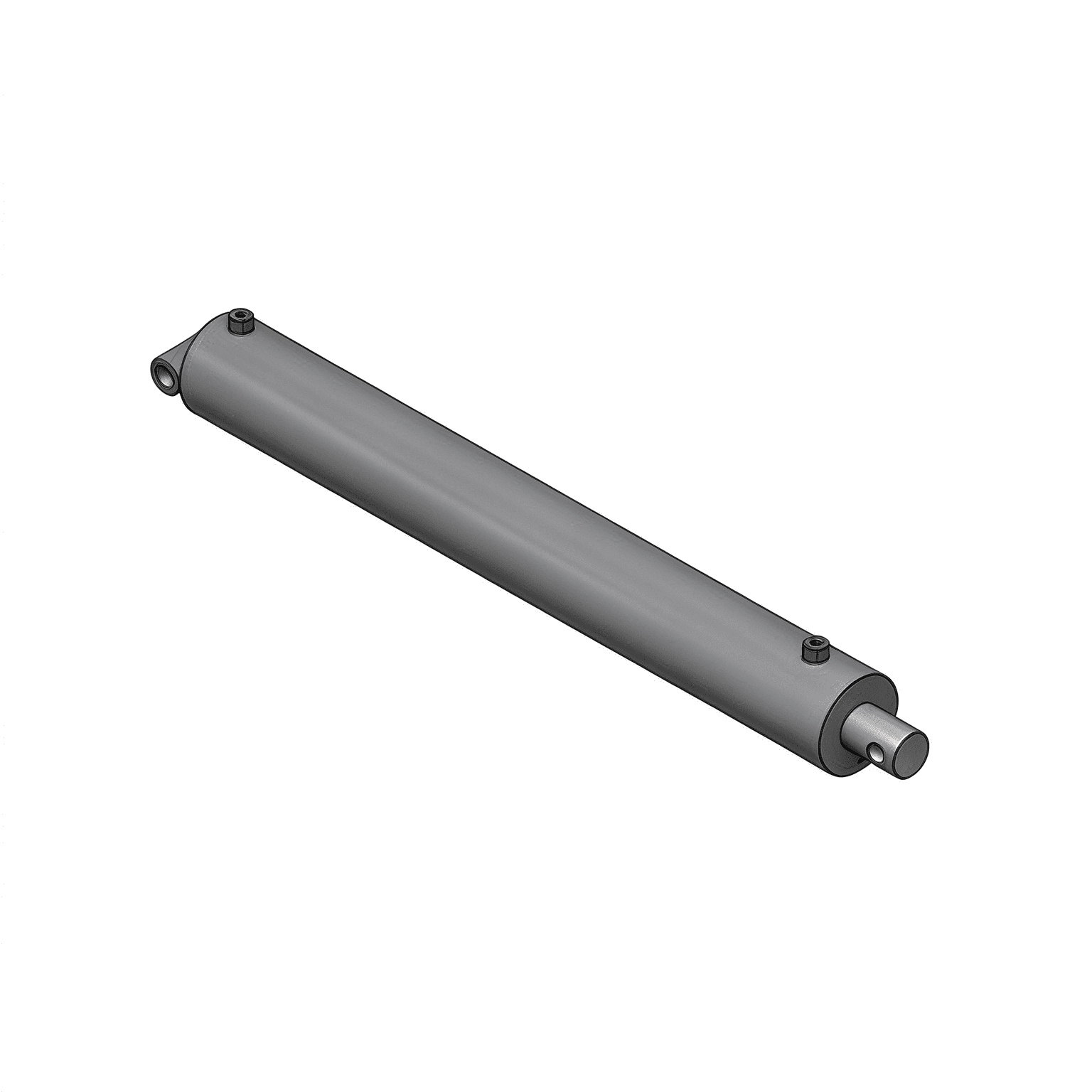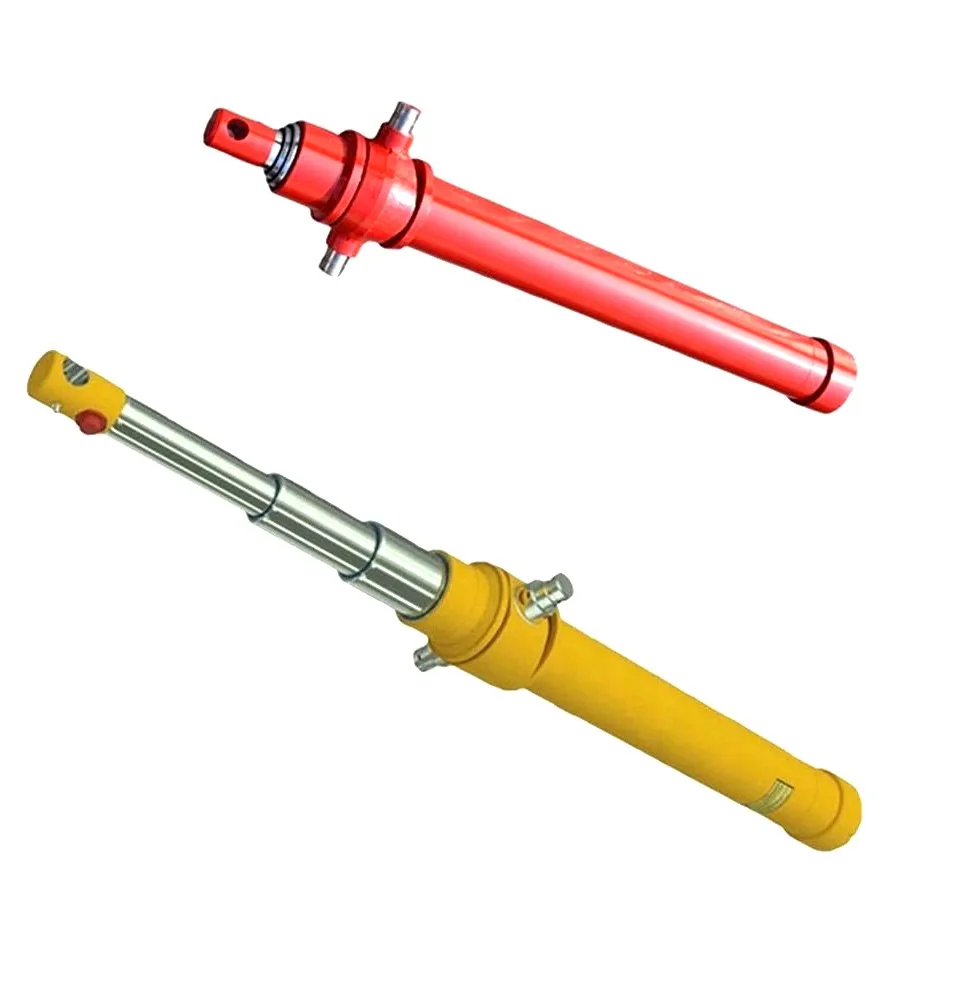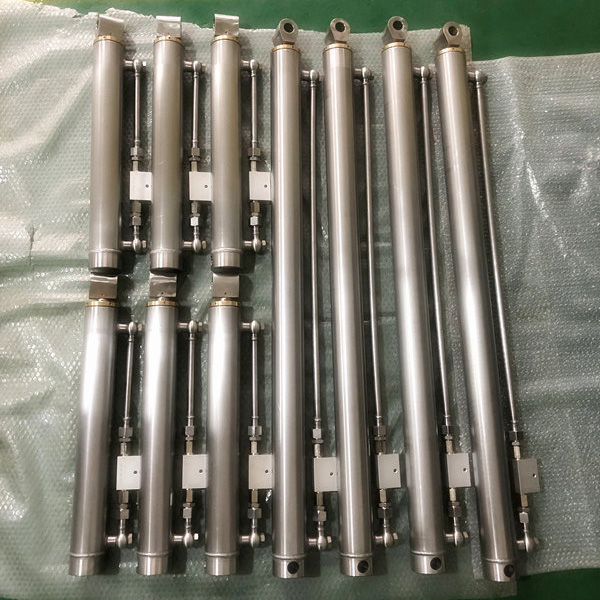
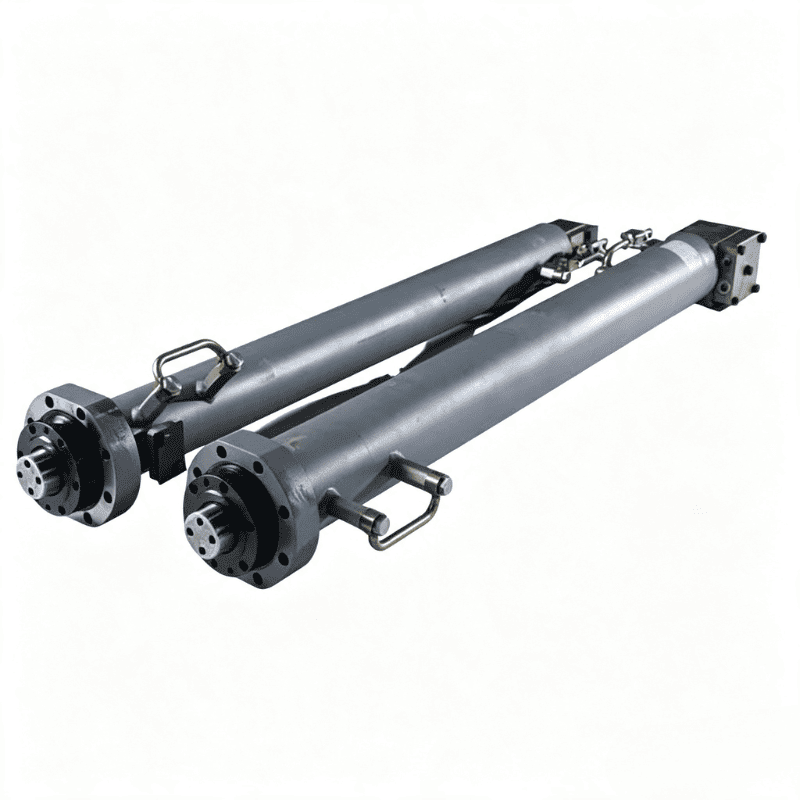
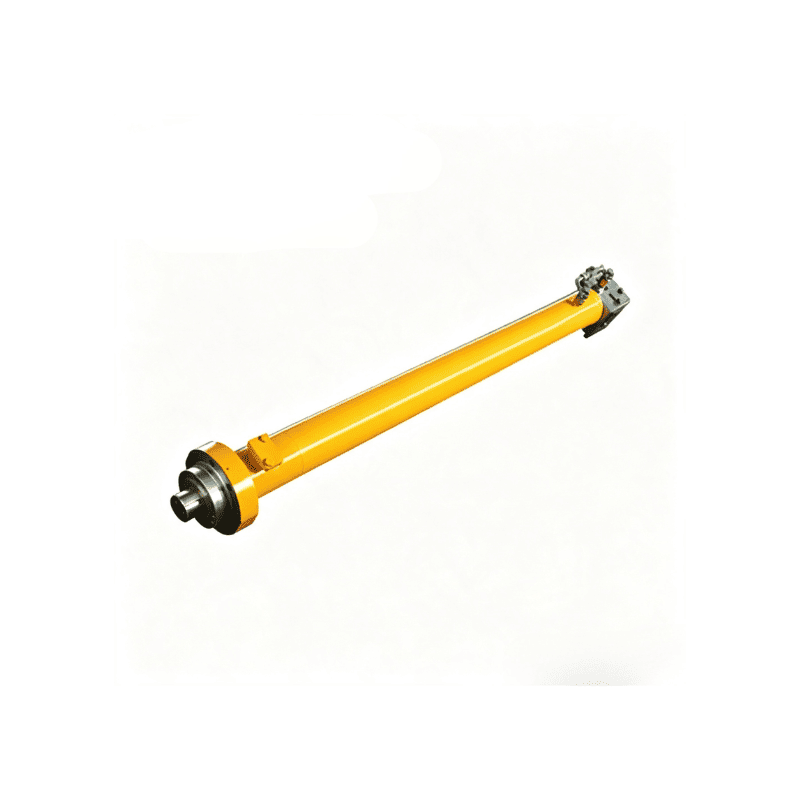
HCIC concrete pump truck boom cylinder for long-reach placement equipment. High-pressure, vibration-resistant hydraulic cylinders with 50-450 mm bores and up to 8,000 mm strokes.
Bore diameter:
50‑450 mmRod diameter:
32‑280 mmStroke:
200‑8,000 mmWorking pressure:
16‑45 MPaWorking temperature:
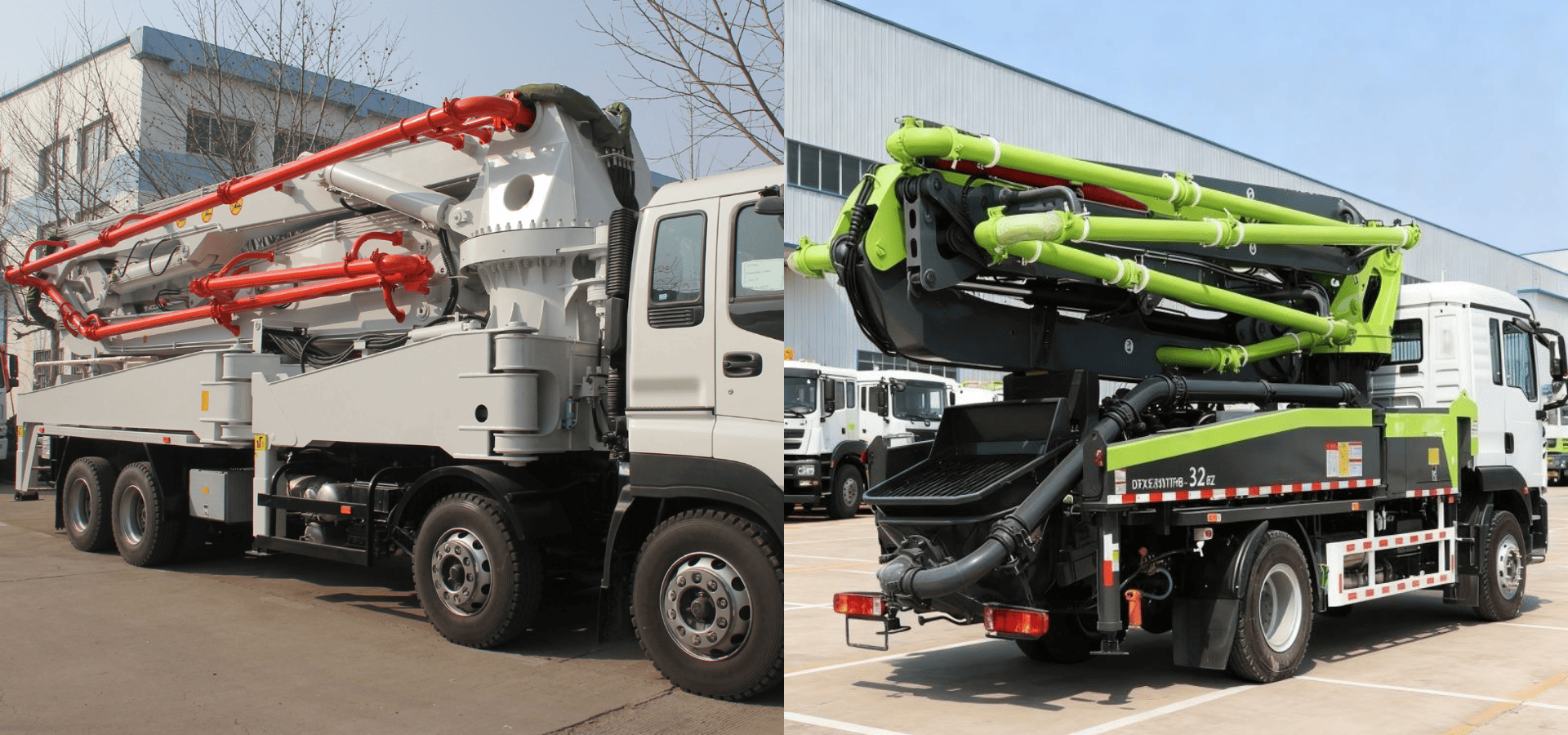
-40℃ to +120℃A concrete pump truck boom cylinder controls the movement of the placing boom. The boom folds for transport, unfolds over the jobsite and holds position while concrete moves through the delivery line. The cylinder is therefore doing more than extending and retracting. It is controlling a large articulated structure while the machine works under pressure, vibration and changing load conditions.
HCIC lists boom cylinders as one of the three main functional categories of pump truck hydraulic cylinders. This product article focuses on the boom-cylinder application only. It does not combine the boom cylinder with an outrigger cylinder or a pumping cylinder.
For a contractor or equipment builder, the buying decision comes down to controlled movement, pressure resistance, fatigue life, mounting accuracy and serviceability. A boom cylinder that fits the pin centers but cannot tolerate vibration is not a solution. A strong cylinder with the wrong port position is not a solution either.
The following range is listed in the HCIC 2026 catalog for pump-truck hydraulic cylinders and is used as the engineering envelope for the boom-cylinder application:
| Parameter | Catalog Range |
|---|---|
| Bore diameter | 50‑450 mm |
| Rod diameter | 32‑280 mm |
| Stroke | 200‑8,000 mm |
| Working pressure | 16‑45 MPa |
| Working temperature | -40℃ to +120℃ |
| Main application | Concrete pump trucks and complex construction equipment |
| Design priorities | High pressure resistance, vibration resistance and long service life |
A boom cylinder is installed between moving links. Its load changes as the boom angle changes. At one point in the movement, the cylinder may need to start a heavy section. At another point, it may need to hold the boom while the concrete line and the boom geometry create a different reaction force.
That changing load is why the cylinder must be selected from the complete movement diagram, not from bore diameter alone. The supplier needs the force requirement, stroke, pin centers and operating pressure before the design can be approved.
Concrete pump trucks work with engine vibration, hydraulic pulsation, road transport shock and boom movement. The catalog identifies vibration resistance as a core advantage of this product family.
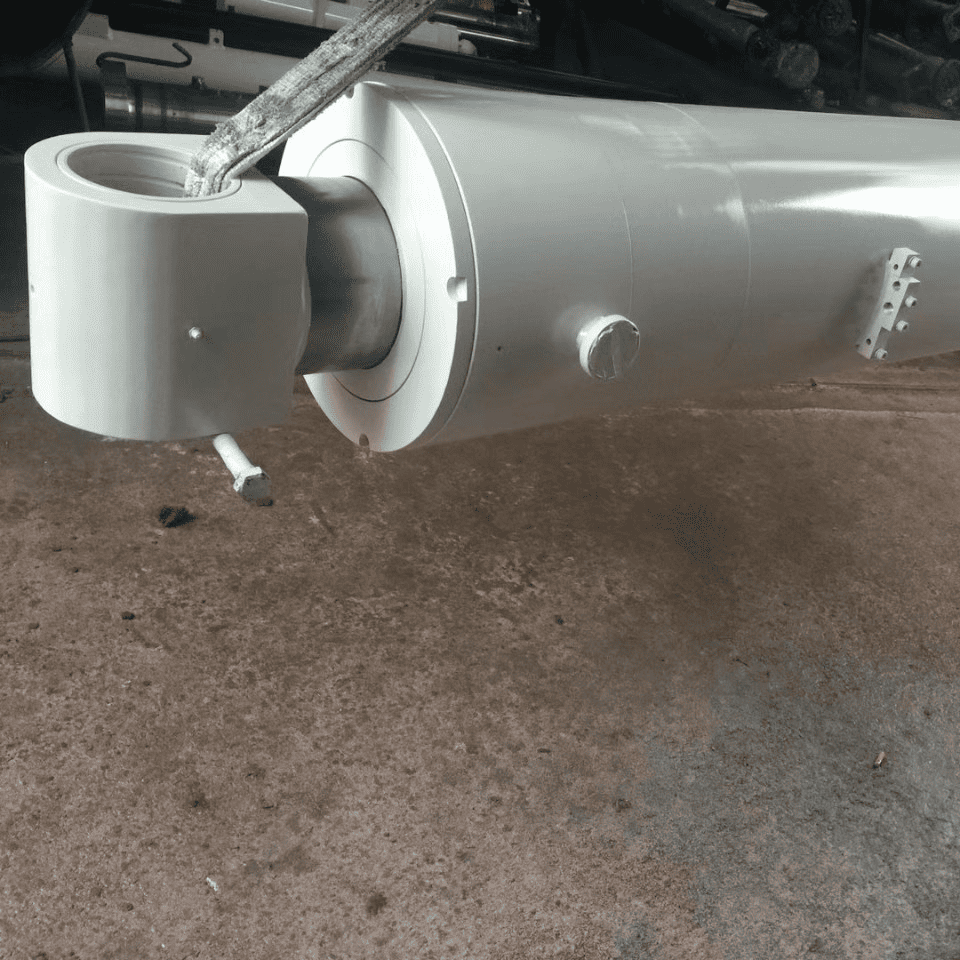
The barrel, welded mounting points, piston, rod and seals must work as one assembly. A small alignment error at a mounting lug can create side load on the rod. Over repeated cycles, side load increases guide wear and seal stress. Mounting accuracy is therefore part of cylinder reliability, not just an installation detail.
The catalog lists a 16-45 MPa working-pressure range and a -40°C to +120°C working-temperature range for the pump-truck hydraulic-cylinder envelope. The correct point inside that range depends on the actual system.
A buyer should not treat the upper number as a default operating setting. The pump, relief valve, hoses, control valves, cylinder and frame must be rated as a complete system. Pressure spikes and thermal expansion also need to be considered during design review.
The catalog describes jointly developed high-strength materials for the cylinder barrel. It identifies boring and rolling as the processing route. These processes are used to improve inner-bore surface roughness and dimensional accuracy.
That inner bore is the running surface for the piston seal and guide system. If the bore is out of tolerance or has the wrong surface condition, the cylinder can develop excessive friction, internal leakage or accelerated seal wear.
The catalog identifies friction welding as a piston-rod process for this engineering product group. Friction welding joins components through pressure and heat generated by relative movement. It avoids an open-flame weld zone and can produce a repeatable joint when the parameters and inspection method are controlled.
For a boom cylinder, the joint must be reviewed together with rod straightness, concentricity, surface treatment and the load path through the mounting end.
High-pressure seals and guide components control leakage and keep the rod aligned. In a boom application, the seal package has to deal with pressure changes, vibration, temperature variation and outdoor contamination.
The exact seal compound should be selected from the hydraulic fluid, temperature range and pressure. The drawing should also state rod surface treatment, seal arrangement, port location and mounting tolerances.
For an accurate quote, send:
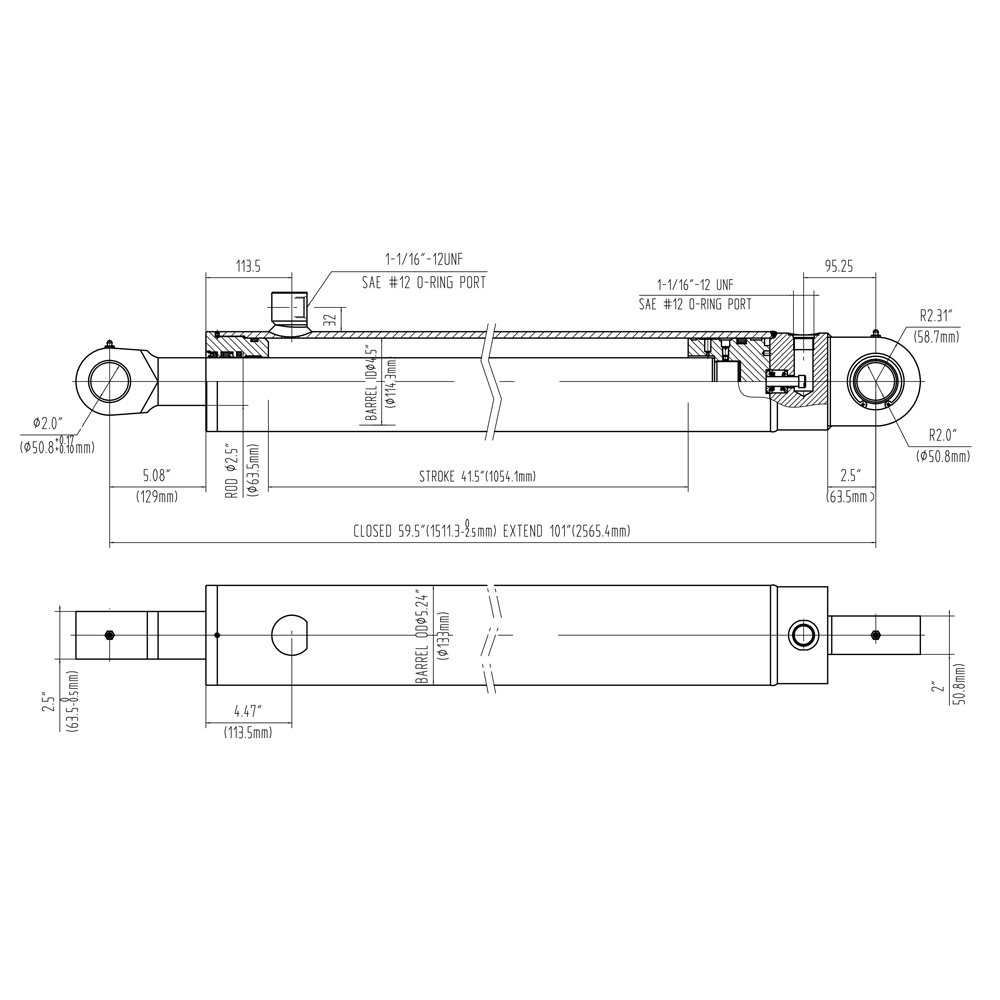
Photographs are useful, but a dimensioned drawing is better. If the existing cylinder is still installed, provide the machine model and the location of each mounting center.
It controls the movement and positioning of the articulated placing boom on a concrete pump truck or related placement equipment.
The catalog range is 50‑450 mm bore, 32‑280 mm rod diameter and 200‑8,000 mm stroke. The final size is selected from the machine geometry and load requirement.
The catalog lists 16‑45 MPa as the working‑pressure range for the pump‑truck hydraulic‑cylinder product group. The approved pressure for a specific cylinder must be confirmed from its drawing, material and complete hydraulic system.
They improve inner‑bore surface condition and dimensional accuracy. That directly affects piston‑seal life, friction and internal leakage.
Friction welding is used for the piston‑rod manufacturing process in this engineering product group. It provides a controlled joining method that must still be verified for concentricity, straightness and load capacity.
Yes, an existing cylinder can be reviewed as a reference. Provide the pin‑center lengths, bore, rod, stroke, ports, mounting details and photographs. Final production should follow an approved drawing.
HCIC has manufactured hydraulic products since 1998. The company provides hydraulic cylinders and power units for construction, waste handling, transport and other industrial applications.
For concrete pump equipment, HCIC’s engineering approach is based on the cylinder and the machine interface together. Bore, stroke, working pressure, temperature, mounting, port arrangement and material process are reviewed as one specification.
- WhatsApp / Tel: +86 153 7619 8599
- Email: davidsong@mail.huachen.cc
- Website: http://jnhcic.com/
Send the boom drawing or the existing cylinder dimensions. HCIC can review fitment and prepare a quotation for the required quantity.