In open-pit copper mines, iron ore quarries, and aggregate crushing plants, mobile heavy equipment—such as 100-ton hydraulic excavators, large wheel loaders, and blasthole drill rigs—operates within dense clouds of airborne crystalline silica dust.
These silica dust particles are harder than hardened steel (7.0 to 7.5 Mohs hardness)and feature razor-sharp crystalline edges. When hydraulic boom and arm cylinders extend and retract through these dust plumes:
Implementing a comprehensive mining equipment hydraulic dust exclusion seal upgrade halts this destructive cycle at the physical atmospheric boundary.
| Step | Process / Failure Stage |
|---|---|
| 1 | Airborne Silica Dust Plume (7.5 Mohs Hardness) |
| 2 | Adheres to Oil Sheen on Extended 120mm Rod |
| 3 | Standard Snap-In Wiper: Fails on Caked Dust Cakes |
| 4 | Particles Ingested into Gland Packing |
| 5 | Three-Body Abrasive Lapping Compound Forms in Oil |
| 6 | Destroys Rod Seals, Scores Barrel, Causes Chronic Drift |
Standard elastomeric wipers fitted in open grooves quickly deform, pack with dried mud, and lose contact pressure against the rod. When completing a mining equipment hydraulic cylinder dust exclusion seal upgrade, cylinders must be fitted with canned metal-cased double-lip scrapers:
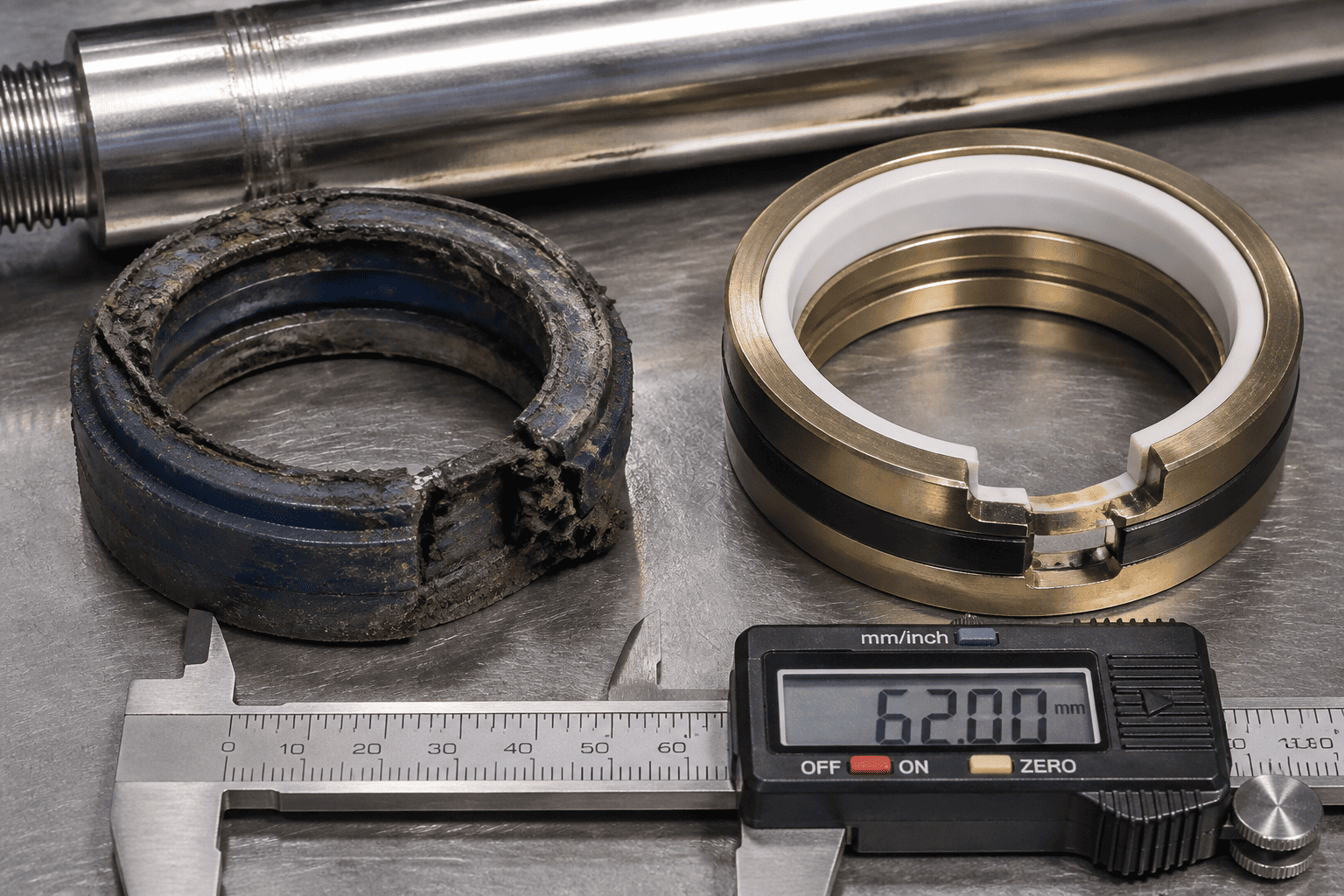
| Item | Component | Function |
|---|---|---|
| 1 | Brass/Steel Canned Metal Double-Lip Scraper | Scrapes caked rock dust & ice |
| 2 | Primary Low-Friction PTFE-Bronze Step Seal | Handles 35 MPa dynamic pressure |
| 3 | Secondary HNBR High-Pressure U-Cup Buffer | Traps pressure spikes & micro-seepage |
| 4 | Fabric-Reinforced Phenolic Guide Wear Rings | Absorbs extreme side-load moments |
Direct Technical Answer Ingress does not occur solely through cylinder rod glands. Every time large multi-stage cylinders extend, fluid volume in the hydraulic reservoir drops, drawing in thousands of liters of ambient atmospheric air. If the hydraulic tank is equipped with a cheap 40-micron wire-mesh breather cap, abrasive silica dust is sucked directly into the oil reservoir. A complete contamination defense requires pairing heavy-duty cylinder wipers with 3-micron absolute desiccant air breathers equipped with internal silica gel beds to simultaneously strip moisture and block particulate ingestion.
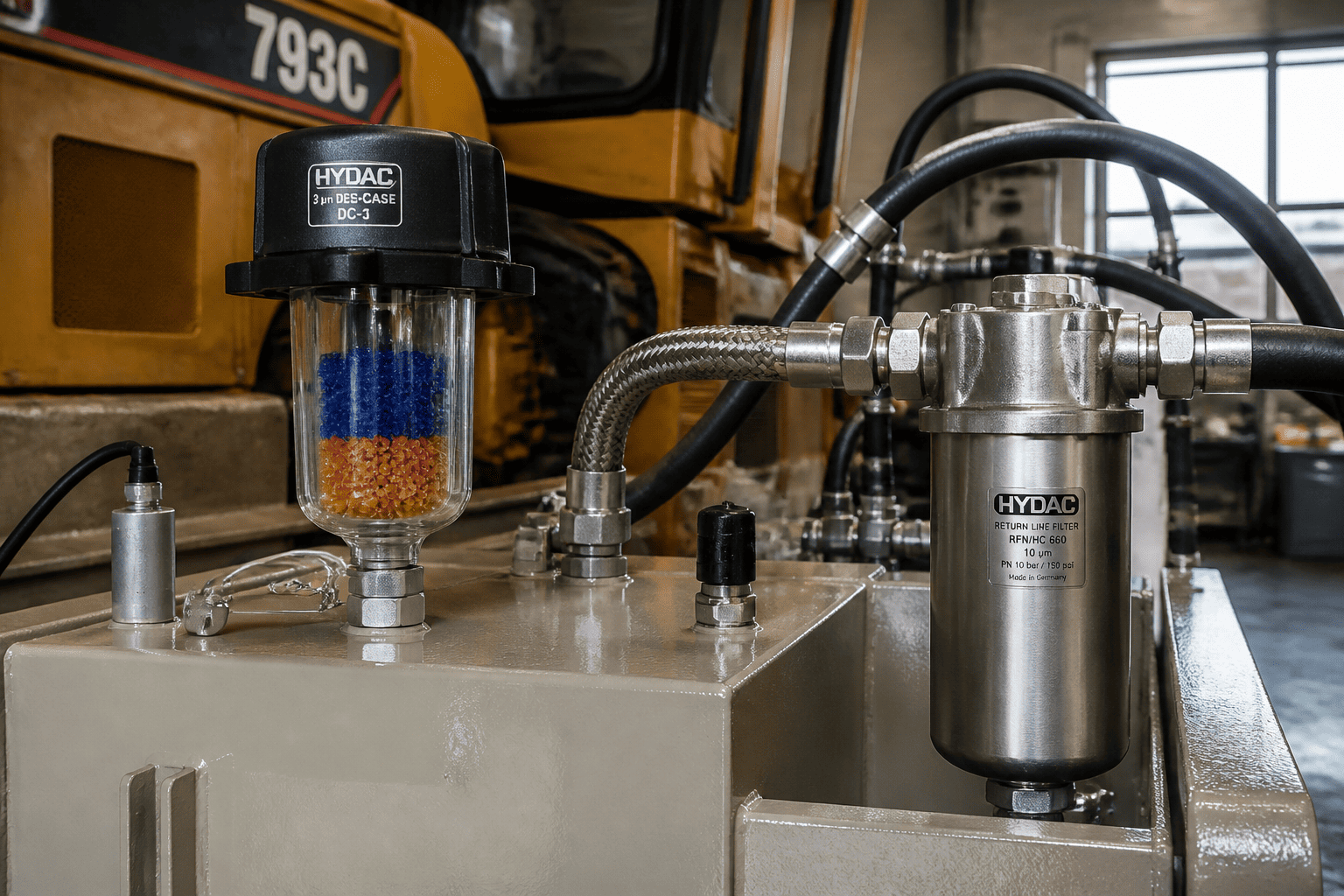
Direct Technical Answer: High-pressure mining hydraulic cylidner systems operating at 30.0 to 35.0 MPa with electro-hydraulic proportional valves require an operating cleanliness target of ISO 4406 16/14/11 or cleaner. Exceeding ISO 18/16/13 accelerates piston pump valve plate wear, cuts dynamic seal life by 70%, and causes pilot spool sticking in main control valves.
A rod seal upgrade will fail prematurely if the underlying steel rod surface is sub-standard. Silica grit easily gouges soft chrome plating, creating microscopic valleys where dust bypasses the wiper.
| Rod Metallurgical Factor | Standard Industrial Spec | HCIC Severe Mining Upgrade Spec | Operational Field Benefit |
|---|---|---|---|
| Base Steel Core | AISI 1045 Standard Bar | 42CrMo4 / AISI 4140 Forged Alloy | Higher yield strength prevents rod bending under rock jams |
| Induction Hardening Depth | 1.0 to 1.5 mm | 3.0 to 3.5 mm Case Depth | Forms rigid bedrock under plating to prevent denting |
| Surface Hardness | 50 – 55 HRC | 58 – 62 HRC Extreme Case Hardness | Resists stone gouges and abrasive scratching |
| Hard Chrome Thickness | 20 μm single layer | ≥ 40 μm Double Micro-Cracked Chrome | Superior corrosion barrier against acidic mine wash |
| Surface Roughness | Ra 0.2 to 0.4 μm | Ra 0.10 to 0.15 μm Mirror Burnish | Perfect hydrodynamic lubrication with zero dust grabbing |
Mining maintenance supervisors should implement this 4-step contamination control protocol during scheduled 250-hour service intervals:
1. Rod Gland Visual Inspection: Inspect the rod wiper cavity for caked silica buildup. Clean with high-pressure solvent spray; never chisel dry rock dust off the chrome surface with steel screwdrivers.
2. Desiccant Breather Color Audit: Check reservoir air breather silica gel. Replace immediately when the desiccant shifts from deep blue/amber to saturated pink.
3. Oil Particle Count Sampling: Take fluid samples from the mid-level reservoir sample port using clean bottles. If laser particle counting indicates contamination above ISO 17/15/12, initiate offline 3-micron kidney-loop filtration immediately.
4. Clevis Bushing Greasing: Purge heavy molybdenum-disulfide grease through spherical mounting pins until fresh grease forms an external dust collar, physically sealing the pin bore against grit penetration.
Are you retrofitting quarry excavators, underground load-haul-dump (LHD) loaders, or surface drill rigs?
Execute your mining equipment hydraulic dust exclusion seal upgrade with factory-engineered hydraulic cylinder assemblies and severe-duty seal packages directly from HCIC: