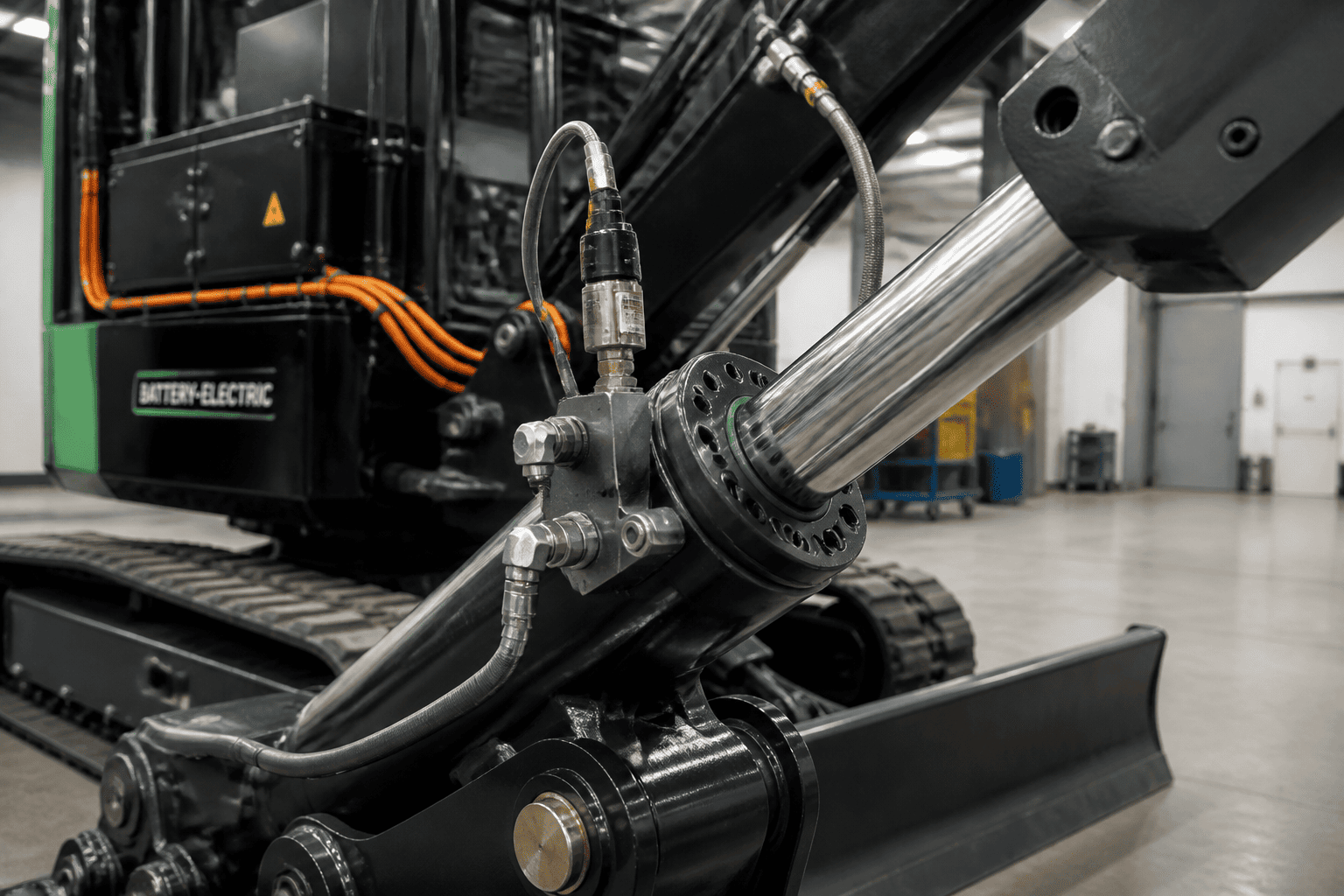
As commercial equipment manufacturers shift from internal combustion engines to 48V, 96V, and 350V battery-electric vehicles (BEV), powertrain engineers face an unexpected bottleneck: parasitic fluid power drag.
On a traditional diesel excavator or wheel loader, a high-torque diesel engine easily overpowers internal cylinder seal friction. Operators rarely notice the mechanical drag caused by aggressive, high-preloaded elastomeric seals squeezing against standard-honed steel barrels.
On a battery-powered compact excavator or electric refuse truck, however, there is no wasted horsepower to spare. Standard industrial cylinder seals consume between 12% and 18% of total onboard battery energy simply overcoming internal seal squeeze and mechanical breakaway resistance.
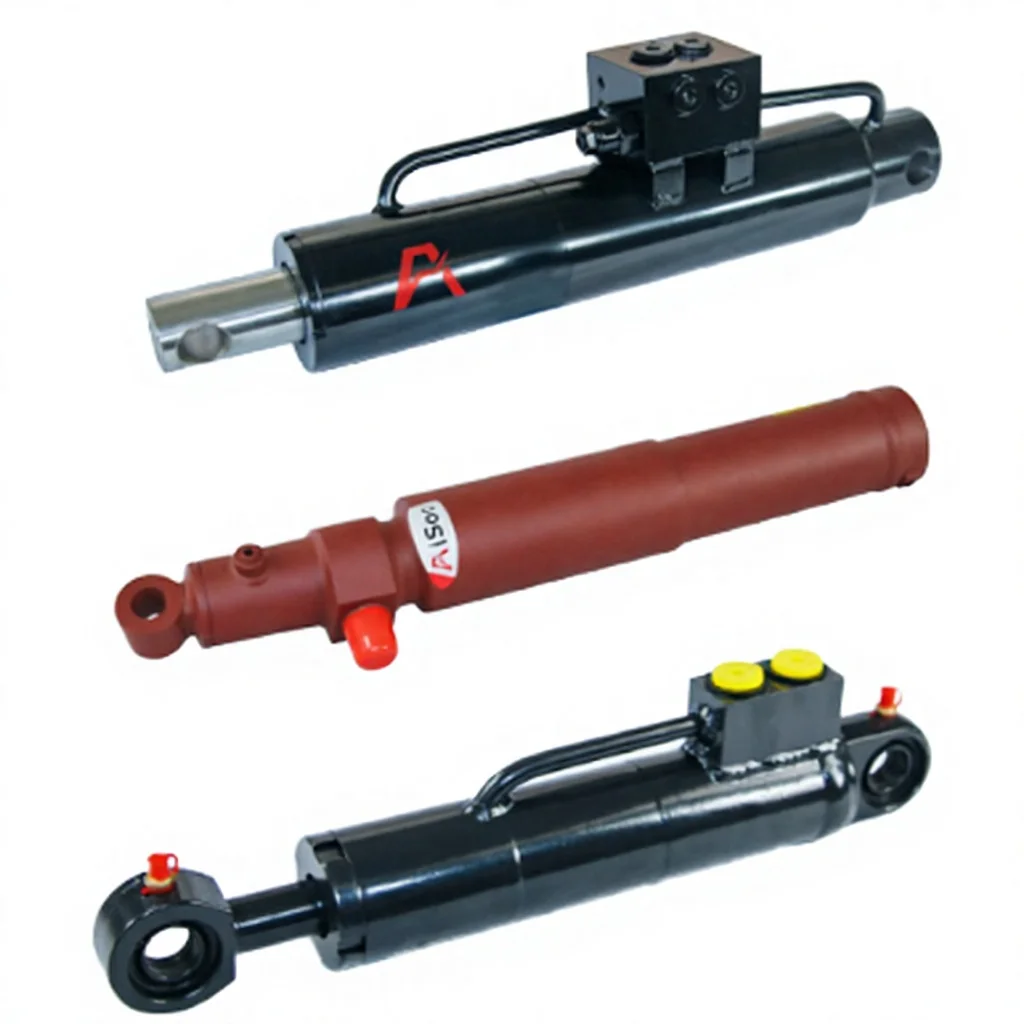
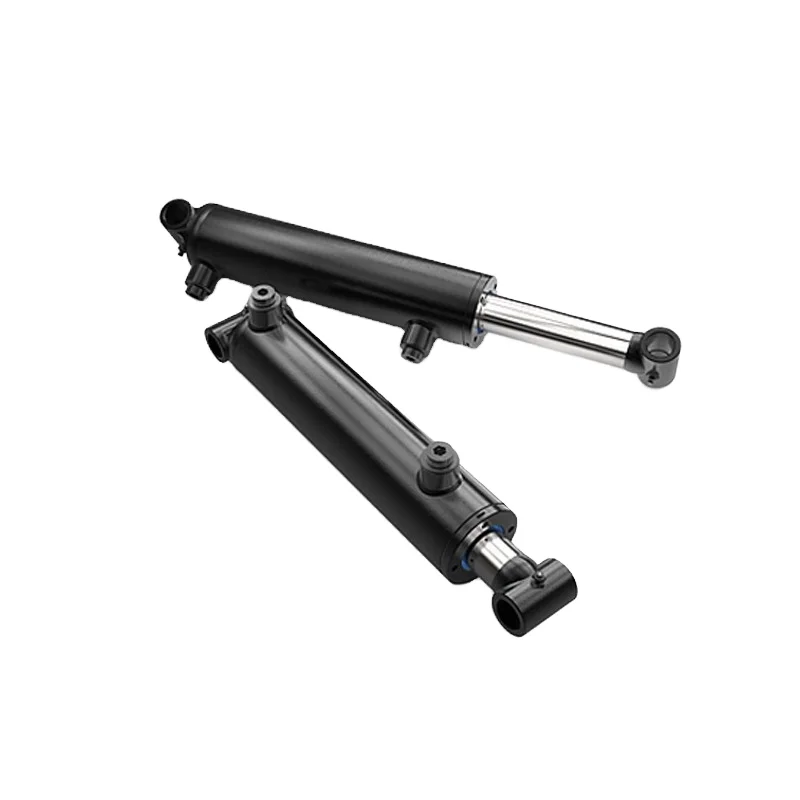
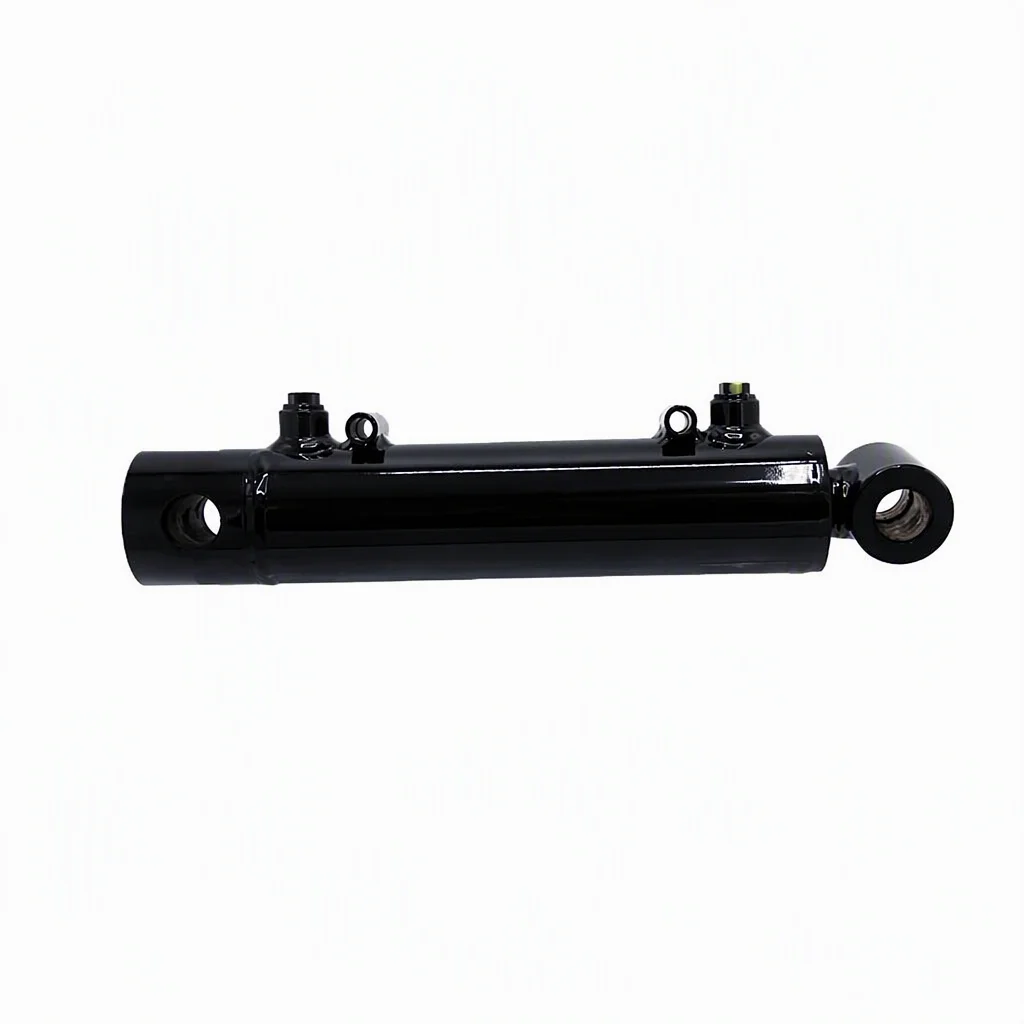
This energy drain has accelerated industry-wide demand for Low-Friction Hydraulic Cylinders for Battery-Electric Construction Equipment and Zero-Emission Fleets. By replacing legacy high-friction sealing glands with hydrodynamic micro-profiled seals and sub-micron roller-burnished tubes, modern electric machines gain up to 45 minutes of additional working time per battery charge.
| Engineering Parameter | Standard Diesel Cylinder | BEV Low-Friction Cylinder |
|---|---|---|
| Internal Breakout Friction | 8.0 to 14.5 bar | 1.2 to 2.8 bar |
| Tube Inner Bore Surface Finish | Ra 0.4 to 0.8 μm | Ra 0.1 to 0.2 μm (SRB) |
| Low-Speed Stick-Slip Threshold | Below 15 mm/sec | Below 1.0 mm/sec |
| Primary Rod Seal Profile | Heavy Preloaded U-Cup | Low-Friction Tandem Step |
| Parasitic Energy Loss Ratio | 12% - 18% of pump output | 3% - 5% of pump output |
| Fluid Compatibility | Standard Mineral Oil | Bio-HEES Synthetic & AW46 |
| Operating Temperature Range | -20°C to +80°C | -40°C to +100°C |
Every time an electric pump inverter ramps up to move a hydraulic boom, it must overcome "breakout friction"—the static sticking force between the rod seal and chrome piston rod. On conventional cylinders, this initial pressure spike forces the electric motor into peak amperage draw before mechanical movement even begins. Over an 8-hour shift involving thousands of small digging cycles, these micro-spikes compound into massive battery depletion.
When an operator performs fine grading or delicate pipe-laying at velocities below 5 mm/sec, standard rubber seals grab and release the metal rod unevenly, causing jerky boom oscillation. Low-Friction Hydraulic Cylinders for Battery-Electric Construction Equipment and Zero-Emission Fleets incorporate self-lubricating PTFE-bronze or modified polyurethane glide rings with microscopic hydrodynamic oil reservoirs, ensuring seamless, vibration-free motion even at ultra-low speeds of 0.5 mm/sec.
[ Micro-Hydrodynamic SRB Honing ] → Ra 0.1-0.2 µm surface retains micro-oil film
↓
[ Low-Breakout Tandem Glands ] → PTFE-composite step seals cut friction by 70%
↓
[ Integrated Regen Valve Blocks ] → Recovers return oil to downsize inverter draw
Reducing friction does not mean creating an ultra-dry mirror surface; it requires microscopic oil retention. HCIC uses advanced skiving and roller burnishing to achieve an inner surface roughness of Ra 0.1–0.2 µm with a cross-hatched plateau structure. This plateau holds a microscopic fluid boundary layer that prevents dry metal-to-seal rubbing during cold-morning electric startups.
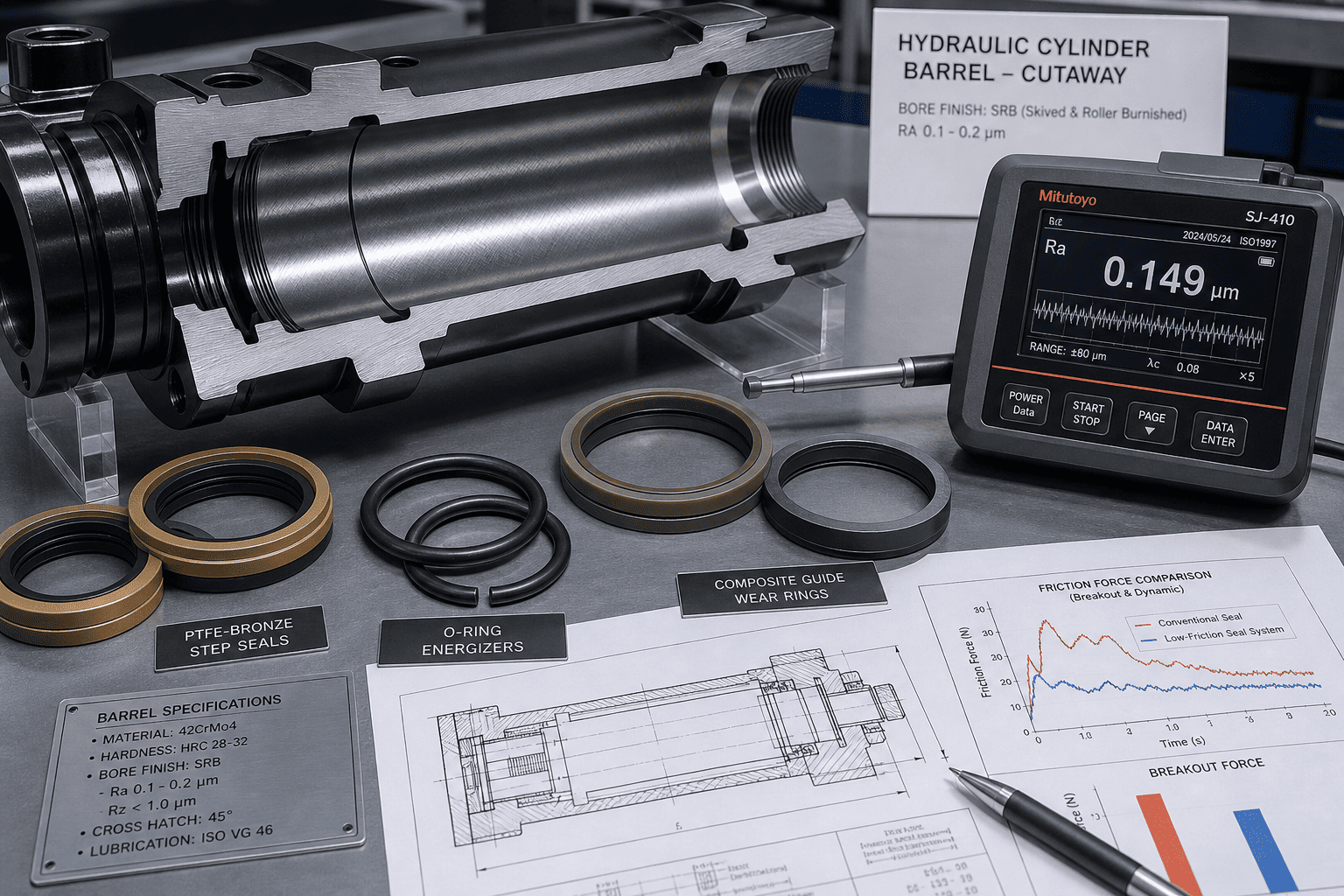
Instead of relying on a single, tightly-squeezed polyurethane U-cup, low-friction designs utilize a tandem sealing package. The primary seal features a dynamic step profile energized by an O-ring with reduced radial interference, cutting friction by over 70% while maintaining zero-leakage fluid containment up to 250 bar.
To further conserve electric kilowatt-hours, low-friction cylinders can be fitted with integrated boom-lowering regenerative valves. During unpowered lowering, gravity forces fluid from the piston side directly back to the rod side without circulating through the main directional control valve, reducing electric motor load to near zero during return strokes.
If you are retrofitting existing equipment or troubleshooting poor battery life on an electric machine, follow this workshop test:
1. Disconnect External Mechanical Linkage: Unpin the rod eye so the cylinder moves completely unladen.As global emissions regulations tighten across urban construction zones, Low-Friction Hydraulic Cylinders for Battery-Electric Construction Equipment and Zero-Emission Fleets are becoming standard specifications for compact loaders, mini-excavators, and electric refuse bodies.
HCIC collaborates directly with BEV equipment upfitters and fluid power engineers to configure custom low-friction cylinders matched to specific voltage buses and duty cycles. We provide custom stroke lengths, integrated position feedback sensors (LVDT / Hall effect), and 3D CAD models for immediate powertrain packaging reviews.
To evaluate low-friction prototype cylinders for your zero-emission machine lineup, contact HCIC: