HCIC's official website includes a dedicated Hydraulics Client Cases section. The resource gives overseas buyers a clearer view of the industrial environments in which hydraulic cylinders and related systems are considered.
The current page groups the application material into four sectors: steel, offshore engineering, renewable energy, and mining. Instead of presenting a generic product list, the page organizes the discussion around operating industries and the engineering demands associated with them.
This article reports on a public website resource, not a newly signed order or a named customer project. The public page does not identify individual customers, contract values, delivery dates, or project-specific performance figures. Those details are therefore not presented here as facts.
The Hydraulics Client Cases page introduces four application directions:
Steel production equipment places high demands on hydraulic components because cylinders may be exposed to heavy loads, repetitive movement and demanding production conditions. HCIC's public steel-industry material discusses hydraulic cylinder use in equipment such as rolling mills, forging presses, continuous casting machines, ladle turrets and slab lifters.
For an engineering buyer, the useful starting point is not a broad claim about durability. It is the application question: what movement must the cylinder perform, what loads act on the mounting points, and what maintenance conditions will the component face?
The offshore application section addresses hydraulic cylinder requirements in marine and offshore environments. Its themes include corrosion exposure, component protection, customization and testing.
These topics are relevant to buyers who need to define the working environment before requesting a quotation. Saltwater exposure, coating requirements, mounting arrangement, load direction and inspection expectations should be confirmed as part of the technical review rather than left as assumptions.
The resource also includes solar and wind energy applications. The public material links hydraulic systems with functions such as solar tracking, wind-turbine pitch control and braking-related movement.
These applications require more than a cylinder with a suitable stroke. Buyers normally need to review positioning accuracy, operating frequency, environmental exposure, mounting space and the complete hydraulic control circuit before selecting a design.
Mining equipment operates around abrasive materials, heavy mechanical loads and difficult service conditions. HCIC's mining application material presents hydraulic cylinders as components for equipment that must be matched to the machine's working environment and load path.
For a mining project, the initial inquiry should include the machine function, stroke, bore and rod requirements, mounting style, operating pressure, contamination exposure and expected service conditions. A general industry label is not enough to approve a cylinder design.
Industrial buyers rarely purchase a hydraulic cylinder as an isolated part. They are usually solving a movement problem inside a larger machine. The same cylinder concept can behave differently when the mounting geometry, duty cycle, load direction, oil circuit or environmental exposure changes.
An application-case resource helps move the first conversation in the right direction. It gives the buyer a way to identify the relevant industry and gives the manufacturer a better starting point for discussing drawings, operating conditions and customization requirements.
For search users, this structure also answers a practical question earlier in the buying process: whether a hydraulic supplier has experience discussing the type of equipment involved, not only whether it lists a standard cylinder category.
The following information can make an industrial hydraulic inquiry more useful:
1. The machine and function — for example, lifting, positioning, clamping, tilting or load holding.
2. Required movement — stroke, retracted length, extension speed and working angle.
3. Mounting details — pin centers, bracket dimensions, connection type and available clearance.
4. Hydraulic data — working pressure, flow rate, oil type and valve arrangement.
5. Working environment — outdoor exposure, saltwater, dust, abrasive material, temperature and cleaning conditions.
6. Project documents — drawings, photographs, an existing cylinder identification plate or a failed-part sample.
7. Commercial requirements — quantity, destination, replacement or OEM use, and required documentation.
The more complete the input, the less likely it is that a quotation will be based on an incorrect assumption about fitment or operating conditions.
The value of the HCIC hydraulic application case studies is the direction they give to technical discussions. The public resource identifies application sectors and related engineering concerns, but it does not replace a project drawing, load calculation, hydraulic schematic or component approval process.
This distinction matters in industrial procurement. A case-study page can help a buyer find the right conversation; it cannot, on its own, confirm that a specific cylinder is suitable for a specific machine.
HCIC's dedicated Hydraulics Client Cases resource gives global buyers a more application-oriented way to review the company's hydraulic work. The current resource covers steel, offshore engineering, renewable energy and mining, four sectors where cylinder selection depends heavily on the surrounding machine and working environment.
For OEMs, distributors and maintenance teams, the next step is straightforward: select the relevant application category, prepare the available technical information, and ask HCIC to review the cylinder or hydraulic system against the actual installation. That approach is more reliable than choosing a component from a general product description alone.
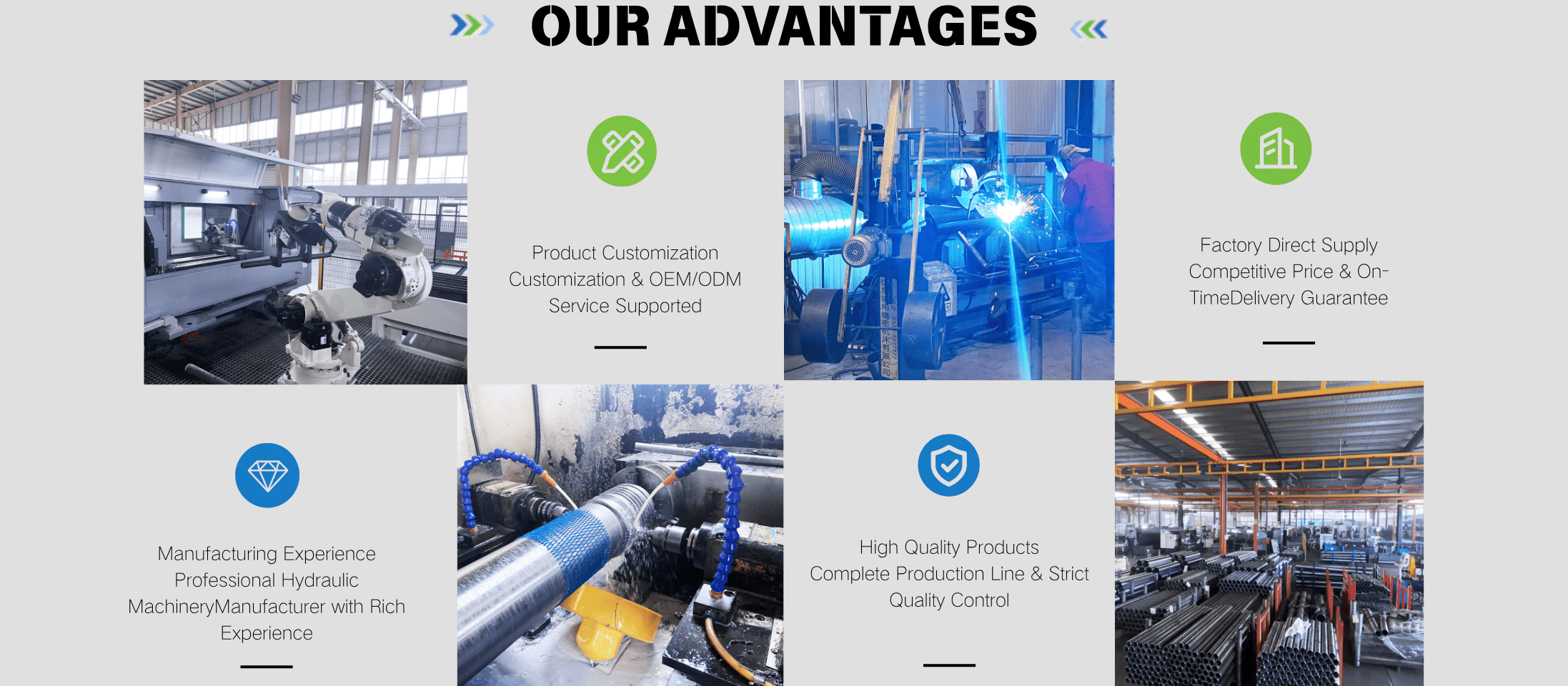
HCIC is a hydraulic manufacturer founded in 1998. Its official website presents hydraulic cylinders, hydraulic power units and application resources for industrial and vehicle-related equipment.
For a technical review, contact HCIC with the application, drawing, key dimensions, hydraulic data and required quantity.
Website: [https://jnhcic.com/](https://jnhcic.com/)
Official resource: [HCIC Hydraulics Client Cases](https://jnhcic.com/hydraulics-client-cases/)