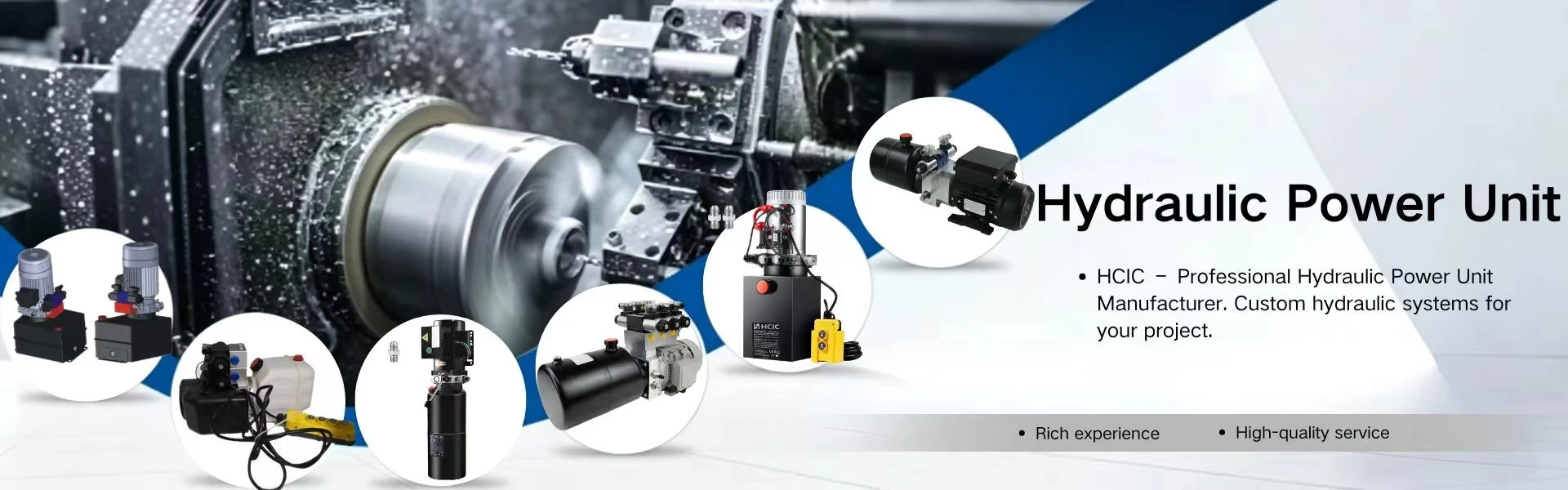
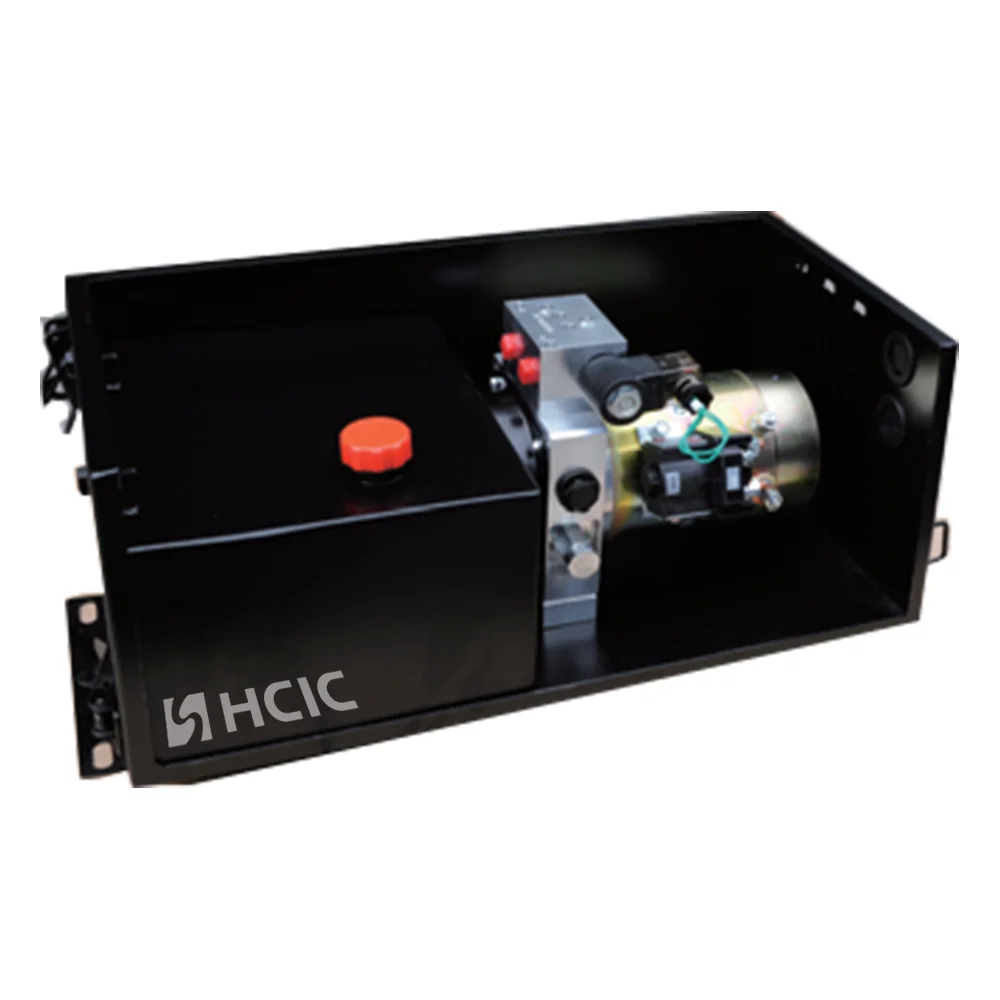
HCIC presents custom hydraulic power units for large-scale projects, with project-based support for flow, pressure, medium, dimensions and control methods.
Some hydraulic projects do not fit a standard power-unit table. The equipment may have a fixed footprint, a special hydraulic medium, an unusual control method or an operating environment that changes the component requirements.
For these cases, the HCIC-2026 catalog presents a separate **Custom Hydraulic Power Unit** section. The page describes custom units built for large-scale engineering projects and gives three application examples: gate control in water conservancy projects, hydraulic drives on drilling platforms and heavy-duty operations in mining machinery.
The catalog does not assign a model number or publish one universal flow, pressure or tank specification for this custom product category. That is important for buyers to understand. A custom HPU should be discussed as a project-engineering scope, not ordered from an assumed standard number.
The catalog states that HCIC provides design, testing and production capabilities for custom hydraulic power units. It also identifies the project inputs that can be adjusted:
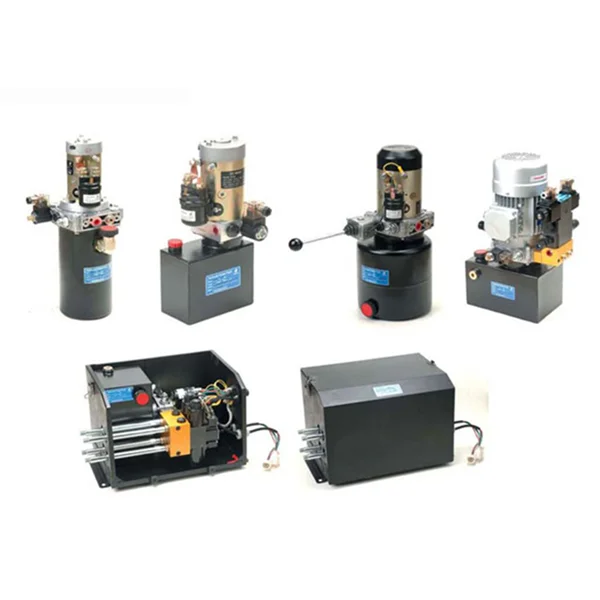
These inputs are connected. Changing the pressure requirement can affect the pump, valve block, motor, reservoir, hoses, heat management and safety controls. Changing the available dimensions can affect maintenance access and component layout. The first conversation should therefore start with the machine and its operating sequence, not with a preferred pump name.
Gate-control equipment may have long service intervals, fixed installation spaces and exposure to moisture. The HPU discussion should cover the required movement, holding method, environmental protection, access for inspection and the hydraulic medium approved for the project.
A drilling platform can place strict demands on control response, operating continuity and environmental protection. The supplier needs to understand whether the HPU is driving one function or several functions, how the system is controlled, and what happens if power or communication is interrupted.
Mining equipment brings heavy loads, dust, vibration and difficult service conditions. An HPU proposal should include the mounting location, protection requirements, hose routing, filtration approach and access for maintenance. The application label alone is not enough to approve a design.
A serious custom HPU inquiry usually moves through several practical questions.
First, what does the machine need to do? Describe the actuator movement, sequence, holding periods, emergency behavior and expected operating frequency in plain language.
Next, what must the HPU fit around? Provide the available envelope, mounting points, access panels, hose outlets, cable entries and nearby heat sources. A compact design is useful only when the service team can still reach the parts that need inspection.
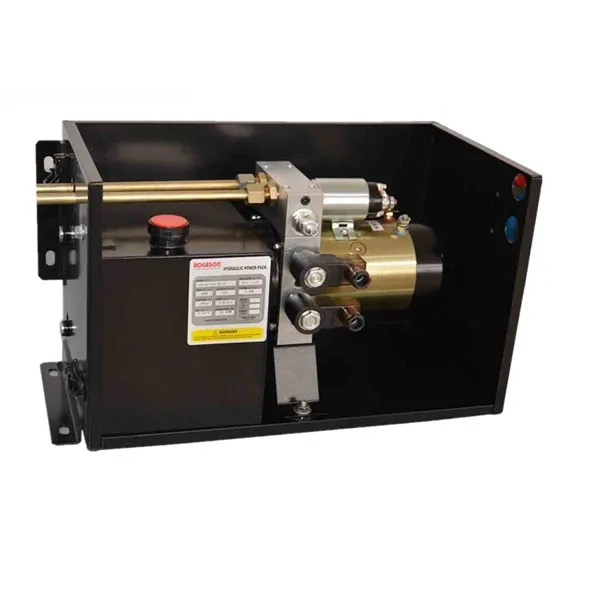
Then, what controls the system? Explain whether the project uses a local switch, PLC, remote station, proportional control, discrete solenoids or another method. The control approach affects the valve arrangement and electrical interface.
Finally, what evidence is needed before approval? This may include drawings, a hydraulic schematic, a test plan, cleanliness requirements, environmental checks or a factory acceptance process. The exact list should be agreed with the project team rather than assumed from a general brochure.
A hydraulic power unit is part of a working system. Its suitability depends on the actuator, load, control sequence, oil, installation, environment and maintenance plan around it.
That is why the HCIC catalog presents the custom unit through project capabilities instead of a single fixed model. The buyer is not only choosing a pump and tank. The buyer is defining how hydraulic power will be generated, controlled, protected, tested and serviced inside a larger machine.
This approach also keeps the quotation honest. If the final design has not been defined, a supplier should not turn a preliminary discussion into a guaranteed performance claim.
Information to Include in a Custom HPU Inquiry
To start a useful engineering review, send:
A drawing is helpful, but clear photographs and marked-up dimensions can also give the design team a practical starting point.
If you are sourcing a custom hydraulic power unit for a water-control, drilling, mining or other large-scale system, send the operating sequence, required hydraulic parameters, installation limits and control method. That gives HCIC a basis for discussing a buildable HPU rather than offering a generic product label.