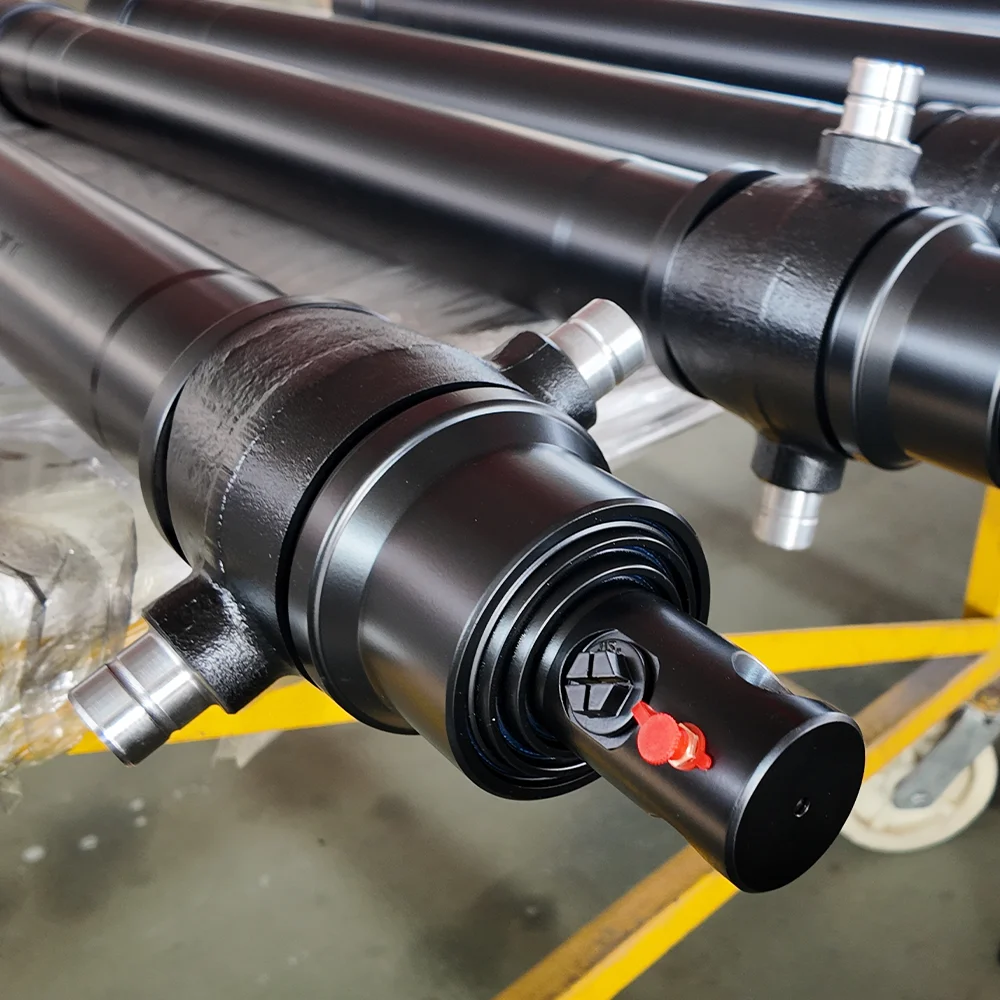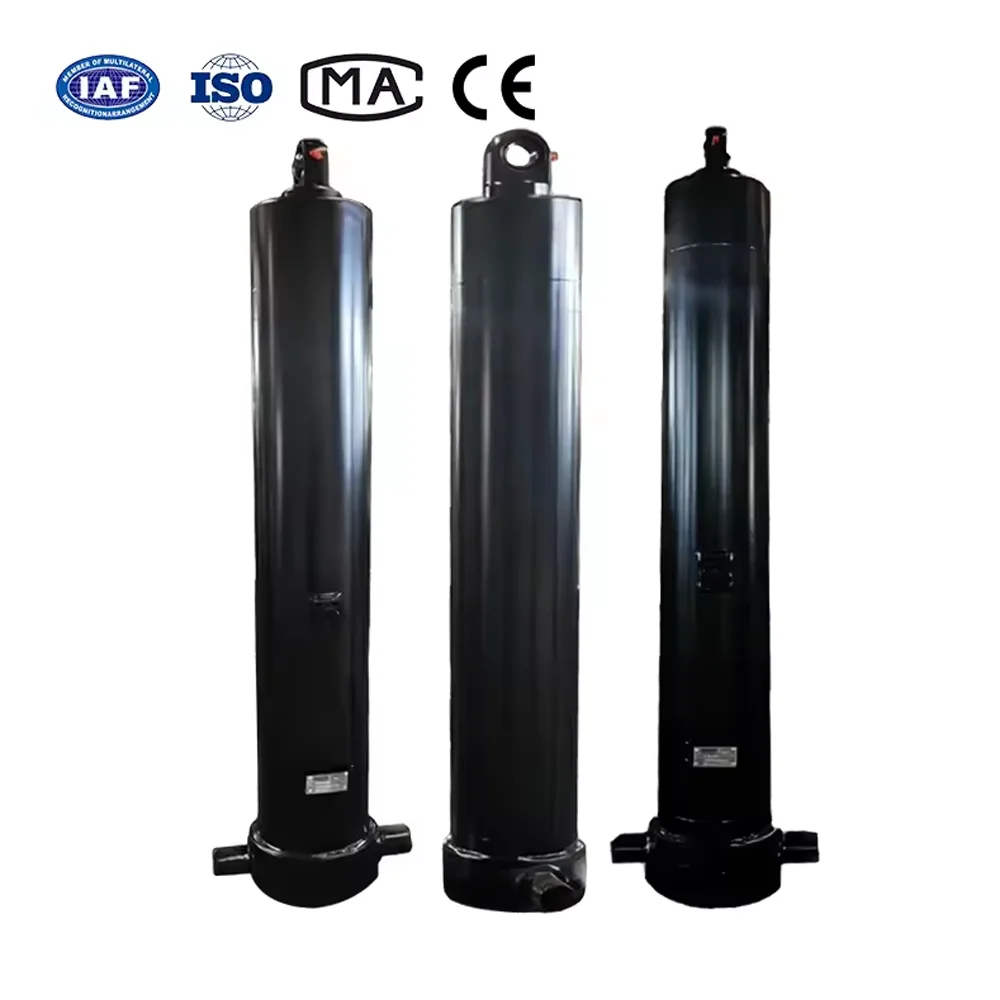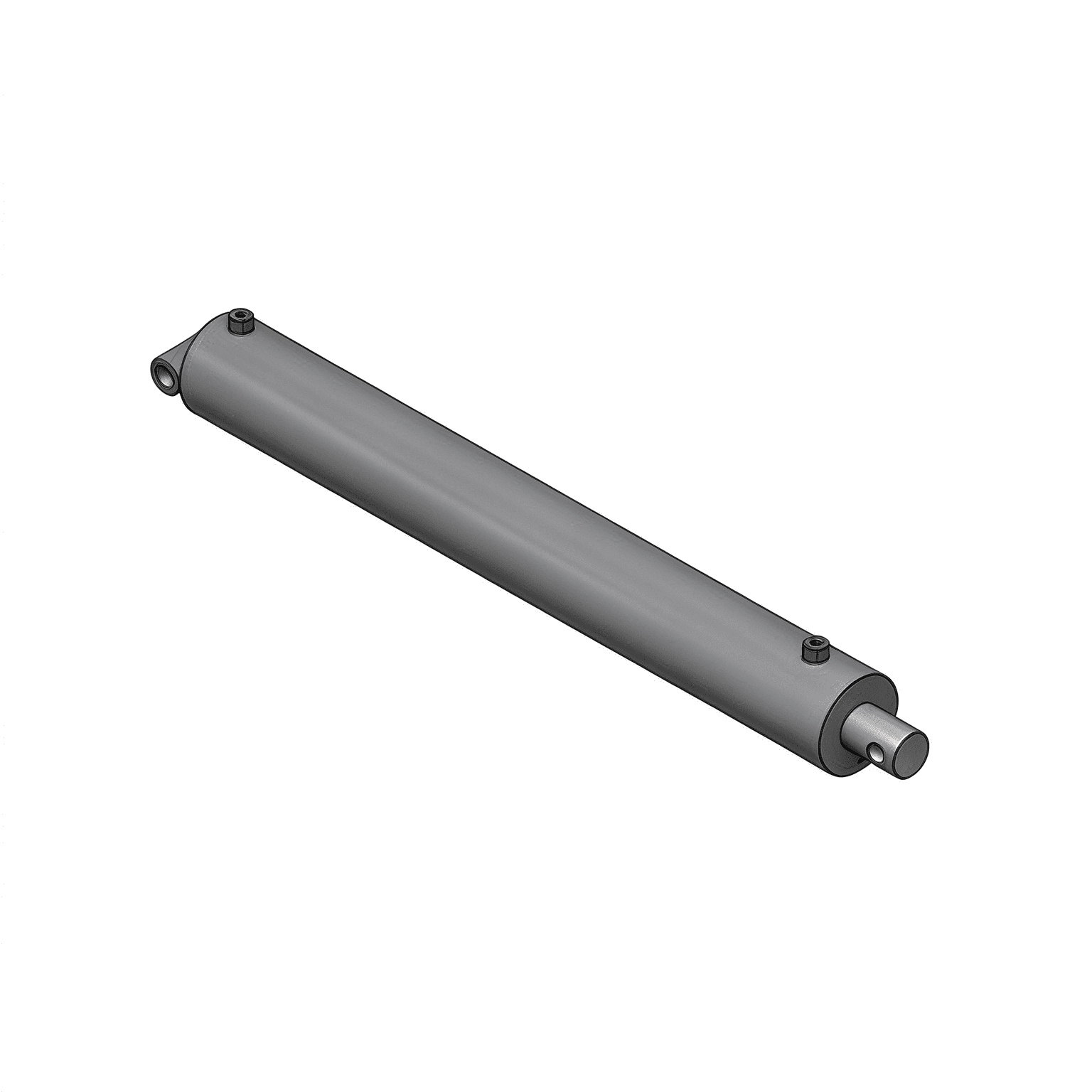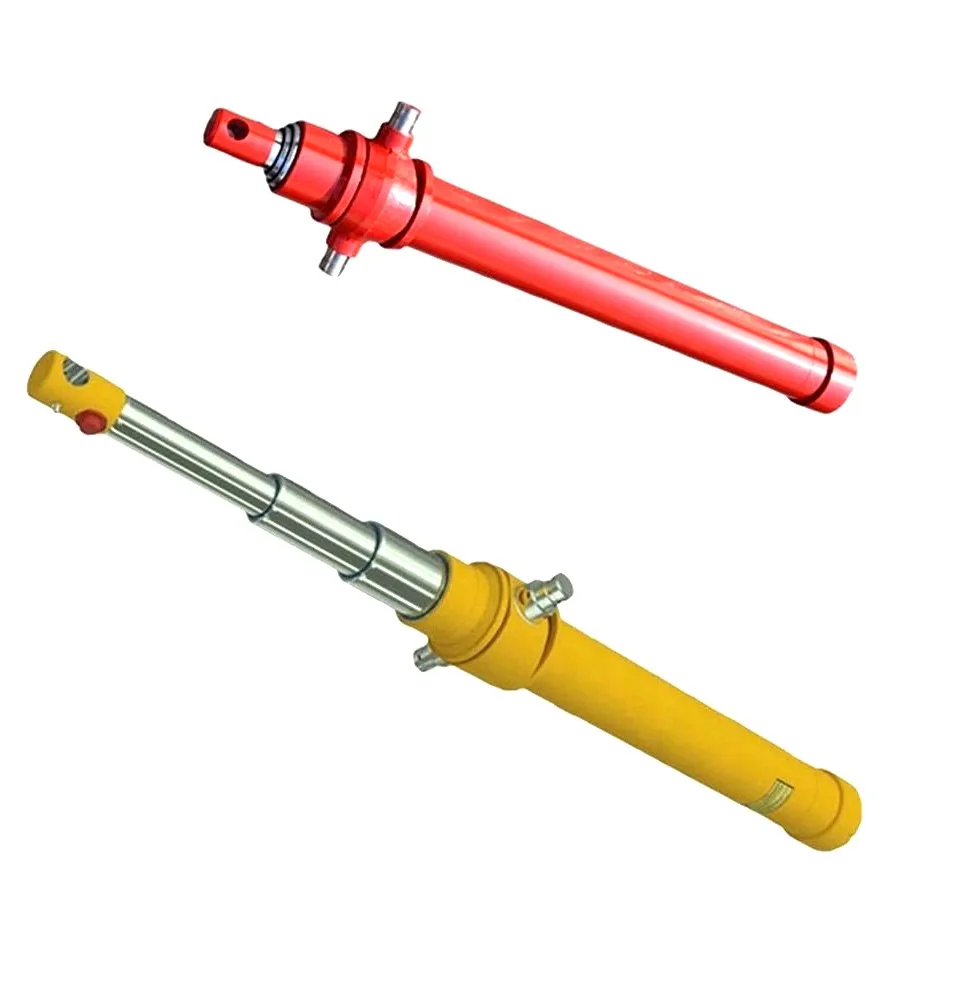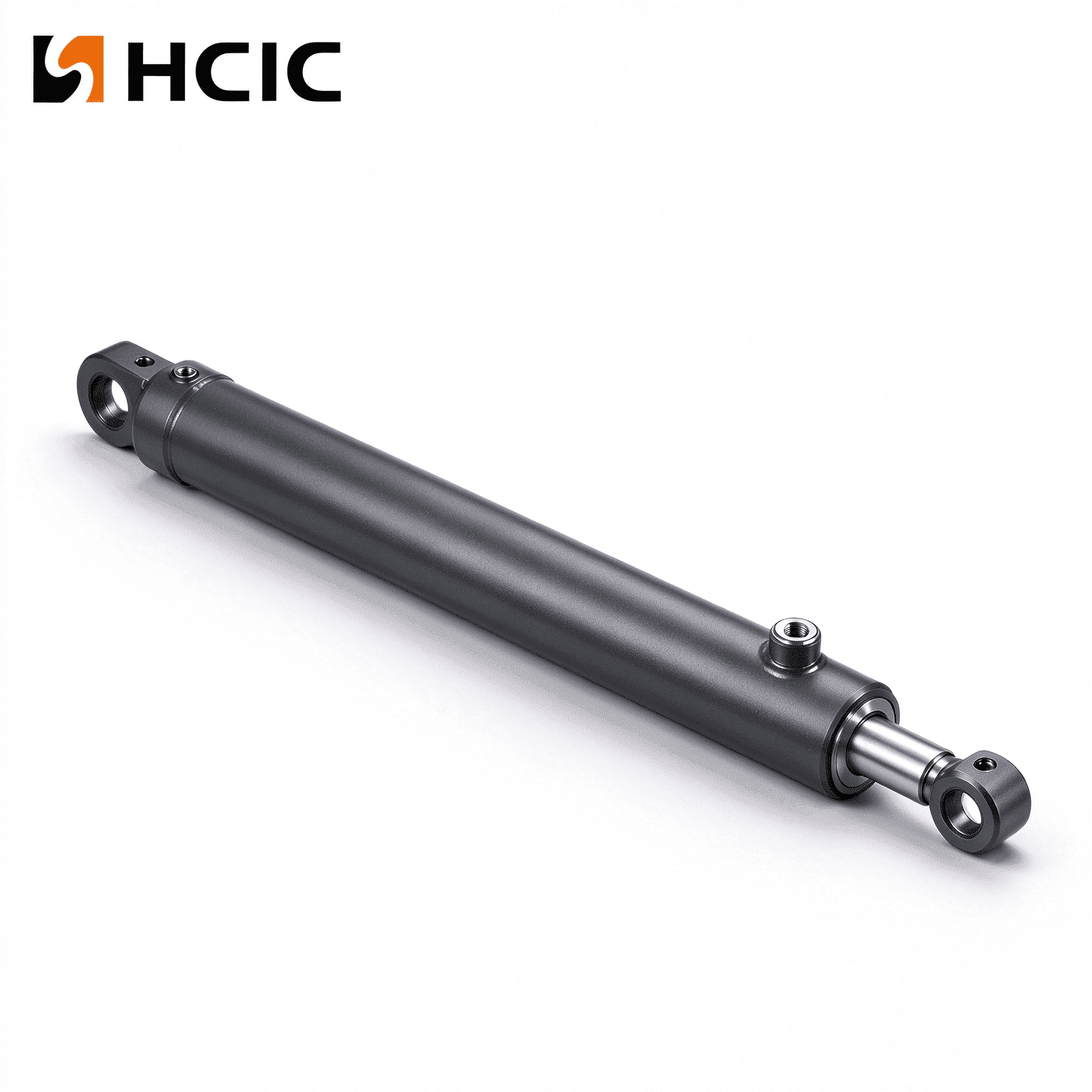


Explore the HCHJ-12KS single-acting hydraulic trailer jack with a 2-inch bore, 1-inch rod, 20-inch stroke, 12-ton load capacity and 3,000 psi working pressure.
The HCHJ-12KS single-acting hydraulic trailer jack is a catalog-listed hydraulic jack for trailer lifting and support applications. It uses a single-acting cylinder with a 2-inch bore, a 1-inch rod and a 20-inch stroke. The catalog lists a 12-ton load capacity, a 30-inch overall length and a maximum working pressure of 3,000 psi.
For trailer builders, fleet operators and replacement buyers, the useful question is not only whether a jack can lift. The jack must also match the trailer's mounting position, hydraulic circuit, working clearance and support procedure. The following information is based on the HCIC-2026 catalog entry for HCHJ-12KS.

| Parameter | Catalog value |
|---|---|
| Model | HCHJ‑12KS |
| Acting type | Single action |
| Bore | 2 in |
| Rod diameter | 1 in |
| Stroke | 20 in |
| Overall length | 30 in |
| Port | SAE #6 |
| Load capacity | 12 ton |
| Working pressure | 3,000 psi |
| Source | HCIC‑2026 catalog, p. 16 |
The listed values describe the catalog configuration. The correct selection for a trailer still depends on the load path, support points, hydraulic supply and installation geometry.
The HCHJ-12KS uses a single-acting hydraulic arrangement. Hydraulic pressure drives the jack in the powered direction; the return movement must be provided by the trailer mechanism, the supported load, gravity or the complete system design. That operating logic should be confirmed before replacing a double-acting jack with a single-acting model.
The 2-inch bore provides the cylinder's pressure area, while the 1-inch rod guides the moving member and transfers force through the mounting connection. The 20-inch stroke determines the available adjustment range. The 30-inch catalog length must be checked against the retracted installation envelope and the trailer's available space.
The SAE #6 port gives the buyer a defined connection reference for the hydraulic circuit. Port orientation, hose routing and fitting clearance should be checked against the actual trailer drawing rather than assumed from the model name.

A single-acting jack can suit a trailer circuit where hydraulic power is required for extension and the return direction is managed mechanically. This can simplify the intended operating sequence, provided the trailer design supports reliable retraction and load transfer.
Stroke is not the same as usable ground clearance. The engineer should review the jack's mounting center, foot or support interface, trailer frame height and the movement required during coupling, parking or leveling.
The catalog lists a 12-ton load capacity. This should be treated as the product's catalog reference, not as permission to exceed the trailer structure, mounting hardware or site safety procedure. The complete support system must be checked for the actual load condition.
The SAE #6 port provides a practical starting point for hydraulic hose and fitting review. The connection should be protected from impact, excessive bending and contamination during installation and service.
Before ordering the HCHJ-12KS, confirm:
The HCHJ-12KS single-acting hydraulic trailer jack may be considered for trailer lifting and support applications where the catalog dimensions and single-acting circuit are suitable. Potential project types include dump trailers, cargo trailers, livestock trailers, horse trailers, flatbed trailers and gooseneck trailer equipment, subject to final fitment and load review.

The product page in the catalog describes hydraulic jacks for trailer use and identifies these trailer categories as application contexts. The jack should not be approved from the category name alone. A quotation review should use the actual trailer drawing and operating conditions.
Provide the following information to reduce fitment errors:
If the replacement is intended to work with an existing HPU, include the HPU model, port arrangement and control method. A dimensional match is not enough if the acting type or circuit logic is different.
The HCHJ-12KS is a defined single-acting hydraulic trailer jack with catalog values that make initial project screening straightforward: 2-inch bore, 1-inch rod, 20-inch stroke, 30-inch overall length, SAE #6 port, 12-ton load capacity and 3,000 psi working pressure.
The next step is fitment review. Send HCIC the trailer drawings, mounting dimensions, hydraulic information and support requirements so the HCHJ-12KS single-acting hydraulic trailer jack can be checked against the actual application rather than selected from capacity alone.
HCIC develops and manufactures hydraulic cylinders, hydraulic power units and related hydraulic components for trailer, vehicle and industrial applications. Product suitability should be confirmed against the machine design and the final hydraulic circuit.