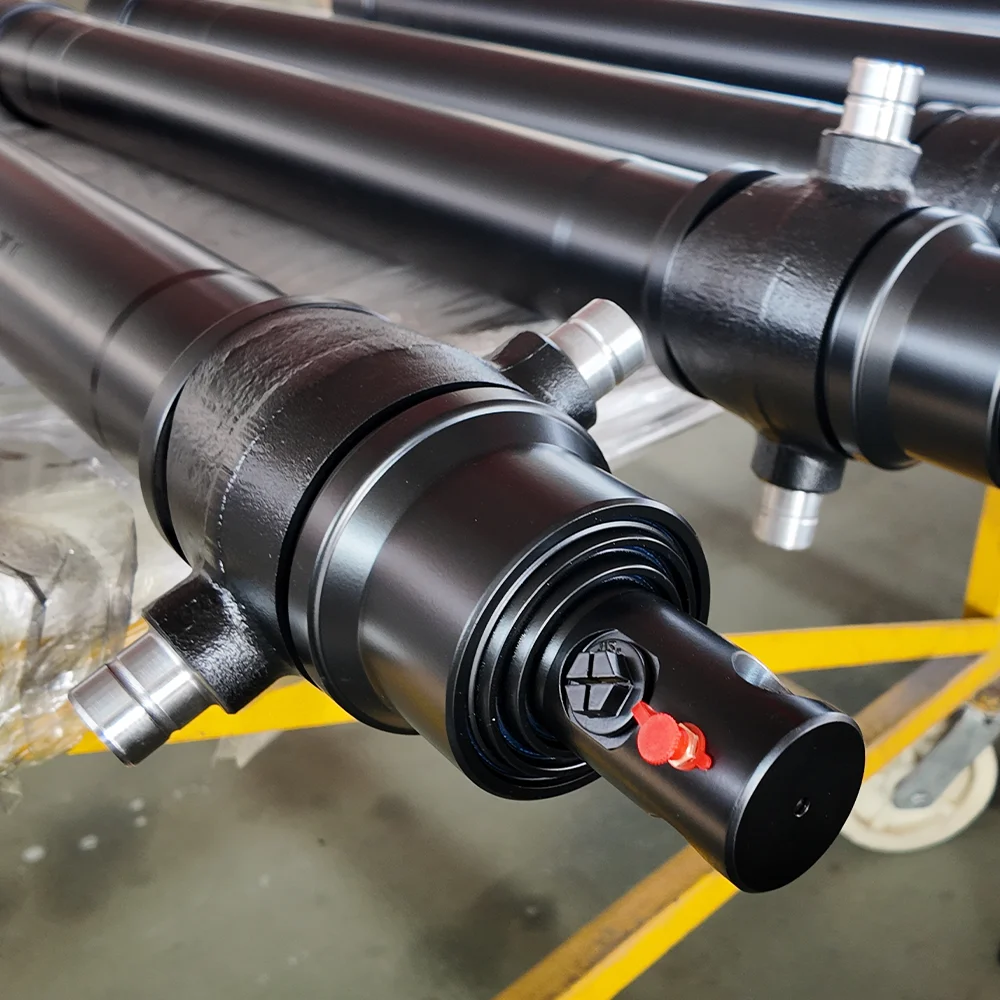
Construction machinery encounters mud mixed gravel, iron scraps and cement dust with strong abrasive property; agricultural cylinders suffer humus soil, fertilizer-laden muddy water and crop residues with corrosion risk. General single-layer dust seal cannot block mixed impurities and easily scratch piston rod chrome coating.
Uniform dust specification for all working conditions is a common design flaw. Fine silt creeps into clearance, abrades dust lip and mixes grease into abrasive slurry, inducing inner seal damage and oil leakage. After-sale data proves roughly 37% premature cylinder failures stem from improper dust selection rather than inner seal quality.
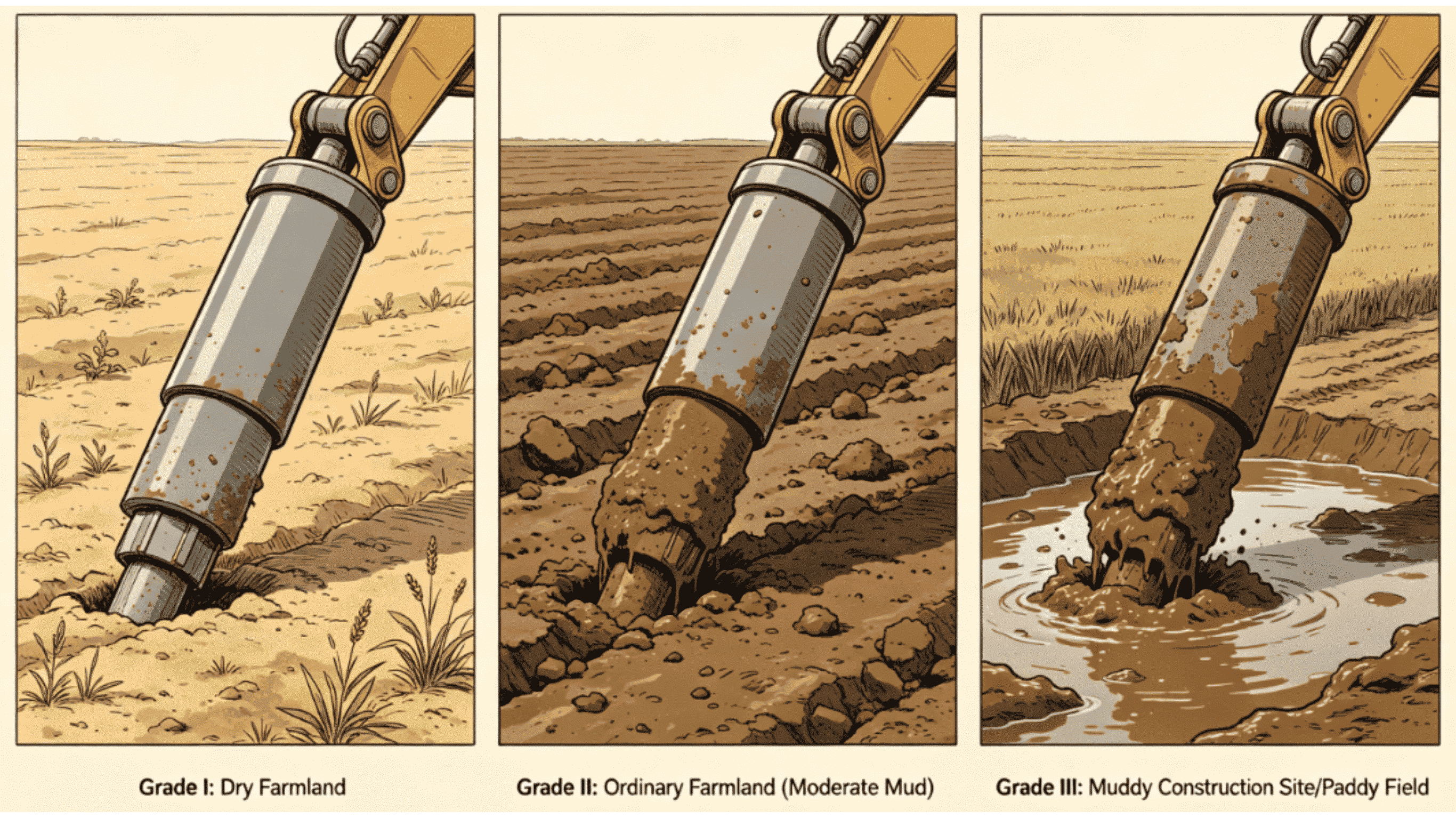
GradeⅠ(Light mud): intermittent dry field operation, mud attachment below12%, floating dust mainly.
GradeⅡ(Medium mud): conventional farm working, mud adhesion 12%~35%, soil plus crop fragments.
GradeⅢ(Heavy mud): paddy field & open earthmoving, mud coverage over35%, mixed gravel and agricultural chemical residues.
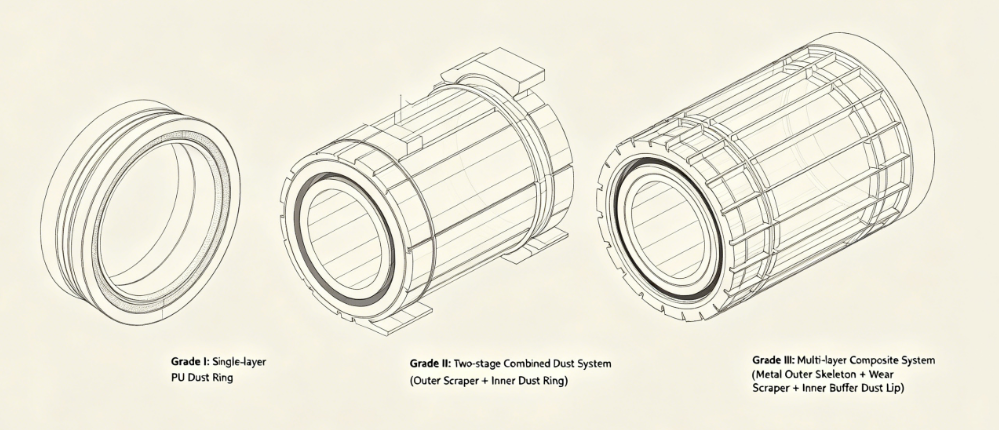
GradeⅠ: single-layer PU dust ring for light pollution equipment.
GradeⅡ: two-stage combined dust (outer scraper + inner standard dust ring) for general farm machinery.
GradeⅢ: multi-layer composite dust with metal outer skeleton + wear scraper + inner buffer dust lip for heavy mud machines.
Shore A92 PU is adopted, compression margin controlled 0.3~0.5mm, balancing dust blocking and friction loss. Overhard material scratches rod surface while soft dust lip turns over under mud impact.
Outer scraper uses high-hardness A96 modified PU to clear bulk mud; inner A92 PU intercept residual fine dust. Split groove avoids mutual extrusion deformation of two dust parts.
Outermost cold-steel skeleton resists gravel impact; middle modified PU scraper peels thick mud; inner soft fluorine-containing PU seals remaining tiny silt to avoid rod scratch.
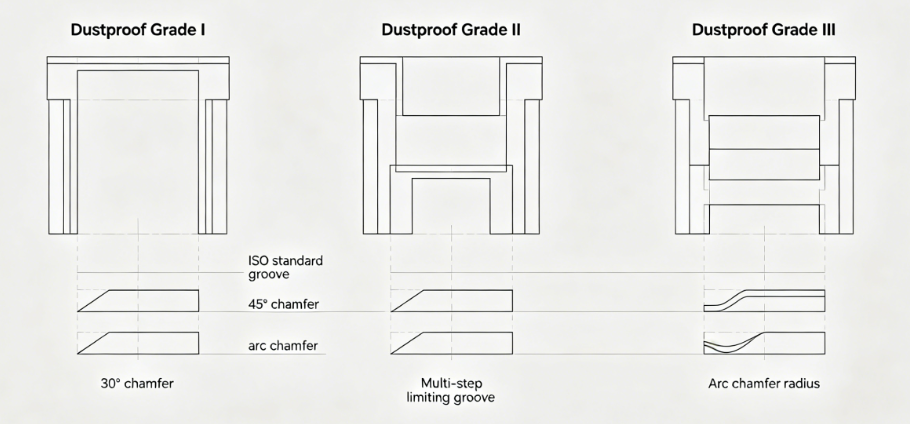
GradeⅠ follows ISO6195 standard groove; GradeⅡ adopts stepped groove with outer scraper groove deepened 1.2mm for mud storage; GradeⅢ multi-step limiting groove prevents axial shifting of dust parts.
30°chamfer for GradeⅠ; 45°for GradeⅡ to accelerate mud sliding; GradeⅢ adds outer arc chamfer to eliminate mud accumulation dead angle.
A domestic trailer factory previously used universal single dust, 42% annual leakage complaints. After graded upgrade: road trailers keep GradeⅠ, field dumpers use GradeⅡ, paddy vehicles apply GradeⅢ. One-year follow-up cuts premature failure rate below7%.
Mini excavator mud pit cylinders upgraded from ordinary double dust to GradeⅢ composite structure, seal service life lifted from 2300h to over5800h under identical working load.
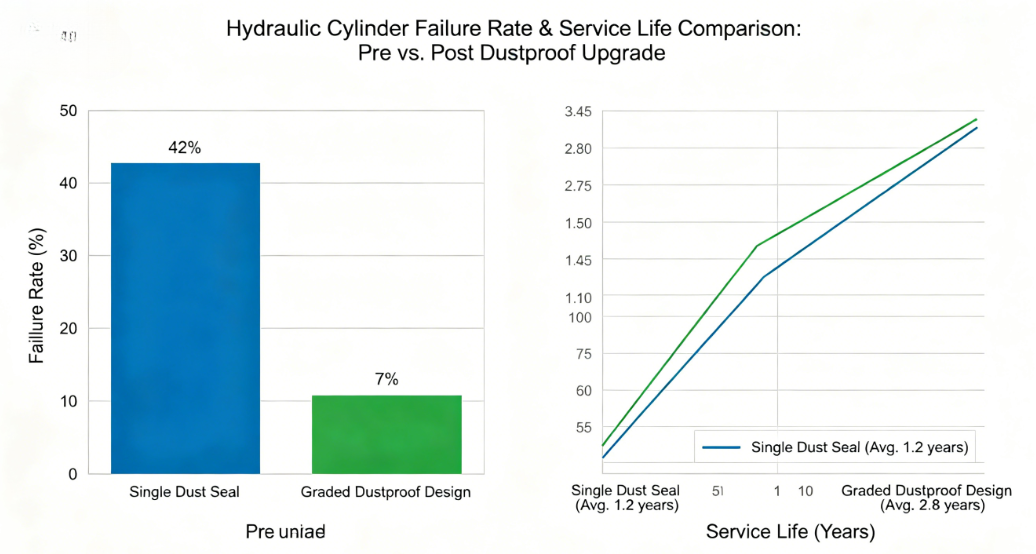
Generalized unified dust configuration cannot adapt varied farm & construction pollution. Graded dustproof design by mud density effectively reduces after-sales failure, balances production cost and service life, becoming mainstream design of high-end hydraulic cylinder manufacturers.
Q1: Can GradeⅡ double dust fit paddy heavy mud cylinders?
A: No. Without anti-impact metal frame, outer scraper gets damaged quickly by gravel; paddy equipment must use GradeⅢ composite dust.
Q2: Is higher hardness dust seal always better?
A: No. Superhard material scrapes mud well yet abrades chrome rod in dry environment; material hardness must match real working mud content.