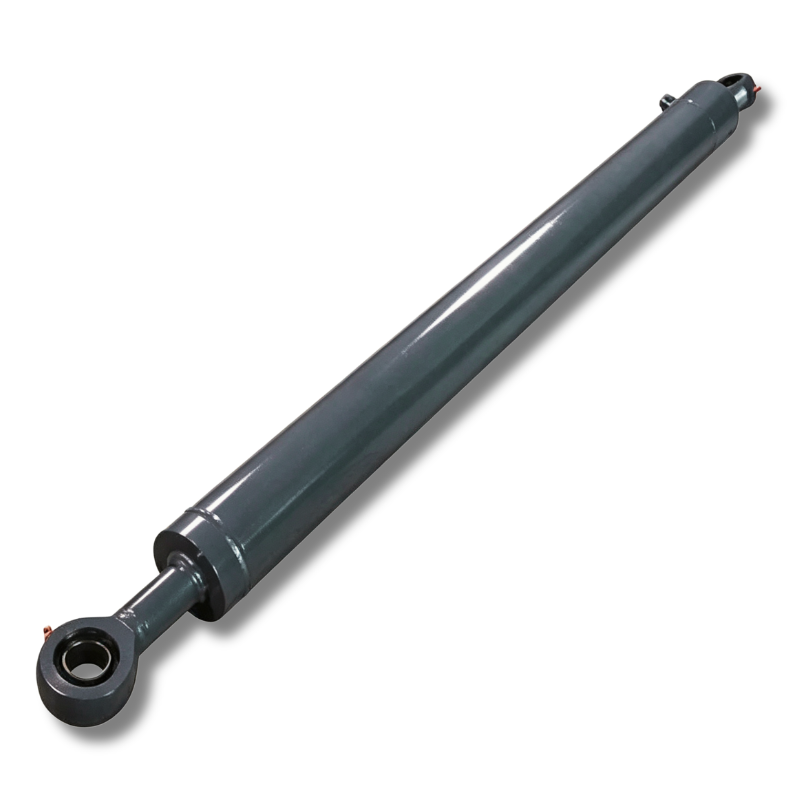
HCIC tarp system hydraulic cylinders for dump trucks and waste trailers. HR4752 (2" bore 36" stroke), HR4719, HR4520 with QPQ nitrided rod, Q355JR barrel. ISO 9001. Direct from Jinan factory.
Bore Diameter:
2.00" /2.50"/1.50"Rod Diameter:
1.25" /1.00"/1.25"Stroke Length:
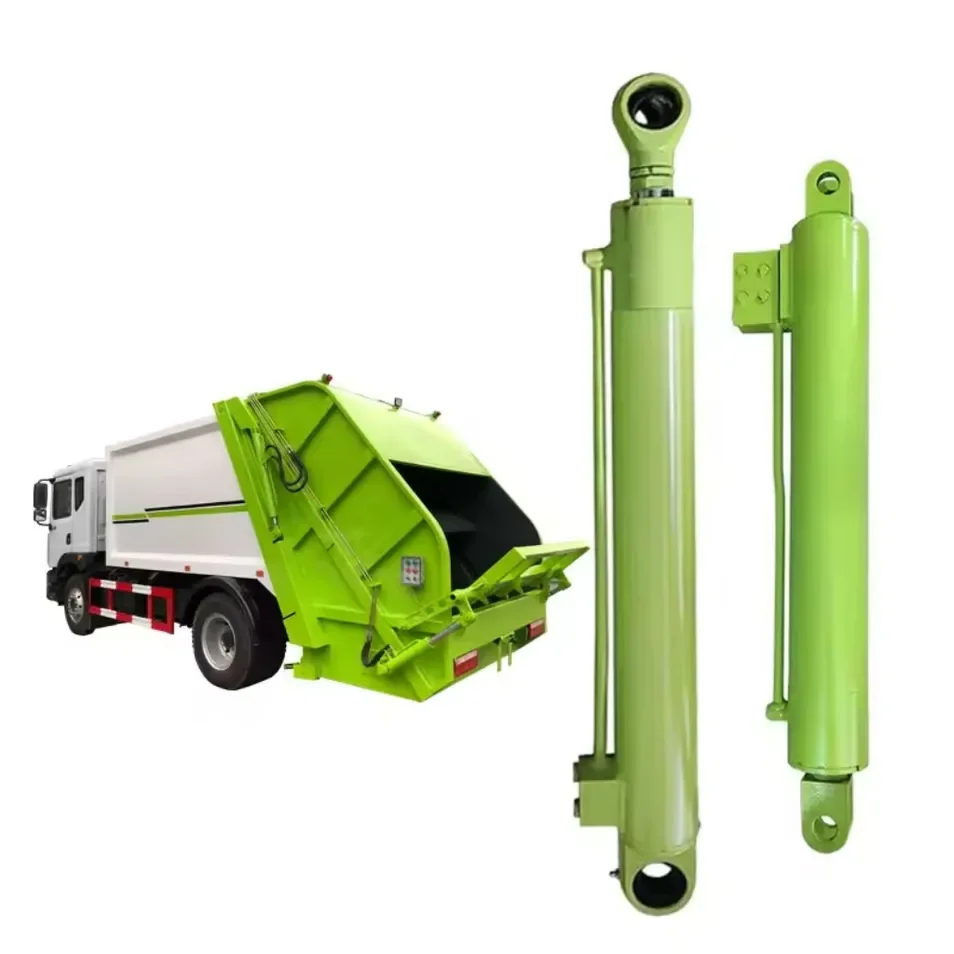
16"/36"HCIC HR-series tarp system hydraulic cylinders are heavy-duty hydraulic actuators for opening and closing tarpaulin covers on dump trucks and waste trailers. Subjected to high-frequency cycling, ordinary cylinders easily suffer seal wear and rod corrosion, causing early failure.
Manufactured for a US waste equipment distributor since 2019, our products maintain an ultra-low 0.3% five-year return rate with 1,200 units supplied annually.
We adopt high-strength Q355JR steel barrels to resist clamping deformation. The AISI-1045 piston rod features induction hardening and QPQ nitriding, providing far better corrosion and scratch resistance than traditional chrome plating with no peeling risk.
QT500-7 ductile iron guide sleeves and pistons offer built-in graphite lubrication, ensuring smooth movement and reliable cold-start performance for long-lasting, trouble-free operation.
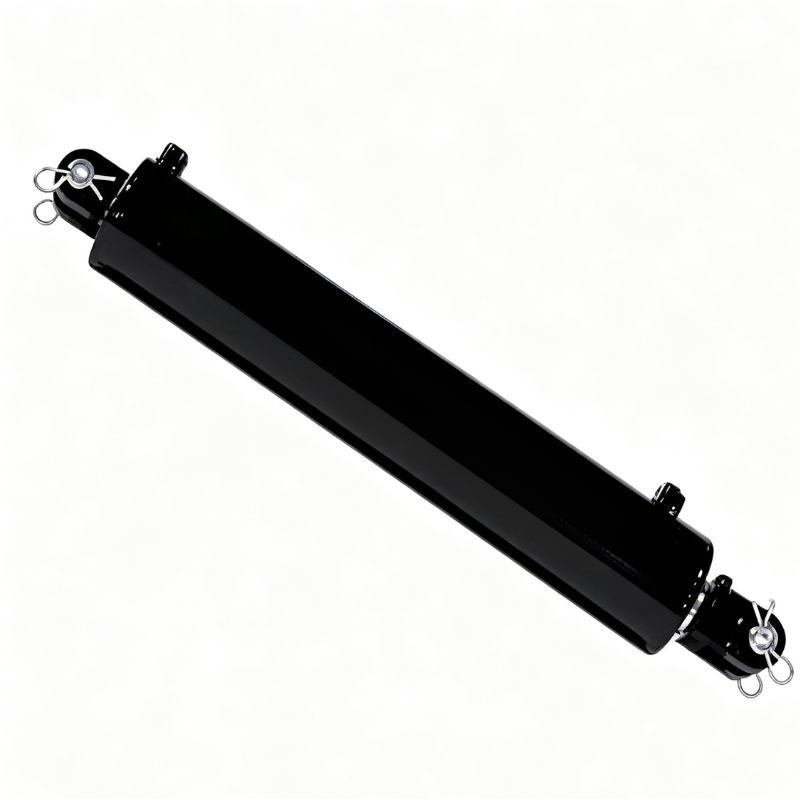
The workhorse. This fits most standard under-body tarp systems on 20-40 yard roll-off containers and full-size dump trailers.
At 2" bore and 14 MPa working pressure, the push force is roughly 2,850 lbs (12.7 kN). Plenty for a tarp that weighs maybe 80-120 lbs including the roller bar. The pull force at 1.25" rod diameter is about 1,740 lbs (7.7 kN). That is enough to tension the tarp so it does not flap at highway speed.
The 36-inch stroke is the most common spec in the US market. It clears the full width of a standard 8.5-foot dump body.
Lighter duty. For single-axle dump trucks and smaller landscape trailers where the tarp is lighter and the arm mechanism puts less leverage on the cylinder.
Push force at 14 MPa: roughly 1,600 lbs (7.1 kN). Pull force: about 890 lbs (4.0 kN).
Same QPQ treatment on the rod. Same Q355JR barrel. This is not a "budget" version. It is the same build quality in a smaller envelope. The only difference is bore and rod diameter.
Short stroke, wider bore. For side-arm tarp systems where the cylinder mounts on a pivot arm and the stroke requirement is shorter but the mechanical disadvantage is higher. These systems pull the tarp across the top of the body at an angle, so the cylinder sees a side-load component that a straight-line roller system does not.
Push force at 14 MPa: roughly 4,450 lbs (19.8 kN). The extra bore compensates for the angular load.
| Parameter | HR4752 | HR4719 | HR4520 |
|---|---|---|---|
| Bore Diameter | 2.00" (50.8 mm) | 1.50" (38.1 mm) | 2.50" (63.5 mm) |
| Rod Diameter | 1.25" (31.75 mm) | 1.00" (25.4 mm) | 1.25" (31.75 mm) |
| Stroke Length | 36" (914 mm) | 36" (914 mm) | 16" (406 mm) |
| Retracted Length | 41.5" (1054 mm) | 41.5" (1054 mm) | 21.5" (546 mm) |
| Working Pressure | 14 MPa (2030 PSI) | 14 MPa (2030 PSI) | 14 MPa (2030 PSI) |
| Max Pressure | 18 MPa (2610 PSI) | 18 MPa (2610 PSI) | 18 MPa (2610 PSI) |
| Push Force @ 14 MPa | 2,850 lbs (12.7 kN) | 1,600 lbs (7.1 kN) | 4,450 lbs (19.8 kN) |
| Pull Force @ 14 MPa | 1,740 lbs (7.7 kN) | 890 lbs (4.0 kN) | 3,220 lbs (14.3 kN) |
| Port Size | SAE #4 (7/16-20 UNF) | SAE #4 (7/16-20 UNF) | SAE #4 (7/16-20 UNF) |
| Cylinder Barrel | Q355JR (yield 355 MPa) | Q355JR (yield 355 MPa) | Q355JR (yield 355 MPa) |
| Piston Rod | AISI-1045, QPQ nitrided | AISI-1045, QPQ nitrided | AISI-1045, QPQ nitrided |
| Rod Surface Hardness | 600-700 HV (QPQ compound) | 600-700 HV (QPQ compound) | 600-700 HV (QPQ compound) |
| Induction Hardening Depth | 1.5-2.0 mm | 1.5-2.0 mm | 1.5-2.0 mm |
| Guide Sleeve | Ductile iron QT500-7 | Ductile iron QT500-7 | Ductile iron QT500-7 |
| Piston | Ductile iron QT500-7 | Ductile iron QT500-7 | Ductile iron QT500-7 |
| Seal Type | Polyurethane U-cup + wiper | Polyurethane U-cup + wiper | Polyurethane U-cup + wiper |
| Rod Wiper | Double-lip polyurethane | Double-lip polyurethane | Double-lip polyurethane |
| Operating Temp | -30°C to +90°C | -30°C to +90°C | -30°C to +90°C |
| Mounting | Clevis / Cross-tube (both ends) | Clevis / Cross-tube (both ends) | Clevis / Cross-tube (both ends) |
| Paint | Black enamel, 60-80 μm DFT | Black enamel, 60-80 μm DFT | Black enamel, 60-80 μm DFT |
| Weight | 7.2 kg (15.9 lbs) | 5.1 kg (11.2 lbs) | 6.8 kg (15.0 lbs) |
We run our own QPQ line. The rod goes through three stages:
Salt spray testing per ASTM B117: QPQ-treated 1045 steel rods show first red rust at 200-300 hours. Untreated 1045: red rust in under 4 hours. Hard chrome: varies wildly by plater quality, but typically 60-100 hours before rust spots appear.
The most common application. Municipal waste trucks run in stop-start conditions, often in rain, road salt, and landfill mud. The tarp cylinder sits on top of the body, fully exposed. HR4752 is the standard spec here. The QPQ rod handles the corrosion. The Q355JR barrel holds up under clamp force and vibration.
Longer stroke sometimes required (up to 48 inches in custom configurations). We have made HR4752 variants with 42" and 48" stroke. Same bore and rod. The longer stroke requires a longer barrel and longer rod, so retracted length increases accordingly. We use a precision honed tube with Ra ≤ 0.4 μm ID finish regardless of stroke.
Grain trailers use tarp systems to cover loads during transport. The environment is dusty, not wet, but grain dust is abrasive. The QPQ rod surface at 600-700 HV resists abrasive wear better than chrome (typically 800-1000 HV but with a brittle interface). We have had zero rod wear complaints from grain trailer operators since 2020.
These trucks haul mulch, gravel, sand. The tarp gets gritty. The rod wiper seal is the first line of defense. We spec a double-lip polyurethane wiper — the outer lip scrapes debris, the inner lip retains oil film. Wiper replacement takes about 10 minutes with a pick tool. We recommend changing the wiper every 5,000 cycles.
Mounting matters. A tarp cylinder that is misaligned by 2 degrees will side-load the rod by roughly 3.5% of the push force. On an HR4752 at full load, that is about 100 lbs of lateral force on the rod bearing. The guide sleeve can handle that. But if the misalignment is 5 degrees, the side load jumps to 8.7% — about 250 lbs. That is enough to accelerate guide sleeve wear by a factor of 3-4x.
Use spherical bearings at both mounting points. Standard clevis pins are fine, but the clevis must be free to rotate. If the pin binds, the cylinder body becomes a bending beam. Q355JR is strong but it is not designed to be flexed 6,000 times a year.
Port orientation: SAE #4 ports can be clocked in 90° increments relative to the mounting plane. Tell us your hose routing when you order. We clock the ports at assembly.
Every HR-series cylinder ships with:
We do not include hydraulic fittings. Too many thread standards — NPT, JIC, BSP, ORFS, metric. Tell us what you need and we will include them at no extra charge beyond the fitting cost.
Jinan Huachen Industrial Co., Ltd. Established 1998. Three factories. 300+ people. ISO 9001:2015.
We specialize in hydraulic cylinders and power units. The HR-series tarp cylinders are built on the same production line as our heavy-duty telescopic cylinders for waste handling trucks. Same honing machines. Same QPQ line. Same pressure test benches.
When you buy HR4752 cylinders from HCIC, you get cylinders made by a company that also builds 6-stage telescopic cylinders rated to 25 MPa. The quality system does not change because the cylinder is smaller.
Export experience: 50+ countries. We have shipped to every major market including the US, Canada, Australia, Germany, UK, UAE, and Brazil. We know the paperwork — Certificates of Origin, Form E, Form F, packing lists, bills of lading. It is handled in-house.