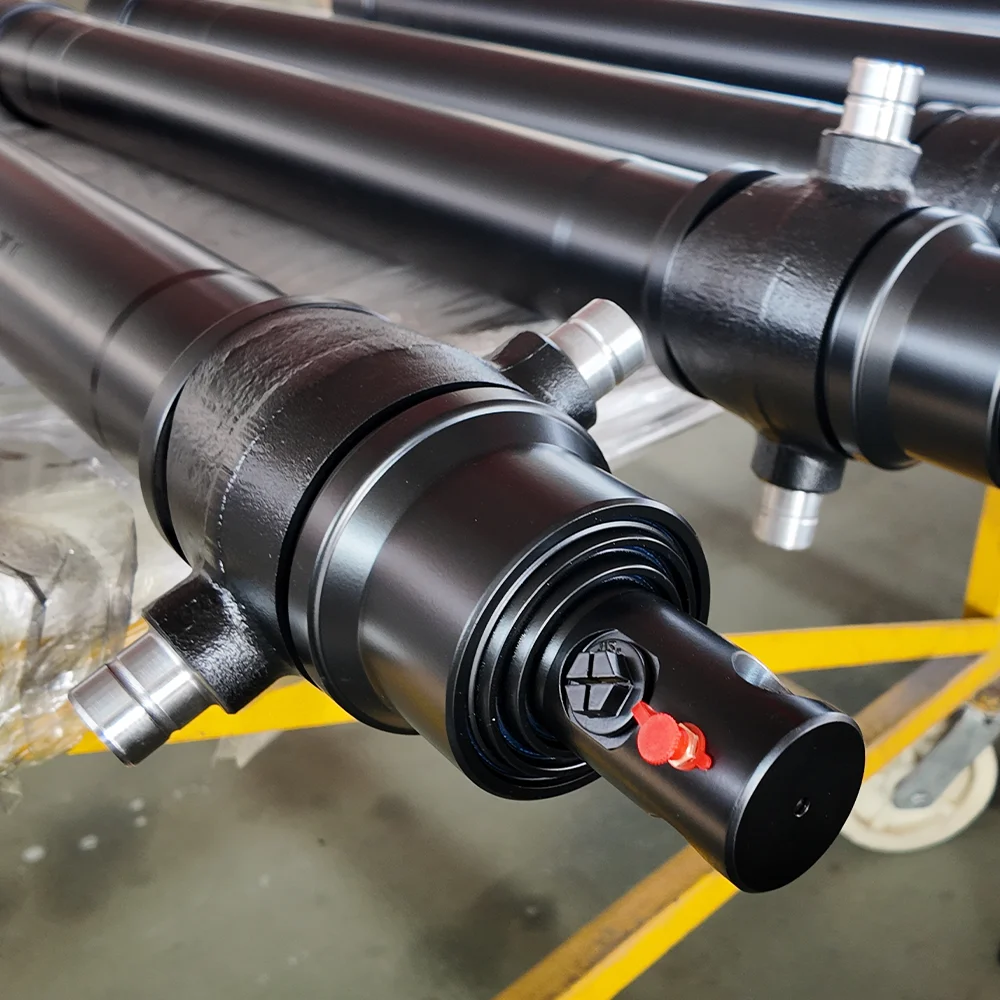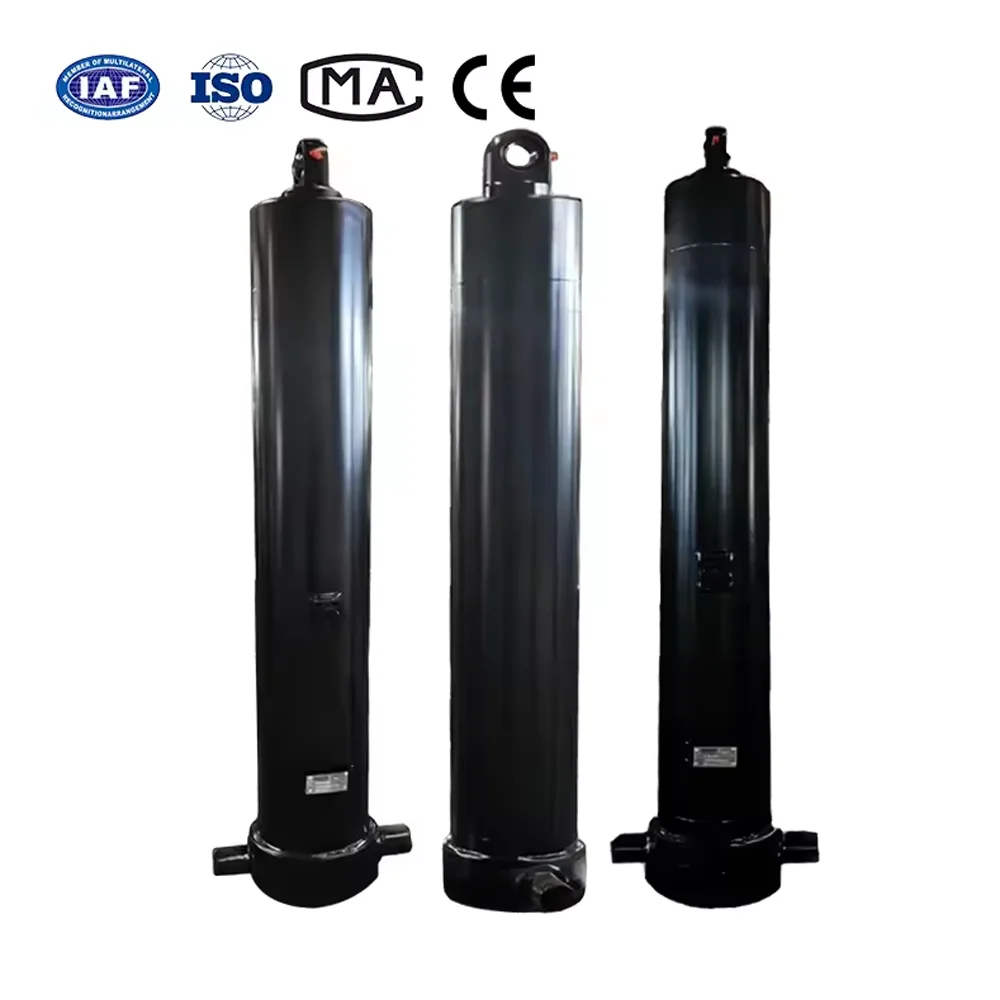
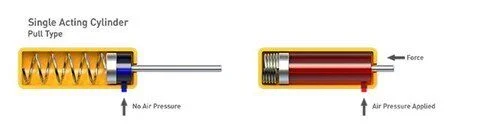
A single acting pneumatic cylinder only produces thrust or working force in one single direction. It uses a built-in spring, or external forces like gravity, weights, or mechanical motion to retract the piston back to its starting spot.
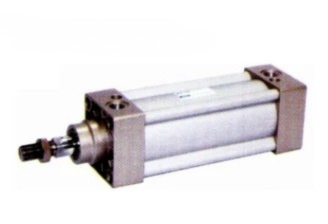
These cylinders only feature one air inlet port, which feeds compressed air into the chamber to push the piston to the target position.
Single acting pneumatic cylinders are built for one-way work tasks, common uses include clamping, part positioning, marking, short stroke moves, and light duty assembly work.
(1).The application of air pressure produces a thrust, thus ‘pushing’ the piston:
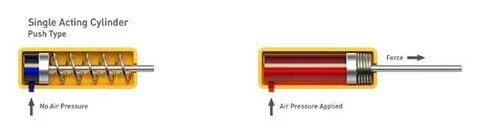
(2).The application of air pressure produces a thrust, thus ‘pulling’ the piston:
Simple, straightforward construction
Compact, space-efficient build
Lower costs for control valves and air line piping
Uses half the compressed air vs a same-size double acting cylinder
The spring return side is open to ambient air, letting dust and debris get inside, which causes breakdowns and shortens cylinder lifespan
Spring performance weakens over time, leading to unsteady stroke end positions
Bore diameter and stroke length are limited by internal spring size and strength
Slight drop in pushing force, since the spring resists the piston’s forward movement
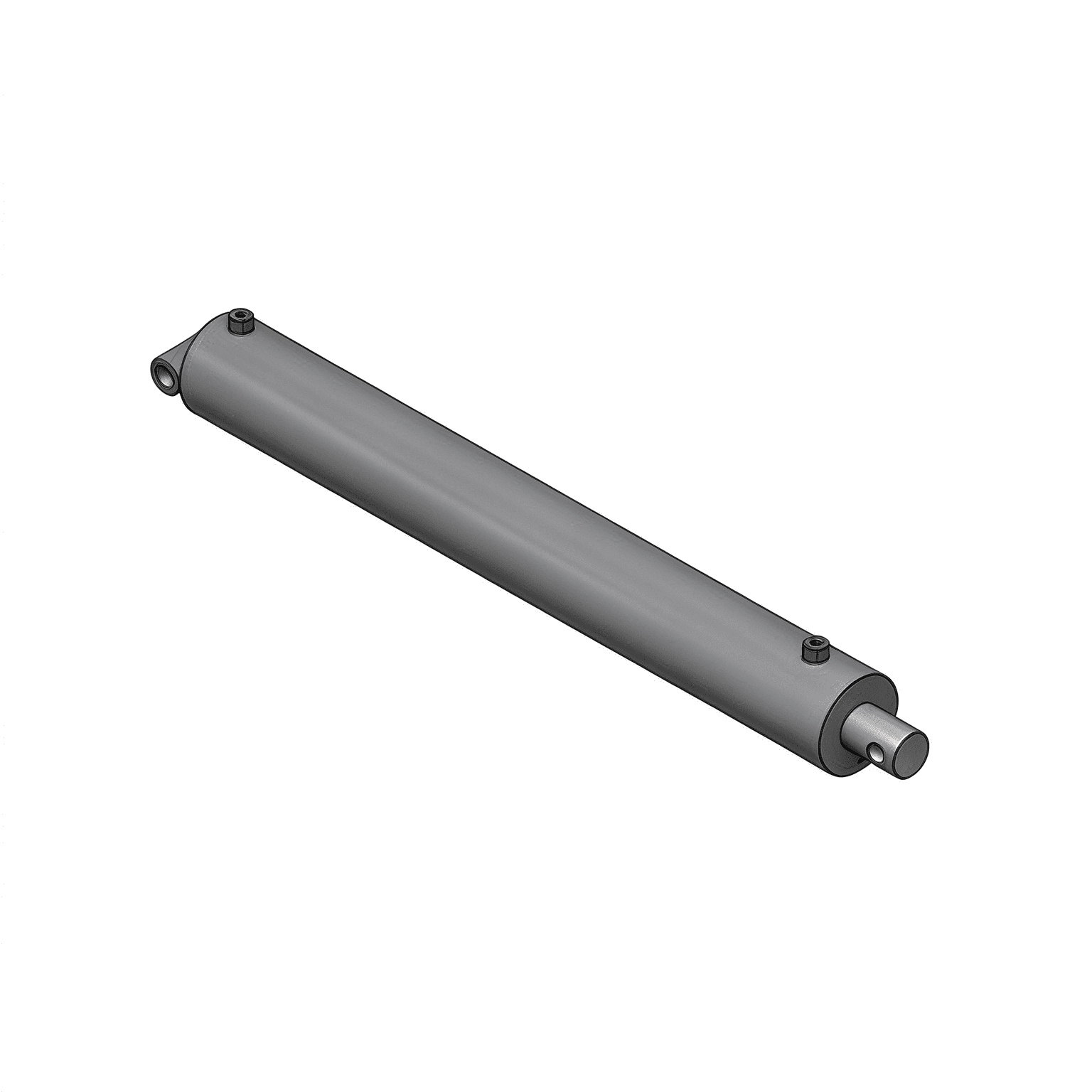
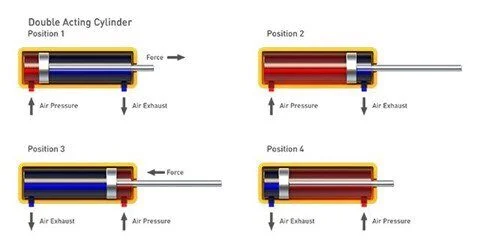
A double acting pneumatic cylinder generates force in both directions, pushing the piston outward and pulling it back inward.
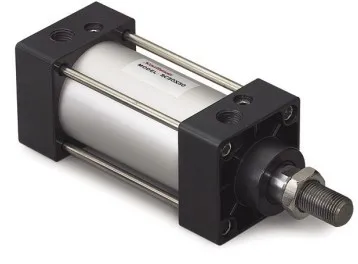
This design comes with an air port at either end, and diverts high-pressure air between the two ports to drive the piston back and forth. It is indispensable for tasks requiring bidirectional movement, such as opening and shutting industrial gates and dampers.
Double acting cylinders are the most widely used linear actuators, accounting for about 95% of the cylinders applied in pneumatic control systems.
They are the optimal choice for heavy-duty operations, long strokes and high-force demands that single acting cylinders cannot satisfy.Small double acting models also work for jobs needing precise, fixed end positions on both extend and retract strokes.
Here's how they work:
- Nearly all ISO standard pneumatic cylinders use the double acting design
- Wider range of bore sizes and stroke lengths than single acting models
- Plenty of custom modifications for the base double acting frame
- No built-in lock to hold the piston steady at mid-stroke positions
- Air is compressible, so feeding applications need a hydraulic slave cylinder for smooth, steady movement
- Long stroke units need extra piston rod support to stop bending and keep operation smooth