Preface
90% hydraulic leakage on construction machinery comes from premature oil seal failure. Low seal cost leads to huge losses from downtime and component wear. This article combines ISO sealing standards, CE assembly rules and real maintenance data of mining, sanitation and construction fleets, listing 10 common failure causes with simple actionable fixes for mechanics and fleet managers.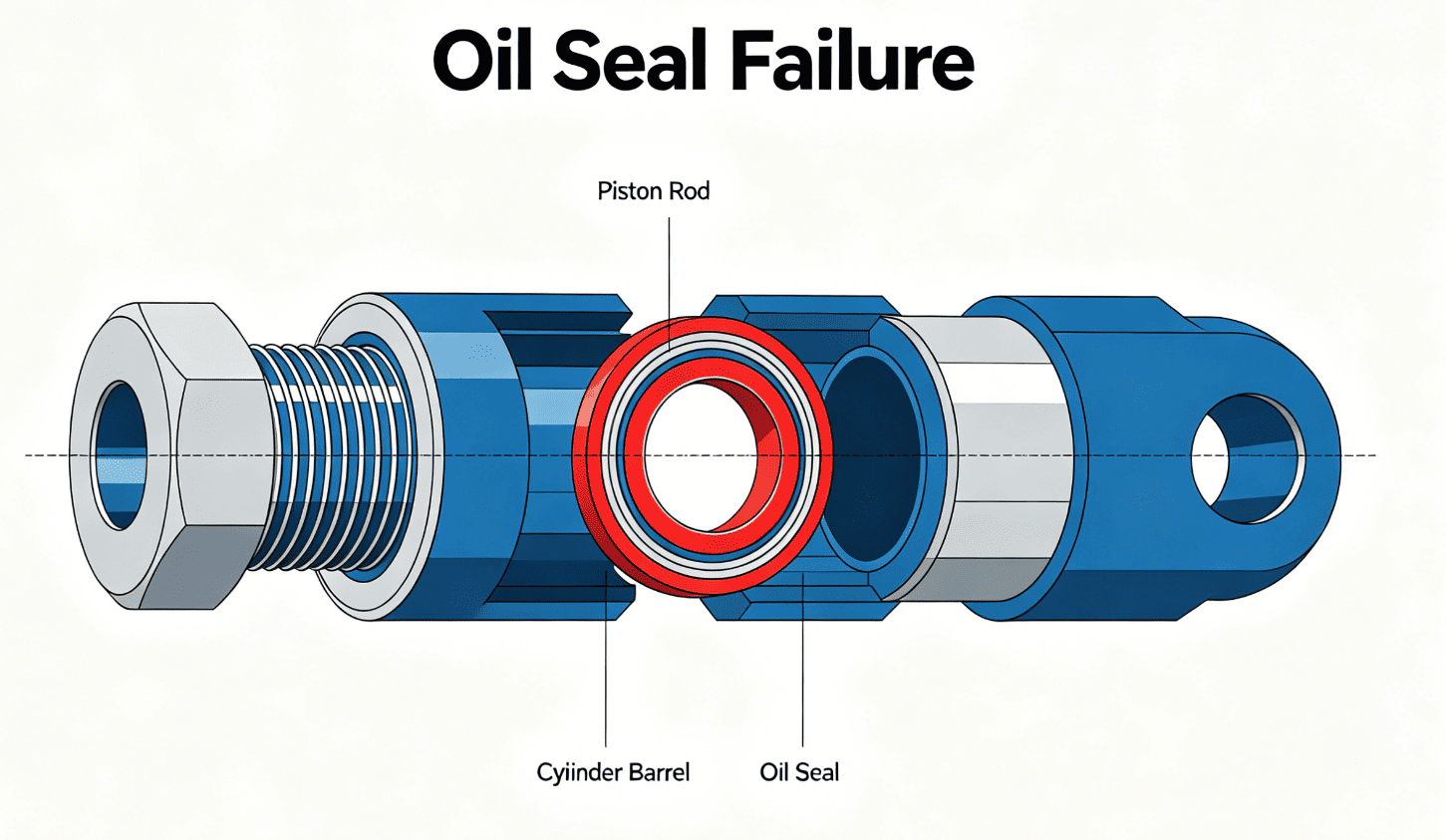
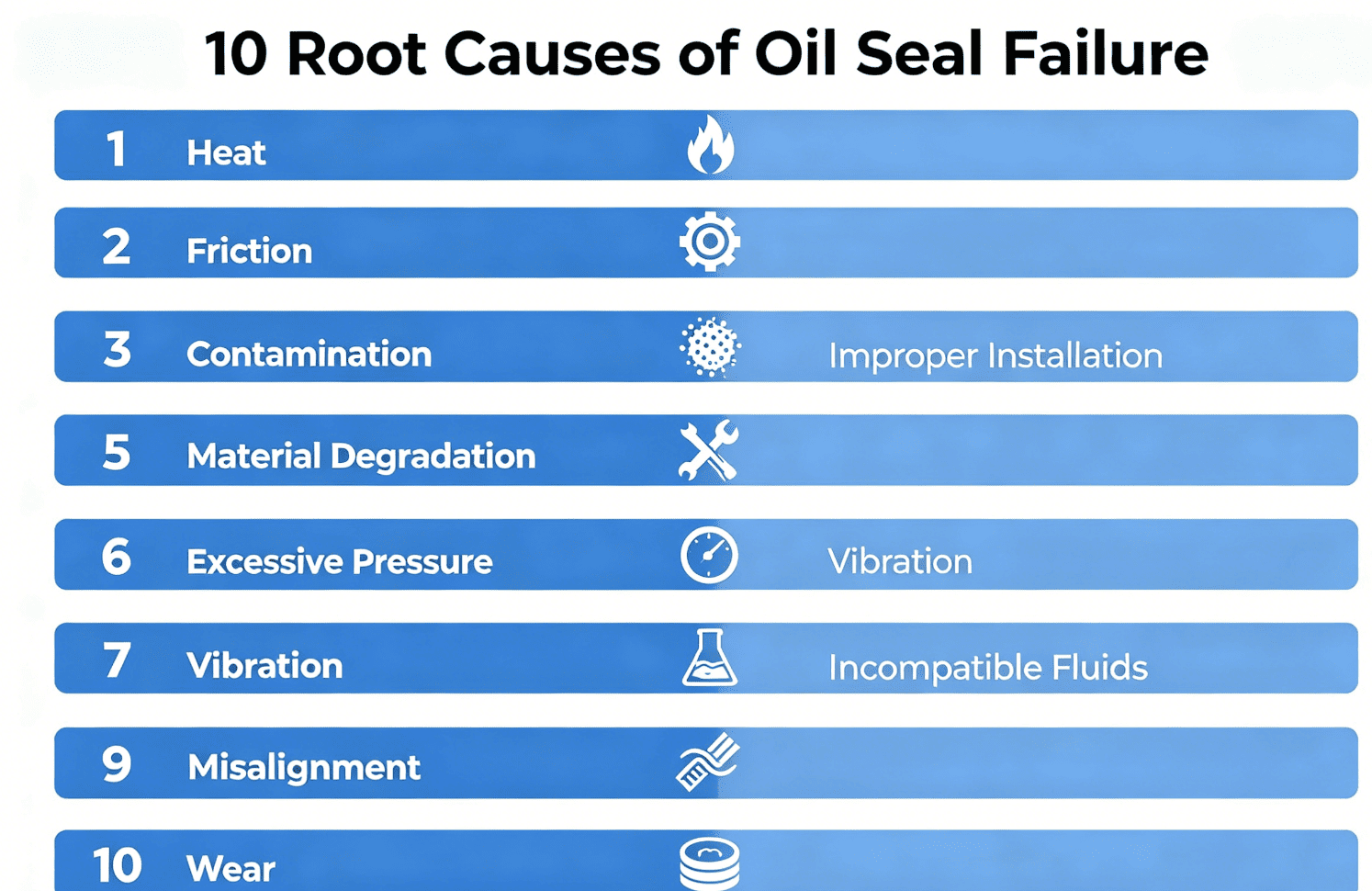
I. Assembly Defects (42% of failures)
1.1 Sharp burrs & poor shaft chamfer
-
Sharp shaft edges cut seal lips during installation and cause slow leakage.
-
Standard: 15°-30° chamfer, shaft roughness Ra≤0.8μm.
-
Fix: Polish all shaft edges before assembly.
1.2 Over-standard assembly tolerance
-
Unqualified shaft size breaks lip pre-tightening force.
-
Data: Service life drops 70% if tolerance exceeds 0.08mm.
-
Fix: Measure shafts with micrometers before fitting.
1.3 Rough installation without special tools
-
Hammer striking deforms seal metal skeleton.
-
Standard: Use plastic press sleeves and lubricate seal lips.
II. Shaft Surface Damage (21% of failures)
2.1 Scratches & circular grooves on shafts2.1.1 Sand and metal scraps abrade shafts and break sealing fit.
-
High-risk machines: excavators, mining trucks.
-
Fix: Coat minor grooves; replace severely scratched piston rods.
2.2 Excessive shaft radial runout
-
Unbalanced friction creates local overheating and one-sided leaks.
-
Standard: Shaft radial runout ≤0.05mm.
III. Abnormal Oil Temperature (16% of failures)
3.1 Long-term high hydraulic oil temperature
-
NBR seals crack quickly over 90℃. Blocked coolers push temp over 110℃.
-
Fix: Clean radiators; use FKM seals for high-temperature mining machines.
3.2 Low temperature cold start damage
-
Ordinary rubber hardens in cold weather and fails to seal at startup.
-
Fix: Preheat equipment 3-5 mins; adopt low-temp modified NBR seals.
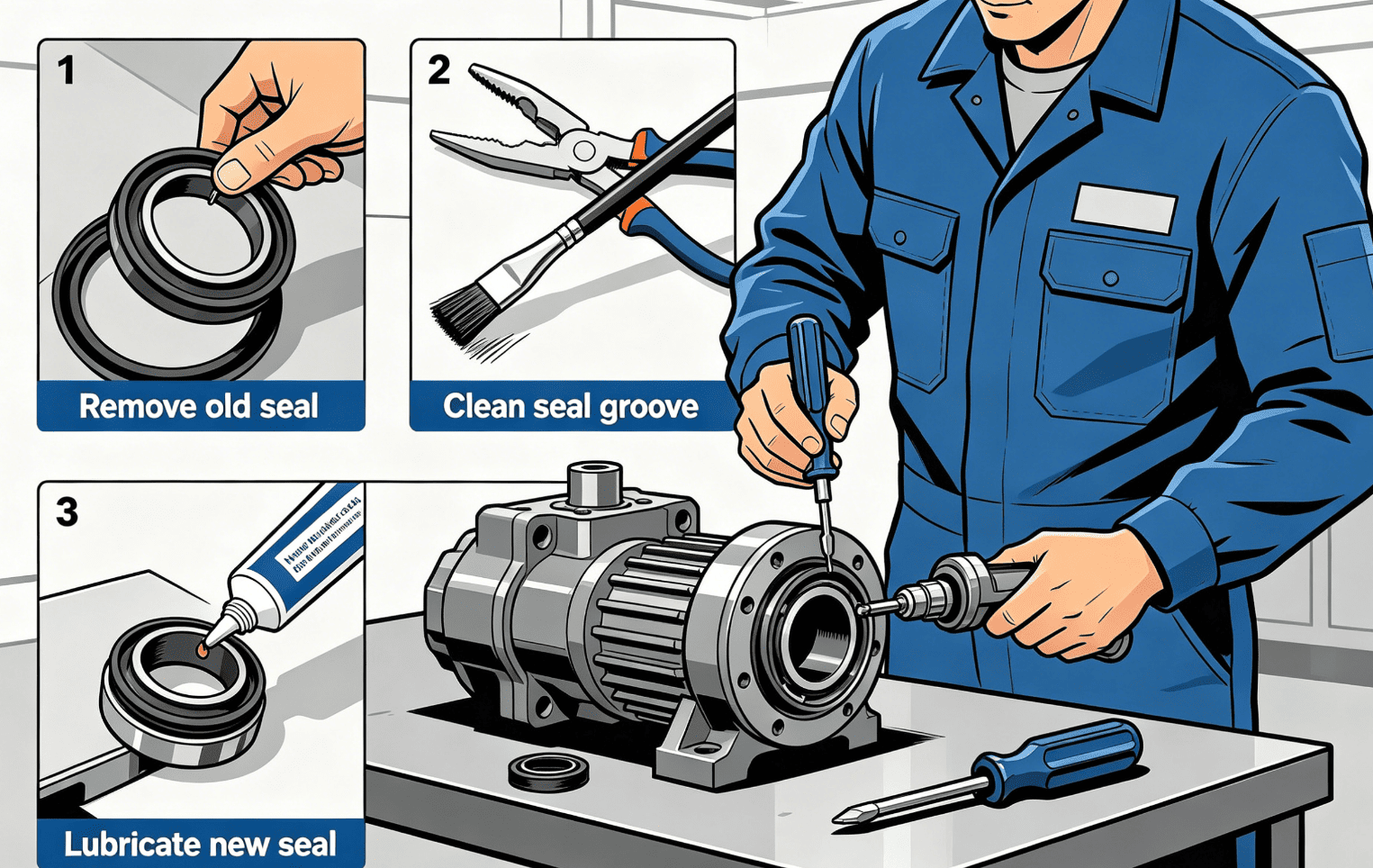
IV. Mismatched & Degraded Hydraulic Oil
4.1 Seal material incompatible with hydraulic fluid
-
NBR swells with synthetic hydraulic oil and loses tightness.
-
Rule: NBR for mineral oil; FKM for synthetic & fire-resistant oil.
4.2 Dirty & oxidized hydraulic oil
-
Acidic deteriorated oil corrodes rubber; impurities grind seal lips.
-
Rule: Replace oil and filters every 2000 working hours.
V. Overloaded Working Pressure
5.1 Instant high-pressure impact
-
Rock breaking or lifting creates pressure surges that break seal lips.
-
Fix: Install back-up ring reinforced seals for high-pressure cylinders.
5.2 Accumulated internal back pressure
-
Clogged return pipes push seals outward and trigger leakage.
-
Fix: Clear oil return pipelines regularly.
VI. Incorrect Oil Seal Selection
6.1 Wrong rubber material for working conditions
-
Normal NBR seals crack within 300 hours on hot mining equipment.
-
Selection guide: NBR for normal temp; FKM for high heat.
6.2 Wrong seal structure & size
-
Non-skeleton seals only fit static low-pressure use.
-
Procurement tip: Provide pressure, temperature and speed when ordering seals.
VII. Rubber Aging From Storage & Long Idle Time
7.1 Long-term stock aging
-
Light and air oxidation makes unused seals lose elasticity.
-
Rule: Seal storage time ≤24 months, follow FIFO stock management.
7.2 Permanent indentation from long machine shutdown
-
Stationary seals stay pressed at one spot and leak after restart.
-
Fix: Retract & extend cylinders monthly for idle equipment.
VIII. Broken Dust Protection Parts
8.1 Damaged dust wipers
-
Mud and gravel pass broken wipers and wear seal lips fast.
-
Rule: Replace dust wiper and oil seal together during maintenance.
8.2 Cracked piston rod protective sleeves
Outdoor construction machines collect dust easily without intact covers.
IX. Excessive Running Speed & Dry Friction
9.1 Over-limit reciprocating speed
-
High-speed movement causes friction heat and burns rubber lips.
-
Standard: Normal seal speed limit ≤0.5m/s.
9.2 Lubrication loss & dry friction
-
Missing oil film leads to direct abrasion and instant seal damage.
-
Ban: Empty cylinder retraction without enough hydraulic oil.
X. Failed Internal Tension Springs
10.1 Corroded or loose seal springs
-
Springs supply holding force; corroded springs cause constant leakage.
-
Corrosion trigger: Rainwater and emulsified hydraulic oil.
10.2 Spring lost during replacement
Common human error causing immediate oil leakage after fitting.
Conclusion
Repeated oil seal leakage rarely comes from defective seals alone; most faults stem from bad assembly, wrong selection and irregular maintenance. This guide follows international sealing standards and can be used for workshop training.If you cannot confirm matching oil seal models or solve continuous leakage issues, send your machine type, working pressure and hydraulic oil type to us for free customized sealing solutions.