Learn how hydraulic cylinders work, explore key designs, and find the right solution for your system
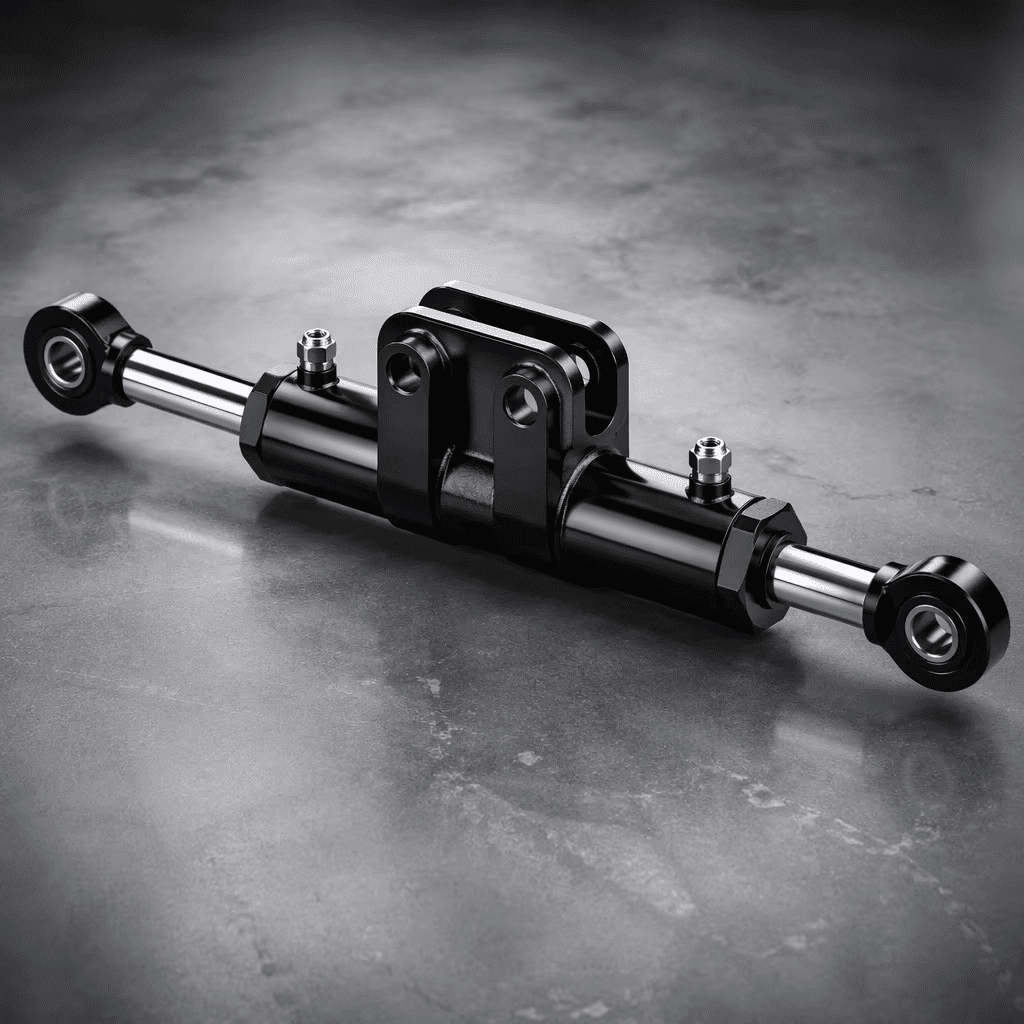
Hydraulic cylinders, also called ‘hydraulic rams’, get power from pressurised hydraulic fluid, usually hydraulic oil. They are made up of a cylinder barrel, inside which a piston connected to a piston rod moves back and forth. The barrel is closed at both ends: one end is the cylinder bottom (also known as the cap end), and the other is the cylinder head, where the piston rod comes out. The piston has sliding rings and seals, and it divides the cylinder’s interior into two chambers— the bottom (cap end) chamber and the piston rod side (rod end) chamber. Hydraulic pressure acts on the piston to produce linear work and motion.
Flanges, trunnions, and/or clevises are attached to the cylinder body. The piston rod also has mounting parts to connect the hydraulic cylinder to the object or machine component it pushes.
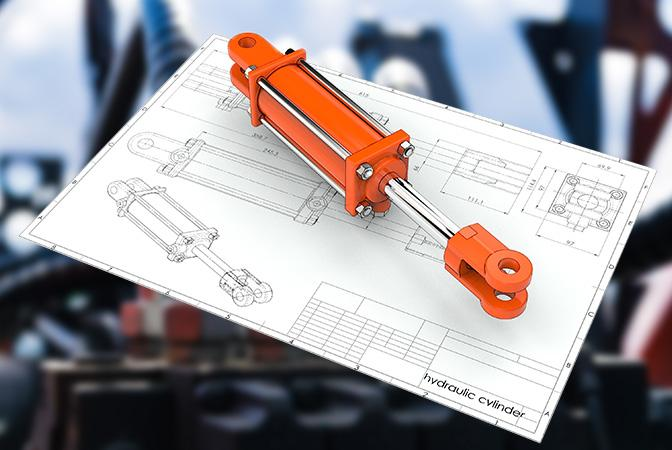
A hydraulic cylinder is the actuator, or ‘motor’, part of a hydraulic system—sometimes called the ‘muscles’—that makes it easy to lift, lower, move, or ‘lock’ heavy loads. The ‘generator’ part of the system is the hydraulic pump, which sends a fixed or regulated flow of oil to the bottom side of the cylinder to move the piston rod upward. The piston pushes the hydraulic oil in the other chamber back to the reservoir. If we assume the oil pressure in the piston rod chamber is almost zero, the force on the piston rod is equal to the pressure in the hydraulic cylinder multiplied by the piston area (F=PA).
The piston moves downward when oil is pumped into the piston rod side chamber, and the hydraulic oil from the piston area flows back to the reservoir without pressure. The pressure in the piston rod area chamber is (Pull Force) divided by (Piston Area – Piston Rod Area).
Also known as ‘hydraulic jacks’ or ‘actuators’, hydraulic cylinders turn fluid power into mechanical energy. Unlike hydraulic motors, which produce rotary movement, hydraulic cylinders perform linear (translatory) movement—so they are also called “linear motors”.
Used at high pressures, hydraulic cylinders generate large forces and precise movement. That’s why they are made of strong materials like steel, which can stand up to the large forces involved.
There are two main types of hydraulic cylinder construction used in industry: tie rod and welded body cylinders. Other common cylinder designs include telescopic, plunger, differential, re-phasing, single-acting, and double-acting hydraulic cylinders.
Most hydraulic cylinders are double-acting: pressurised oil can be applied to either side of the piston to allow movement in both directions. Single-acting cylinders are sometimes used when the weight of the load is used to return the cylinder to its closed position.
Hydraulic cylinders offer more flexibility in design and structure when transferring force between two different points. Cylinders of different sizes make it possible to create a system that can pull, push, and lift weights. Bends and corners can be included in the system design, which is useful if there are space constraints.
However, hydraulic cylinders should only be used for linear pushing and pulling. No bending moments or side loads should be transferred to the piston rod or the cylinder. For this reason, a cylinder should ideally be connected using a single clevis with a spherical ball bearing. This allows the cylinder to move and adjust for any misalignment between itself and the load it is pushing.
The total length of a hydraulic cylinder is the sum of the stroke, the thickness of the piston, the thickness of the bottom and head, and the length of the connections. Often, this length doesn’t fit in the machine. In such cases, the piston rod is also used as a piston barrel, and a second piston rod is added.
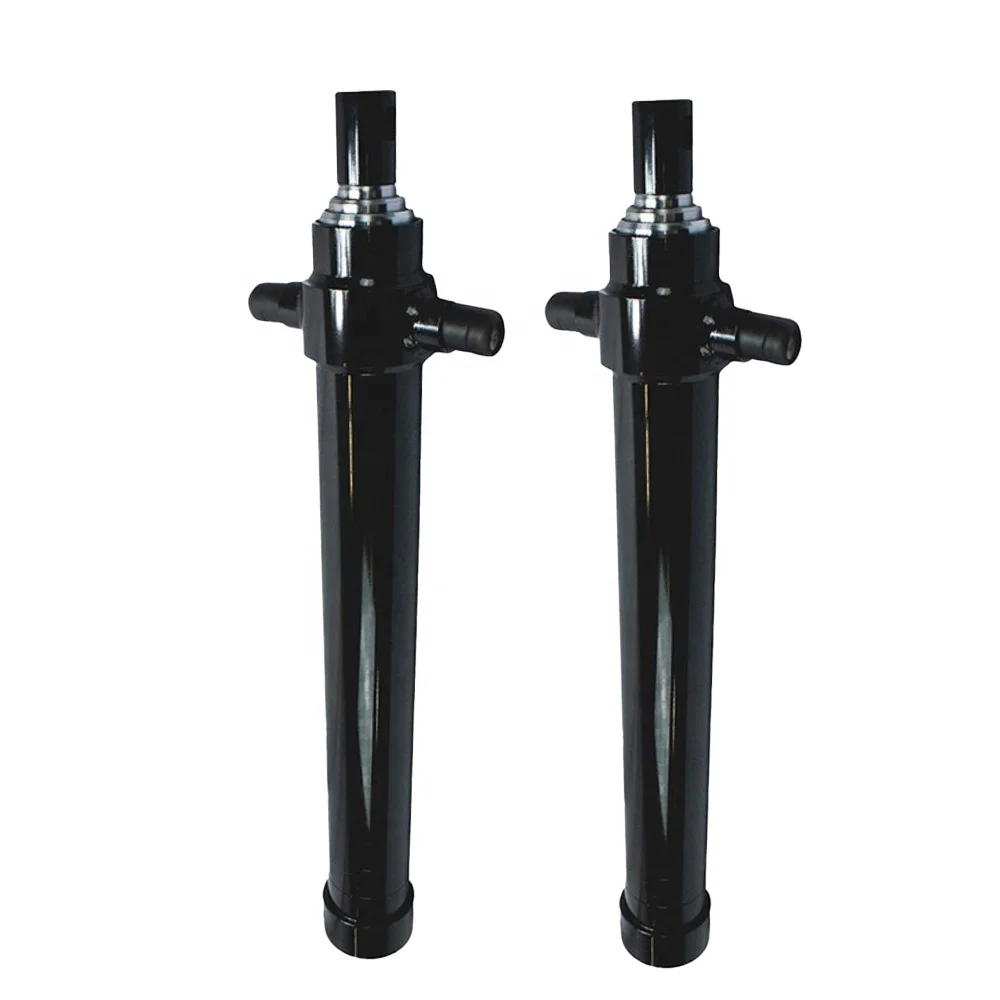
These are called telescopic hydraulic cylinders. If a normal rod cylinder is single stage, telescopic cylinders are multi-stage units with 2, 3, 4, 5, or even 6 stages. In general, telescopic hydraulic cylinders are much more expensive than normal cylinders. Most telescopic cylinders are single-acting (push-only). Double-acting telescopic cylinders must be specially designed and manufactured. You can find more technical information in the “HOW CYLINDERS WORK” section below.
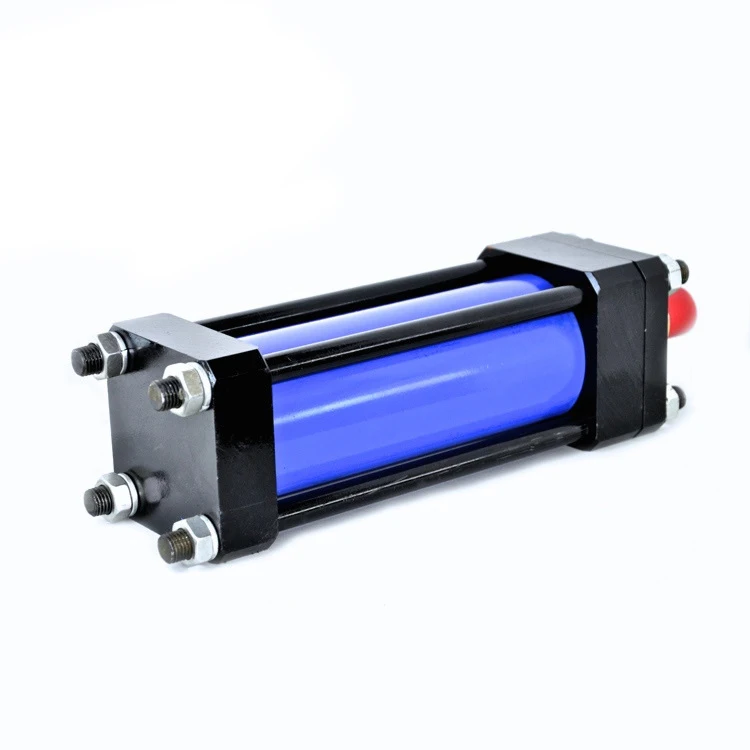
Tie rod style hydraulic cylinders use high-strength threaded steel rods to hold the two end caps to the cylinder barrel. This construction method is most commonly seen in industrial factory applications. Small bore cylinders usually have 4 tie rods, while large bore cylinders may need as many as 16 or 20 tie rods to keep the end caps in place under the huge forces produced.
The National Fluid Power Association (NFPA) has standardised the dimensions of hydraulic tie rod cylinders. This means cylinders from different manufacturers can be interchanged in the same mountings. Tie rod style cylinders can be completely taken apart for service and repair.
We can provide you with standard and custom-made hydraulic cylinders, including tie rod hydraulic cylinders, to meet your specific application, requirements, and operating parameters. Just fill out our Bespoke Cylinder Design Form, and one of our hydraulic engineers will get back to you quickly.
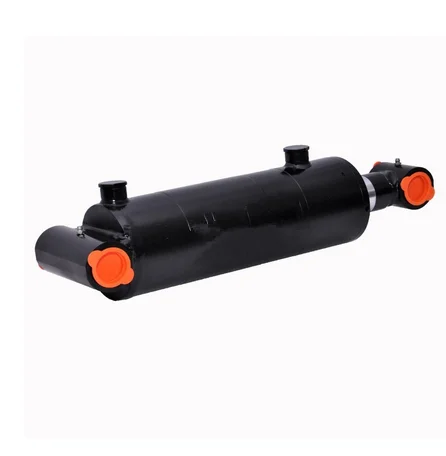
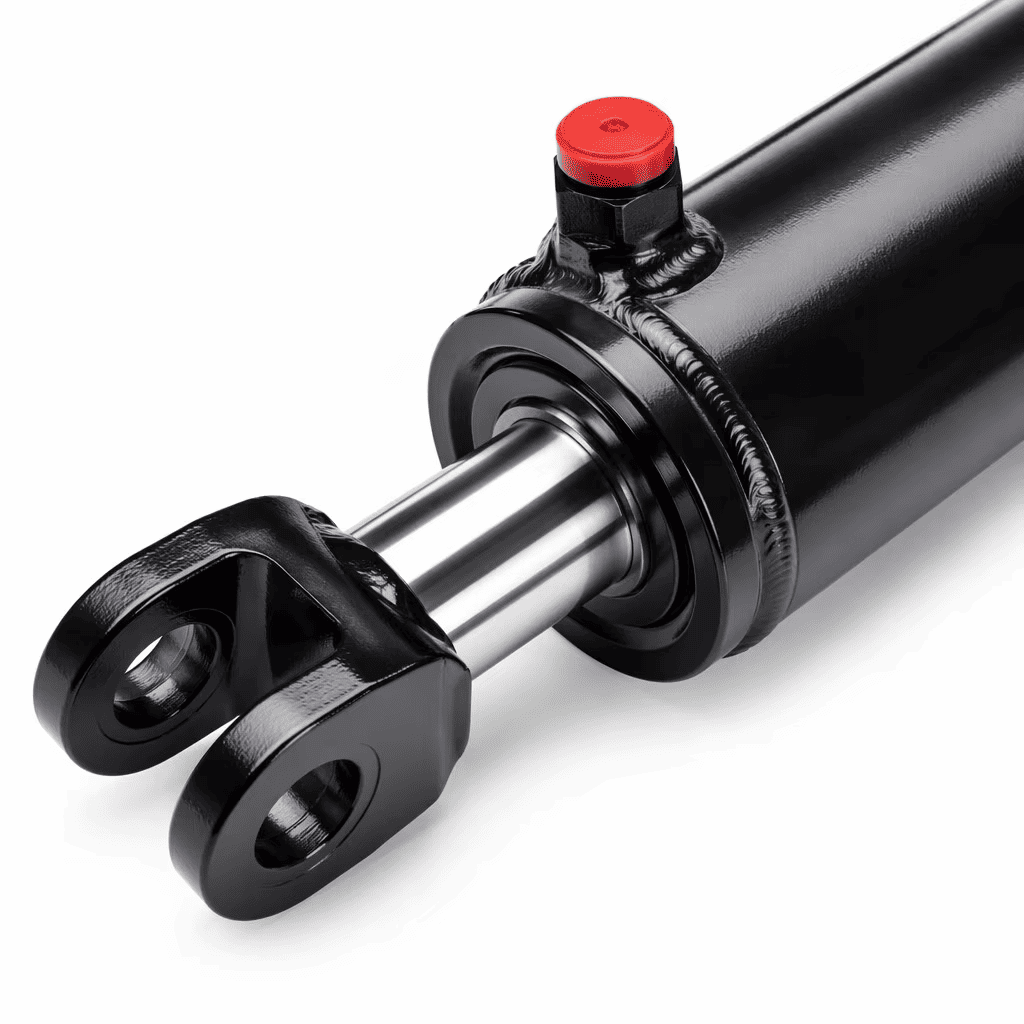
Welded body hydraulic cylinders have no tie rods. The barrel is welded directly to the end caps; the ports are welded to the barrel; and the front rod gland is usually threaded into or bolted to the cylinder barrel. This allows the piston rod assembly and rod seals to be removed for service.
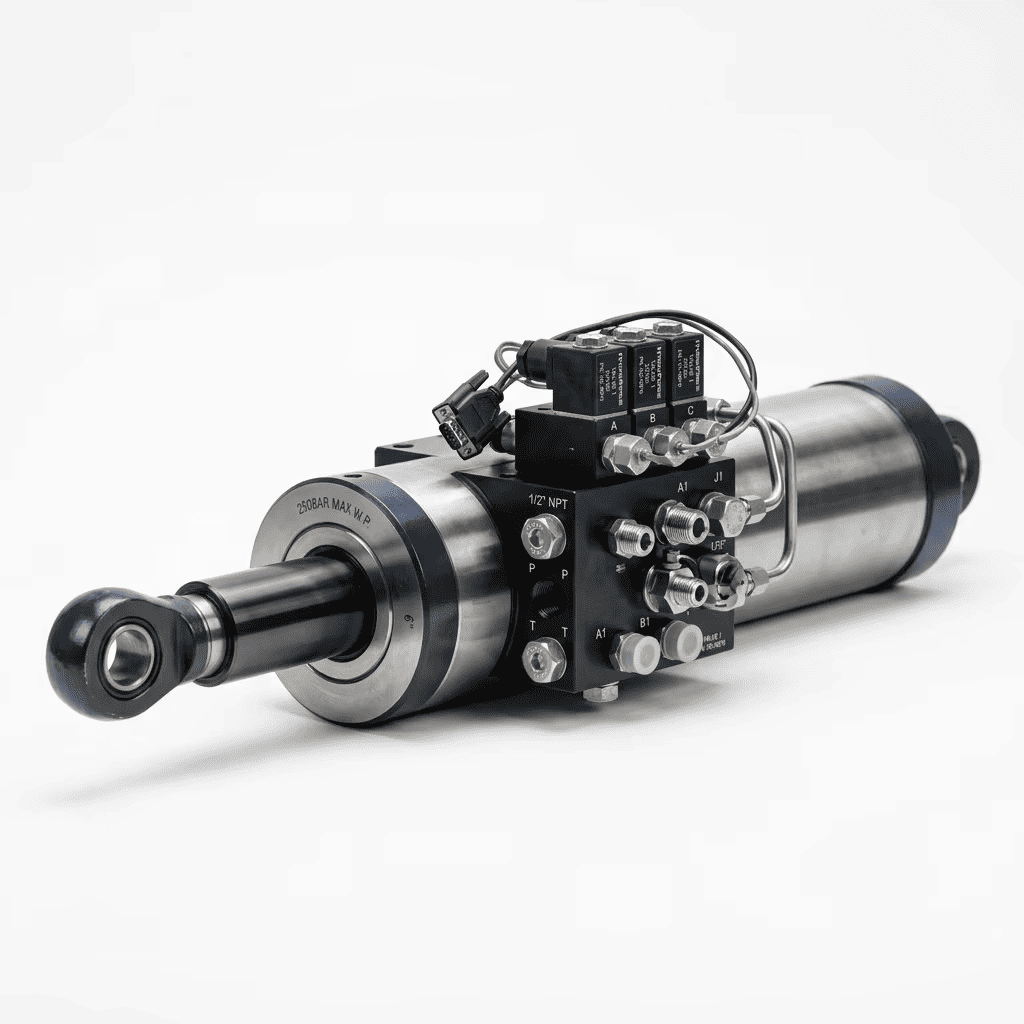
Welded body cylinders have several advantages over tie rod style cylinders: they have a narrower body and often a shorter overall length, making them fit better in the tight spaces of machinery. Welded cylinders don’t fail due to tie rod stretch at high pressures and long strokes. The welded design also makes customization easy. Special features—such as special ports, custom mounts, and valve manifolds—can be easily added to the cylinder body. The smooth outer body of welded cylinders also makes it possible to design multi-stage telescopic cylinders.
Welded body hydraulic cylinders are widely used in the mobile hydraulic equipment market, such as construction equipment (including excavators and bulldozers) and material handling equipment (fork lift trucks and tail lift gates). They are also used in heavy industry, such as cranes, oil rigs, and large off-road vehicles in above-ground mining.